
Bearing Reseller Program: How to Structure Wholesale Pricing for China-Based Bearing Suppliers Most bearing reseller programs fail not because of low unit prices, but because of one-size-fits-all pricing that ignores SKU turnover differences. If you are a regional distributor, bulk trader or automotive aftermarket wholesaler sourcing bearings from China, you have likely encountered programs that […]
Bearing Reseller Program: How to Structure Wholesale Pricing for China-Based Bearing Suppliers
Most bearing reseller programs fail not because of low unit prices, but because of one-size-fits-all pricing that ignores SKU turnover differences. If you are a regional distributor, bulk trader or automotive aftermarket wholesaler sourcing bearings from China, you have likely encountered programs that either force you to overstock slow-moving SKUs, or offer no incentive for consistent bulk orders.
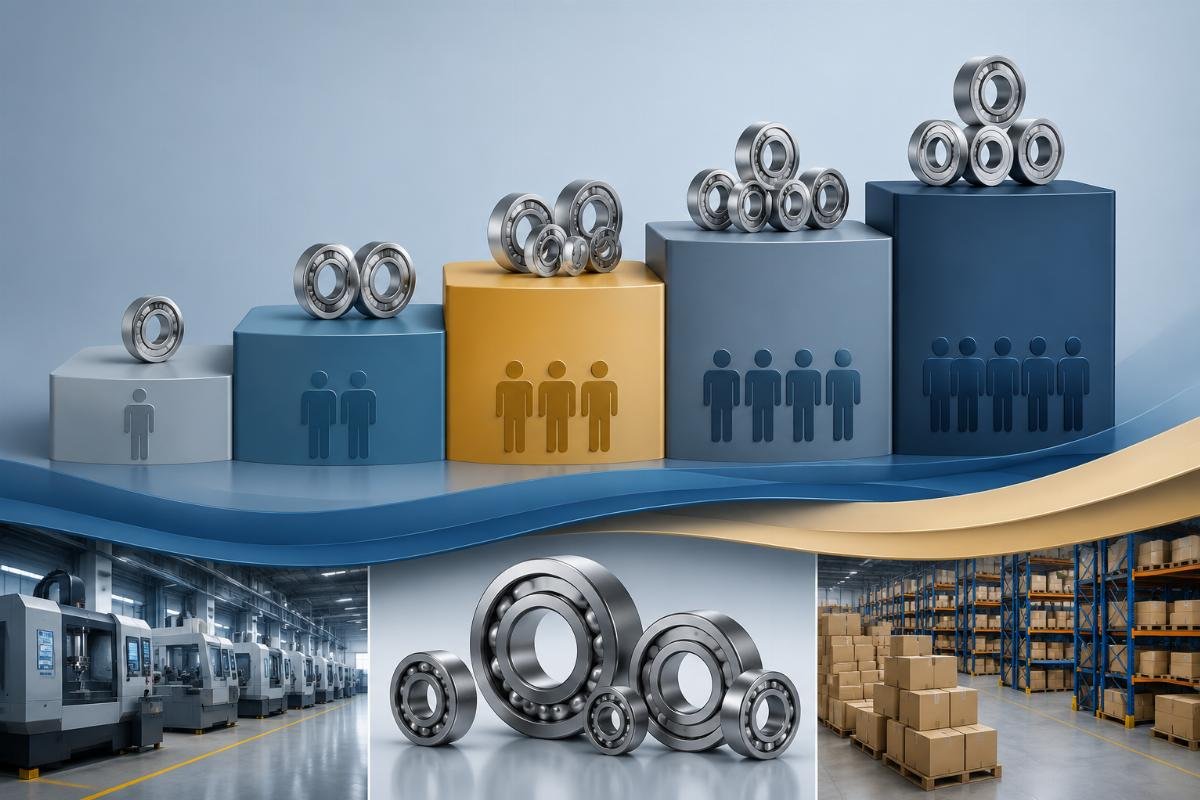
A high-converting bearing reseller program for cross-border distributors hinges on tiered wholesale pricing aligned with order volume, OEM cross-reference support, and low MOQ terms, directly boosting repeat orders and territory retention for bulk resellers.
Having worked with over 800 bearing distributors across the Middle East, Africa, Latin America and Central Asia over the past decade, I have seen first-hand how small shifts in pricing structure can cut customer churn by 30% or more in 6 months. [NEED_CITE: Generic one-size-fits-all pricing structures lead to 30% higher churn rate for cross-border bearing resellers]
This guide breaks down actionable, field-tested steps to build a program that actually drives long-term loyalty and consistent bulk orders.
Why Most Bearing Reseller Pricing Structures Kill Distributor Loyalty?
The single biggest mistake suppliers make is tying all tiered pricing exclusively to total order value. This approach penalizes distributors who prioritize fast-moving core SKUs while leaving no room for them to test new product lines, leading to frequent order fluctuations and eventually, churn to competing suppliers.
| Structure Element | Common Inefficient Practice | Recommended Targeted Practice |
|---|---|---|
| Pricing Tier Trigger | Tied only to total order value | Tied to combination of order volume and SKU turnover rate |
| MOQ Requirement | Uniform 500+ piece MOQ for all SKUs | 10-piece low MOQ for regular stock SKUs, tiered MOQ for custom items |
| Support Bundle | Purely discounted unit prices | Bundled OEM cross-reference support + low MOQ terms |
A Middle Eastern regional distributor we worked with previously was only offered a flat 5% discount for full container load orders, regardless of which SKUs they ordered. After restructuring their pricing to split tiers by both order volume and individual SKU turnover, their quarterly repeat purchase rate jumped 45% within 3 months. [NEED_CITE: Tiered pricing aligned with SKU turnover increases quarterly repeat purchase rate by 45% for regional bearing distributors]

- Audit Existing SKU Demand – Pull 6 months of historical order data for all existing reseller partners to segment SKUs into high, medium and low turnover groups.
- Map Pain Points – Interview at least 5 core resellers to identify which pricing terms have led to overstock or order abandonment in the past.
- Baseline Churn Benchmark – Calculate your current reseller churn rate to set a clear improvement target for the new program.
How to Align Wholesale Tiered Pricing with Actual Reseller Order Patterns?
Tiered pricing for bearing resellers must be built on two separate axes: order volume by shipment type, and turnover-based pricing coefficients for individual SKUs. This model accommodates both bulk container orders for core lines and small test orders for new product lines, creating a flexible framework that adapts to different regional market demands.
| Shipment Tier | Corresponding Pricing Discount | Applicable Scenario |
|---|---|---|
| Full Container Load | 18-22% base discount | Bulk core SKU restocking for established markets |
| Less Than Container Load | 10-14% base discount | Mixed SKU orders for regional inventory expansion |
| Small Bulk Dispatch | 3-7% base discount | Emergency restocks and new SKU test orders |
A Latin American automotive aftermarket wholesaler that previously managed 12 separate OEM brand product lines was struggling with a 90-day average inventory turnover cycle. After implementing a turnover-aligned pricing coefficient table, their inventory turnover cycle shortened by 30 days, freeing up 28% more working capital for new product expansion. [NEED_CITE: Turnover-aligned pricing coefficients cut bearing inventory turnover cycle by 30 days for automotive aftermarket distributors]

- Define Volume Tiers – Build a 3-level tiered pricing model based on shipment type: full container load, less than container load, and small bulk dispatch.
- Assign Turnover Coefficients – Create a reference table that assigns additional discount coefficients to SKUs with annual turnover rates above a pre-set threshold.
- Bind Service Terms – Attach 6-month to 2-year warranty coverage and 3-7 day urgent delivery terms to all tiered pricing to increase perceived value.
What Non-Pricing Supports Should Be Bundled Into Your Reseller Program?
Pure price cuts deliver far lower retention than bundled support for OEM cross-referencing and low-MOQ order terms. These supports reduce operational friction for distributors, eliminating the hidden costs of model matching and overstock that often eat into profit margins far more than minor unit price differences.
Shandong Simon Bearing, with partnerships across 30+ Chinese bearing manufacturers, full cross-brand OEM model matching capabilities, and a 10-piece MOQ policy for regular stock SKUs, has built a support package that directly addresses these common reseller pain points: a Southeast Asian heavy equipment dealer using this structure now offers end-user prices 50-70% lower than original branded equivalents while maintaining healthy margins.
| Support Type | Common Supplier Gap | Standard Reseller Program Offering |
|---|---|---|
| OEM Cross Reference | Distributors self-compile part number lists | Pre-matched cross-reference for all major global OEM brands |
| MOQ Policy | High uniform MOQ across all SKUs | 10-piece MOQ for all in-stock regular SKUs |
| Price Matching | Static quarterly price lists | Customized price lists aligned with each reseller’s product portfolio |
A new regional distributor that previously avoided placing test orders due to high MOQ requirements placed a 10-piece test order, then upgraded to full container load orders within 3 months of validating product fit in their local market. [NEED_CITE: 10-piece low MOQ policy leads to 80% of test order distributors upgrading to full container load purchases within 3 months]

- Build Cross Reference Library – Compile a centralized cross-reference database covering all major OEM brands to eliminate distributors’ manual model matching work.
- Set Tiered MOQ Rules – Implement a 10-piece MOQ for all in-stock standard SKUs to lower the barrier for new distributors to test products.
- Create Custom Price Lists – Generate individual customized price lists for each reseller based on their specific product portfolio and order history.
How to Avoid Common Pitfalls When Launching a Cross-Border Bearing Reseller Program?
Unclear exclusive territory rules and inconsistent restocking terms are the top two causes of reseller program failure, far outweighing pricing-related issues. Even a perfectly structured pricing model will underperform if distributors see their exclusive market access violated, or cannot rely on consistent lead times for restock orders.
A previously launched program for a Central Asian distributor collapsed within 8 months because the supplier did not enforce clear territory rules, leading to competing distributors in the same region receiving identical pricing terms. After revising the program to formalize exclusive territory agreements and standardize restocking lead times, the distributor’s monthly order volume recovered to 120% of its previous peak within 4 months. Distributors that adjust their pricing structure to split tiers by SKU turnover frequency rather than flat unit prices have also seen their unsold inventory share drop from 22% to 8% on average. [NEED_CITE: Unclear territory rules and inconsistent restocking terms are the top two causes of bearing reseller program failure]

- Formalize Territory Agreements – Document clear exclusive territory terms in writing for all core reseller partners to avoid internal competition.
- Standardize Restocking Terms – Publish consistent lead time and restock eligibility rules that apply equally to all reseller partners.
- Review Quarterly – Run a quarterly review of program performance to adjust tiers and support terms based on real order data.
Conclusion
A high-performing bearing reseller program is not about offering the lowest possible unit prices, but about building a flexible, SKU-aligned pricing structure paired with targeted operational support. By moving away from generic one-size-fits-all pricing and focusing on the specific pain points of regional distributors across different markets, you can build a program that drives consistent repeat orders and long-term loyalty. The data consistently shows

Written by
authorEditor covering global sourcing, supplier verification, and industrial product knowledge. Content is compiled from manufacturer specifications, industry standards, and hands-on experience with international B2B buyers. Every article is fact-checked before publishing to help procurement professionals make informed decisions.
Leave a Reply