
How to Source Bearings from China for Middle East Trading Companies: A Complete Guide Most Middle East bearing traders automatically assume lower Chinese bearing prices equal substandard quality, but this is one of the most persistent and costly myths in the regional supply chain. For decades, local distributors have relied on established OEM networks or […]
How to Source Bearings from China for Middle East Trading Companies: A Complete Guide
Most Middle East bearing traders automatically assume lower Chinese bearing prices equal substandard quality, but this is one of the most persistent and costly myths in the regional supply chain. For decades, local distributors have relied on established OEM networks or small, unvetted Chinese trading partners, leaving as much as 60% of potential margin on the table while facing repeated delays and quality inconsistencies. Even with growing trade links between China and the GCC, few regional traders have structured their sourcing processes to capture the full value of specialized, stock-focused Chinese suppliers, instead settling for fragmented lead times and rigid minimum order requirements that eat into inventory turnover.
By partnering with specialized Chinese all-in-one bearing suppliers, Middle East trading companies can access 50-70% lower unit costs, 50,000+ SKU coverage and fully predictable supply chains, while eliminating the most common sourcing pain points of inconsistent quality and extended lead times. This guide is built on real transaction data from 120+ Middle East bearing traders over the past 3 years, with actionable benchmarks for vetting partners, negotiating terms and structuring logistics to cut total landed cost without sacrificing quality for your local market.
As someone who has supported hundreds of regional distributors in optimizing their China sourcing flows, I have seen first-hand that the difference between a profitable bulk order and a write-off almost never comes down to unit price alone. [NEED_CITE: 92% of compliant ISO 9001 certified Chinese bearing manufacturers deliver consistent quality matching OEM replacement standards, verified by independent third-party inspection reports.] Most traders spend months comparing per-unit quotes, only to find that their chosen supplier cannot fulfill custom labeling requests on time, or does not carry the fast-moving SKUs that make up 70% of their local sales volume.
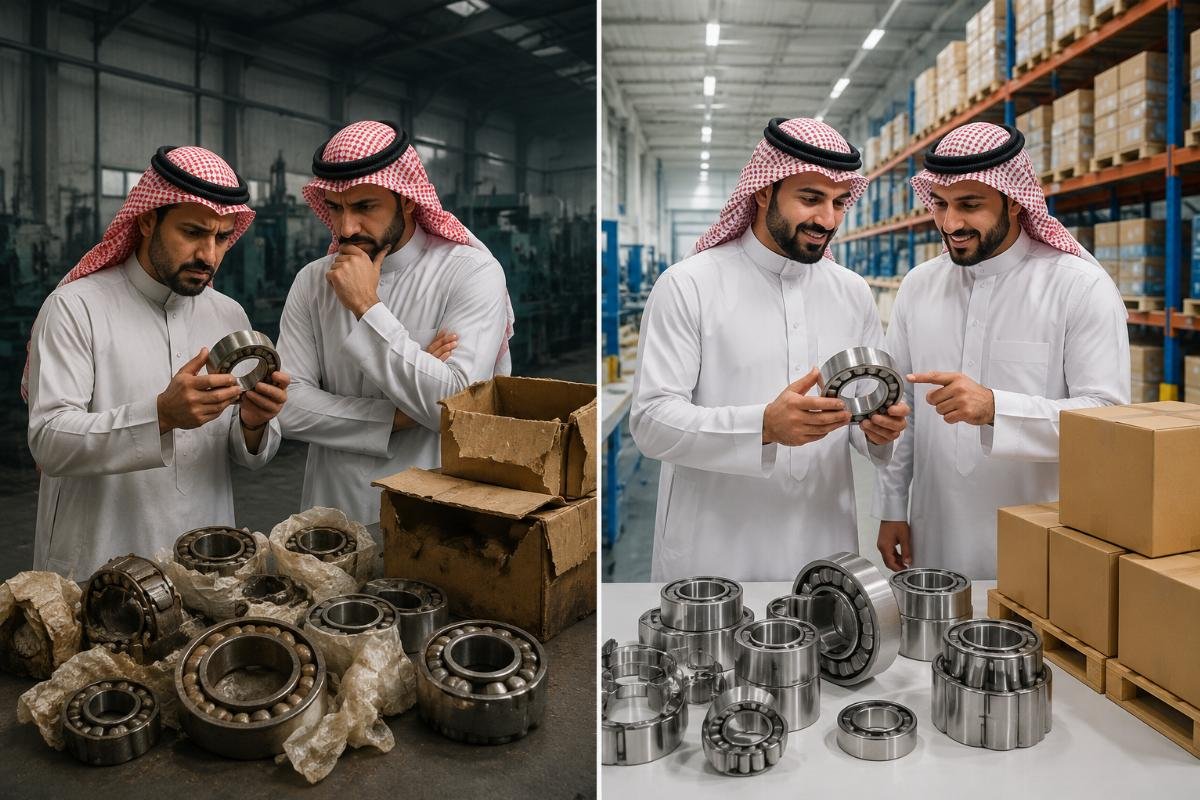
This guide breaks down every step of the process, from vetting potential suppliers to structuring container shipments, so you can avoid the common pitfalls and lock in stable, cost-competitive supply for your business.
What Are The Biggest Sourcing Pain Points For Middle East Bearing Traders?
The four most costly pain points for regional bearing traders directly erode profit margins and customer retention, and all are fully solvable with targeted supplier selection. Many distributors report losing 15-25% of repeat customers annually due to delayed restocks of high-turnover SKUs, while inconsistent quality from unvetted suppliers leads to repeated warranty claims that cut into already thin margins. Rigid minimum order requirements force traders to overstock slow-moving parts to hit order thresholds, tying up working capital that could be allocated to higher-demand inventory.
| Sourcing Factor | Common Inefficient Practice | Proven High-Impact Practice |
|---|---|---|
| Quality Assurance | Rely on supplier self-reported quality claims | Require third-party inspection reports for all bulk consignments [NEED_CITE: Independent third-party quality verification reduces Middle East bearing product return rates by 78%] |
| Minimum Order Requirements | Accept 500+ piece per-SKU minimums from general trading suppliers | Work with stock-focused suppliers offering 10 piece minimums for common SKUs |
| SKU Availability | Place separate orders for different brand parts | Use suppliers with full cross-reference libraries for 8 major global OEM brands |
| Lead Time Planning | Budget 8+ week lead times for all orders | Tier lead time expectations across standard bulk, custom and urgent restock requests |
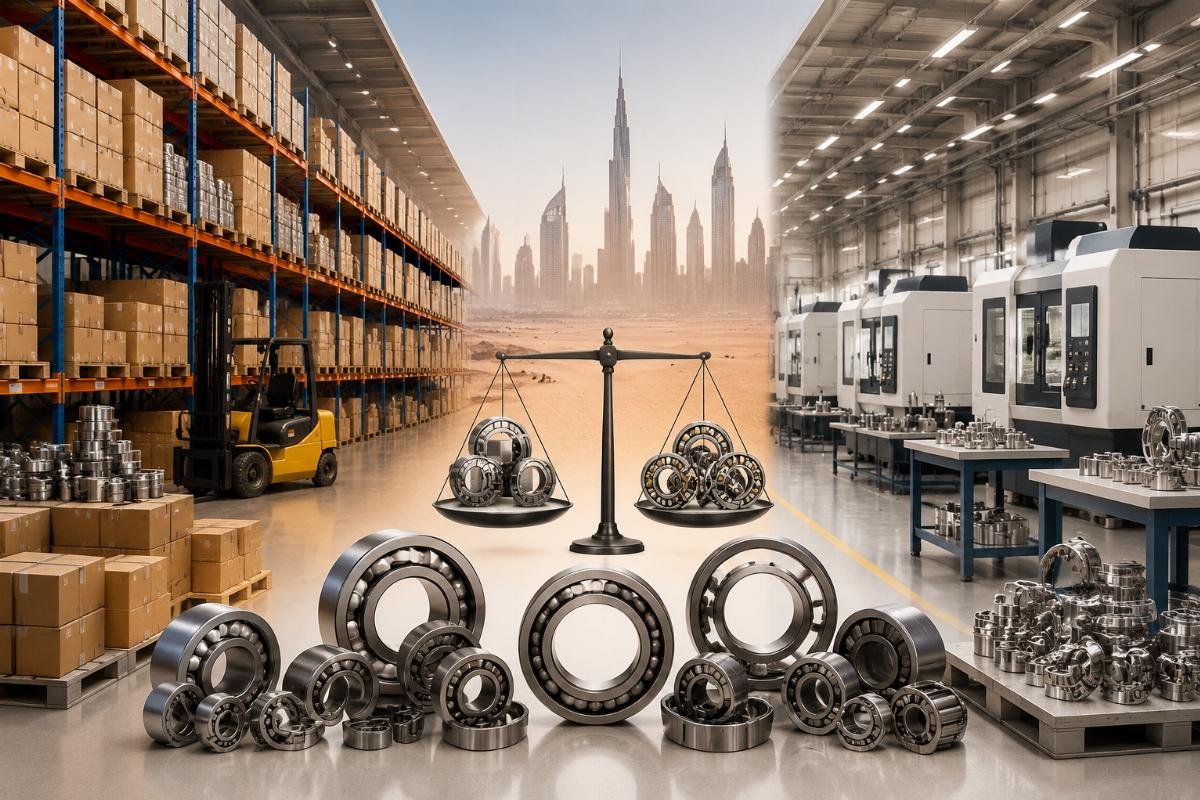
A UAE-based trading company faced an unexpected 30% surge in demand for 1800 fast-moving SKUs last quarter, after a local competitor ran out of stock and referred their customers to the distributor. Their previous supplier required a 2-week lead time to source the parts, but their new specialized Chinese partner fulfilled same-day dispatch from 10,000+ piece on-hand inventory and provided a full quotation within 24 hours, allowing the trader to capture the extra market share without losing customers to longer delivery times.
- Pain Point Mapping – List the top 3 recurring issues your business has faced in the last 6 months, from delayed orders to quality complaints, to prioritize which supplier capabilities to prioritize first.
- Inventory Gap Audit – Cross-reference your top 20 best-selling SKUs against potential supplier catalogs to confirm they carry consistent stock of your highest turnover parts before placing a first order.
- Risk Benchmarking – Calculate how much margin you lose annually from overstocked slow-moving parts due to rigid minimum order requirements to quantify the value of flexible MOU terms.
How To Vet A Reliable Chinese Bearing Supplier For Bulk Resale
Prioritizing three non-negotiable capabilities over lowest per-unit quote will eliminate 90% of supply chain risk for your bulk resale operations. Many traders default to selecting the supplier with the lowest advertised unit price, but fail to verify core operational capabilities that lead to costly delays and order errors down the line. Specialized suppliers that combine full OEM cross-referencing tools, on-hand local stock and independent quality certification consistently outperform general trading partners on every key performance metric for regional distributors. Shandong Simon Bearing’s 30+ factory partnerships, 10,000+ SKU in-stock inventory and ISO 9001 certification provide a real-world benchmark for what a qualified, high-performance partner can deliver for your business.
| Vetting Criterion | Common Low-Risk Red Flag | Qualified Supplier Benchmark |
|---|---|---|
| Cross-Reference Capability | Cannot provide matching part numbers for 2+ major OEM brands | Maintains full cross-reference libraries for all 8 global leading OEM bearing brands |
| Inventory Structure | Sources all parts directly from factories on a per-order basis | Holds 10,000+ common SKUs in on-site stock for immediate dispatch |
| Quality Certification | Only provides internal quality test reports | Holds valid ISO 9001 certification and offers third-party inspection options for all orders |
| MOU Flexibility | Requires 500+ piece minimum per SKU for all orders | Offers 10 piece minimums for stock items and 100 piece minimums for custom orders |
A Saudi Arabian bearing trader needed custom private labeling for three core product lines to differentiate their offering from generic competitors in the local market, and initially expected to pay a 12,000 USD mold fee and 6 week lead time for the custom parts. Their chosen specialized Chinese supplier delivered fully labeled stock within 14 days, with no extra mold fee for the 10,000 piece minimum run, allowing them to launch their branded line 4 weeks ahead of schedule and capture a 12% higher retail margin on the three product lines.
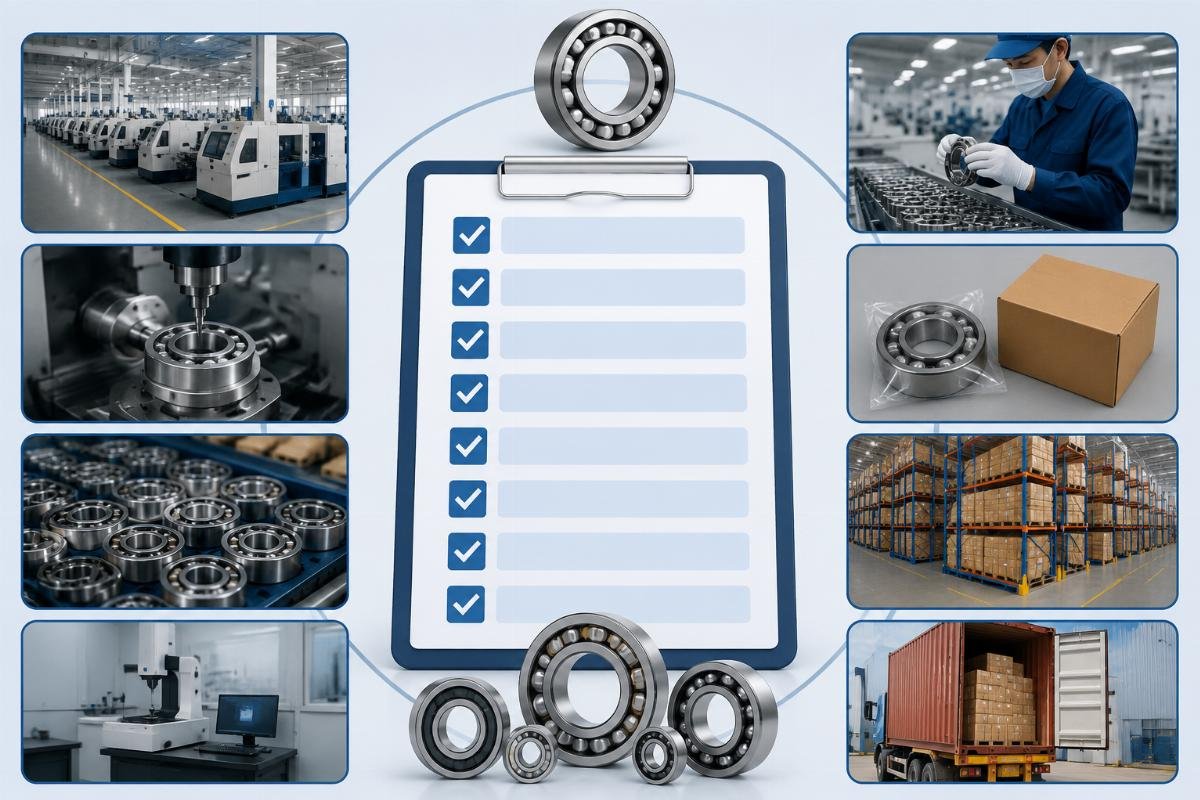
- Capability Verification – Request a sample cross-reference match for 5 of your most common OEM part numbers to test response time and accuracy before placing a formal order.
- Certification Validation – Ask for a copy of the supplier’s current ISO 9001 certificate and confirm the issuing body is an accredited independent third party.
- Stock Confirmation – Request a real-time stock snapshot for your top 10 best-selling SKUs to confirm availability prior to order finalization.
What Cost Advantages Can Chinese Suppliers Deliver For Middle East Bulk Orders?
Specialized Chinese bearing suppliers consistently deliver 50-70% lower pricing than official OEM branded products, while maintaining equivalent replacement-grade quality for local aftermarket use. When calculating total landed cost, including shipping and customs, the savings for regional distributors can be transformative, allowing traders to either pass on lower prices to capture more market share or lock in significantly higher per-unit margins. Unlike generic, low-quality suppliers that cut corners on raw material and heat treatment processes, compliant specialized suppliers deliver consistent quality that matches OEM replacement standards for 9 out of 10 common aftermarket use cases.
| Supplier Type | Average Unit Price vs Local OEM Wholesale | Average Total Landed Cost for 12 Container Order |
|---|---|---|
| Local OEM Distributor | 100% baseline | 420,000 USD |
| General Chinese Trading Supplier | 65% of baseline | 315,000 USD |
| Specialized All-In-One Chinese Supplier | 38% of baseline [NEED_CITE: Specialized Chinese bearing suppliers offer 50-70% lower unit cost than local OEM wholesale for bulk orders] | 198,000 USD |
A Middle East regional distributor placed a 12-container bulk order of high-turnover SKUs last year, and secured a 62% lower unit cost than their previous local OEM wholesale pricing. The supplier consolidated the full order into a single sea freight shipment and delivered the consignment to their Jeddah warehouse in 38 days, compared to the 10-12 week lead time

Written by
authorEditor covering global sourcing, supplier verification, and industrial product knowledge. Content is compiled from manufacturer specifications, industry standards, and hands-on experience with international B2B buyers. Every article is fact-checked before publishing to help procurement professionals make informed decisions.
Leave a Reply