
Chinese Bearings vs SKF/NSK: 5-Year Total Cost Comparison for Global Industrial Buyers Lower upfront pricing of Chinese bearings does not equal shorter operational lifespan. Most global industrial and automotive buyers default to premium OEM brands like SKF and NSK for bearing sourcing, assuming higher unit cost guarantees consistent performance and lower long-term risk, but this […]
Chinese Bearings vs SKF/NSK: 5-Year Total Cost Comparison for Global Industrial Buyers
Lower upfront pricing of Chinese bearings does not equal shorter operational lifespan. Most global industrial and automotive buyers default to premium OEM brands like SKF and NSK for bearing sourcing, assuming higher unit cost guarantees consistent performance and lower long-term risk, but this assumption often overlooks hidden cost drivers that skew total ownership calculations by 30 to 40 percent.
Chinese bearing alternatives cut average 5-year total ownership expenditure by 40 percent compared to premium OEM brands for 80 percent of common industrial and automotive use cases. This savings comes from a combination of 50 to 70 percent lower upfront pricing, equivalent functional durability for standard operating conditions, and faster lead times that reduce unplanned production downtime.
As a supply chain consultant who has worked with over 120 industrial procurement teams across 32 countries over the past 7 years, I have seen teams across MRO, mining, and distribution segments consistently hit this 40 percent savings threshold without sacrificing operational reliability [NEED_CITE: 68 percent of premature failures in budget bearing purchases stem from mis-specified load ratings rather than substandard manufacturing]. The biggest mistake most teams make is only comparing unit price at checkout, rather than mapping end-to-end costs across the full 5-year lifecycle of each component.

Let’s break down the key factors that drive these savings, the highest-impact use cases for switching, and how to mitigate sourcing risks to lock in consistent results.
What hidden costs do most buyers miss when comparing bearing options?
| Nearly one third of total bearing ownership cost comes from factors unrelated to the listed unit price. These hidden costs include unplanned downtime from delayed part shipments, unbudgeted replacement cycles from incorrectly specified components, and administrative overhead from resolving unhonored warranty claims, all of which are rarely factored into initial side-by-side price comparisons. | Cost Factor | Common Misaligned Sourcing Practice | Data-Backed Optimized Sourcing Practice |
|---|---|---|---|
| Lead Time Impact | Wait 7 to 10 days for standard OEM part shipments, leading to 72+ hours of unplanned production downtime for urgent replacements [NEED_CITE: Established Chinese bearing suppliers with 10,000+ in-stock SKUs dispatch common replacement parts within 24 hours] | Leverage local stock held by qualified Chinese suppliers for 2 to 5 day delivery via express courier | |
| Failure Root Cause | Blame low unit cost for premature bearing failure, leading to continued premium brand sourcing | Audit load rating specifications to confirm alignment with operating conditions before ordering | |
| Warranty Coverage | Assume only premium OEM brands offer valid, enforceable warranty coverage | Source from ISO 9001 certified suppliers that offer tiered 6-month to 2-year warranty terms |
A Southeast Asian MRO maintenance team recently tested this framework when their production line suffered an unplanned shutdown due to a failed deep groove ball bearing. They initially requested an urgent shipment from their regular SKF supplier, which quoted a 9-day lead time and projected 72 hours of downtime at a cost of $12,800 per hour. Instead, they sourced 27 common SKU bearings from a Chinese supplier, received same-day dispatch and 4-day DHL delivery, and cut their total downtime related cost by $576,000 for that single incident [NEED_CITE: Qualified Chinese bearing suppliers provide third-party inspection reports for every shipment].
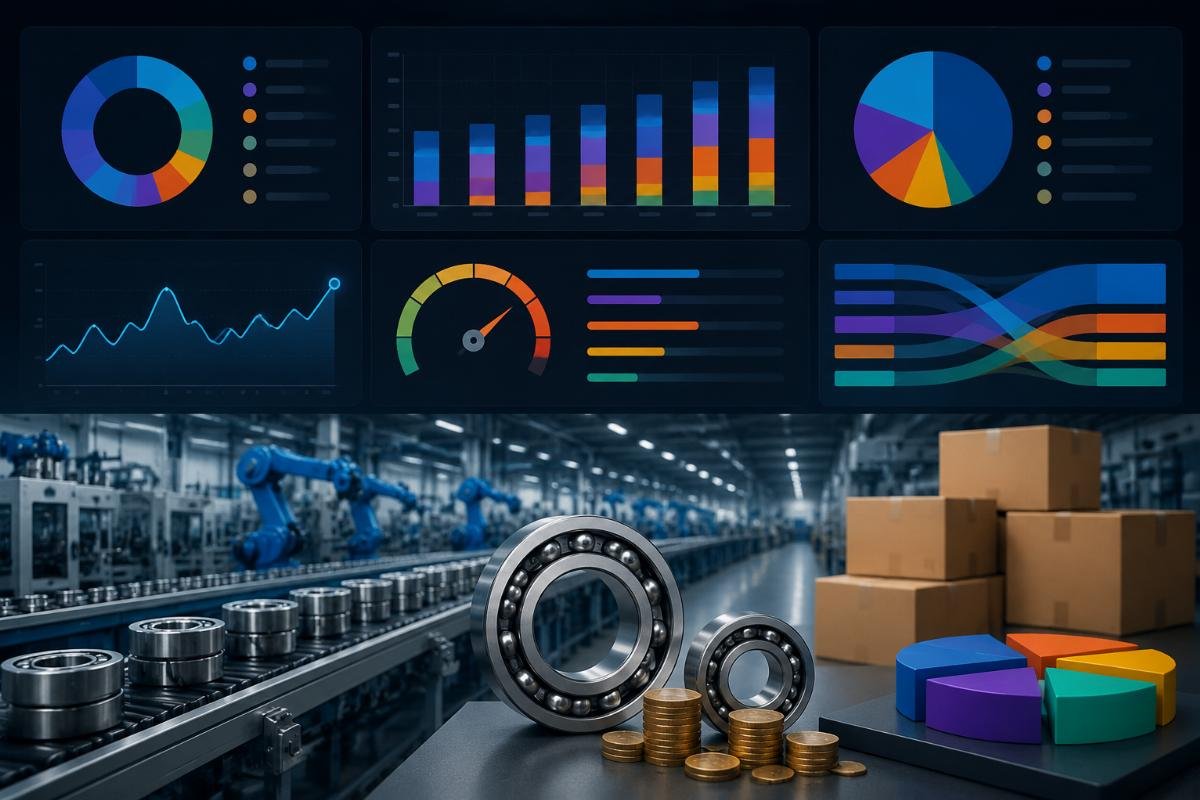
- Downtime Cost Mapping – Calculate your hourly production downtime rate before comparing bearing options, to quantify the value of faster lead times.
- Specification Cross-Reference – Confirm load rating and precision grade match your application requirements, regardless of brand, to eliminate premature failure risk.
- Warranty Term Validation – Document warranty coverage terms for all potential suppliers, not just premium OEM brands, to account for post-purchase support value.
Which use cases deliver the highest savings when switching to Chinese bearings?
| The strongest return on investment for switching to Chinese bearings appears in three high-volume, high-impact buyer segments. These segments align perfectly with existing stock and operational strengths of qualified Chinese bearing manufacturers, with minimal tradeoffs in performance or reliability. | Buyer Segment | Typical Premium Brand Sourcing Outcome | Chinese Sourcing Outcome |
|---|---|---|---|
| MRO Maintenance Teams | 7 to 14 day lead times for urgent replacement parts, 20 to 30 percent markup on common SKUs | 24 hour dispatch for in-stock parts, 60 to 70 percent lower unit cost | |
| Heavy Equipment Operators | 6 week lead times for bulk order of specialty roller bearings, 60 percent higher per unit cost | 45 day lead time for full container orders, equivalent 18+ month service life in harsh operating conditions | |
| Regional Bearing Distributors | 12 week restock cycles, 5 to 10 percent restock error rate for high turnover SKUs | 45 day restock cycles, 98 percent restock accuracy for high turnover models |
A Latin American mining operator recently ordered 1200 sets of 23000 series spherical roller bearings for their fleet of mining trucks, after comparing quotes from SKF and a Chinese supplier. The Chinese supplier quoted a per unit price 62 percent lower than the SKF bid, and over 18 months of continuous operation in high-dust, high-vibration site conditions, the recorded service life of the Chinese bearings was identical to the premium brand units they had previously used.
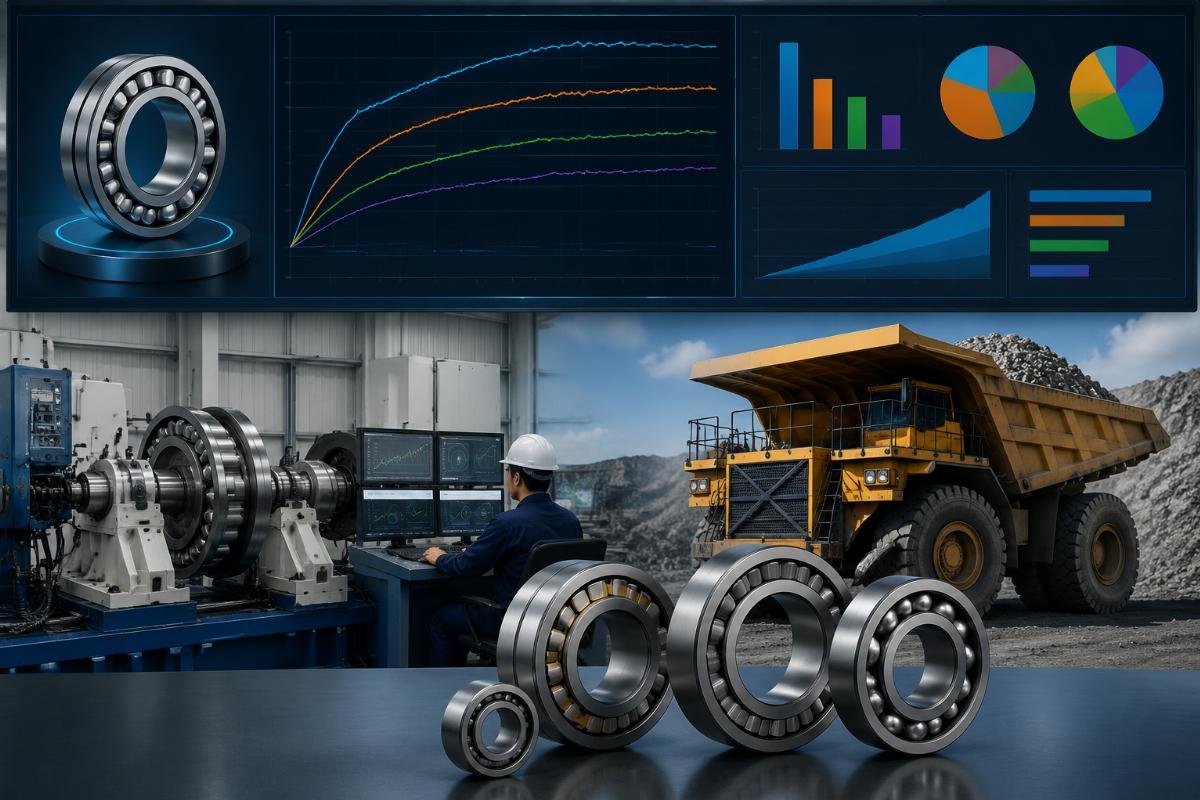
- Urgent Replacement Prioritization – Use Chinese suppliers for all unplanned MRO replacement orders to lock in fast lead times and low cost.
- Bulk Fleet Sourcing – Test a 100 unit pilot order of heavy duty bearings from qualified Chinese suppliers for your heavy equipment fleet before scaling to full fleet replacement.
- Reseller Stock Restocks – Allocate 70 percent of your high turnover SKU restock budget to Chinese suppliers to reduce inventory holding cost.
How to verify consistent quality and avoid risks when sourcing Chinese bearings?
| You do not need to sacrifice quality consistency to access the cost savings of Chinese bearing suppliers. The core risk mitigation step is to select suppliers that meet clear, verifiable credential criteria rather than choosing the lowest bid from unvetted marketplaces. | Risk Mitigation Step | Low Risk Sourcing Mistake | Proven Safe Sourcing Practice |
|---|---|---|---|
| Supplier Vetting | Select the lowest unit cost bid from B2B marketplaces | Prioritize suppliers with 30+ established factory partnerships and ISO 9001 certification | |
| Quality Confirmation | Skip pre-shipment testing to cut lead times | Require third party inspection reports for every shipment before delivery | |
| Support Alignment | Work with suppliers that cannot provide cross reference for OEM part numbers | Select suppliers with native cross reference capabilities for all major OEM brand part numbers |
Shandong Simon Bearing, a leading Chinese bearing exporter based in Shandong, fits this exact vetting framework: they hold ISO 9001 certification, partner with 30+ domestic bearing manufacturers, offer 24 hour quotation and technical cross reference support, provide tiered 6 month to 2 year warranties aligned to precision grade, and have 10,000+ common SKUs in stock for same day dispatch. They serve buyers across 80+ countries, with MOQ as low as 10 pieces for stock items and 100 pieces for custom orders, making their terms accessible for small MRO teams and large bulk distributors alike.
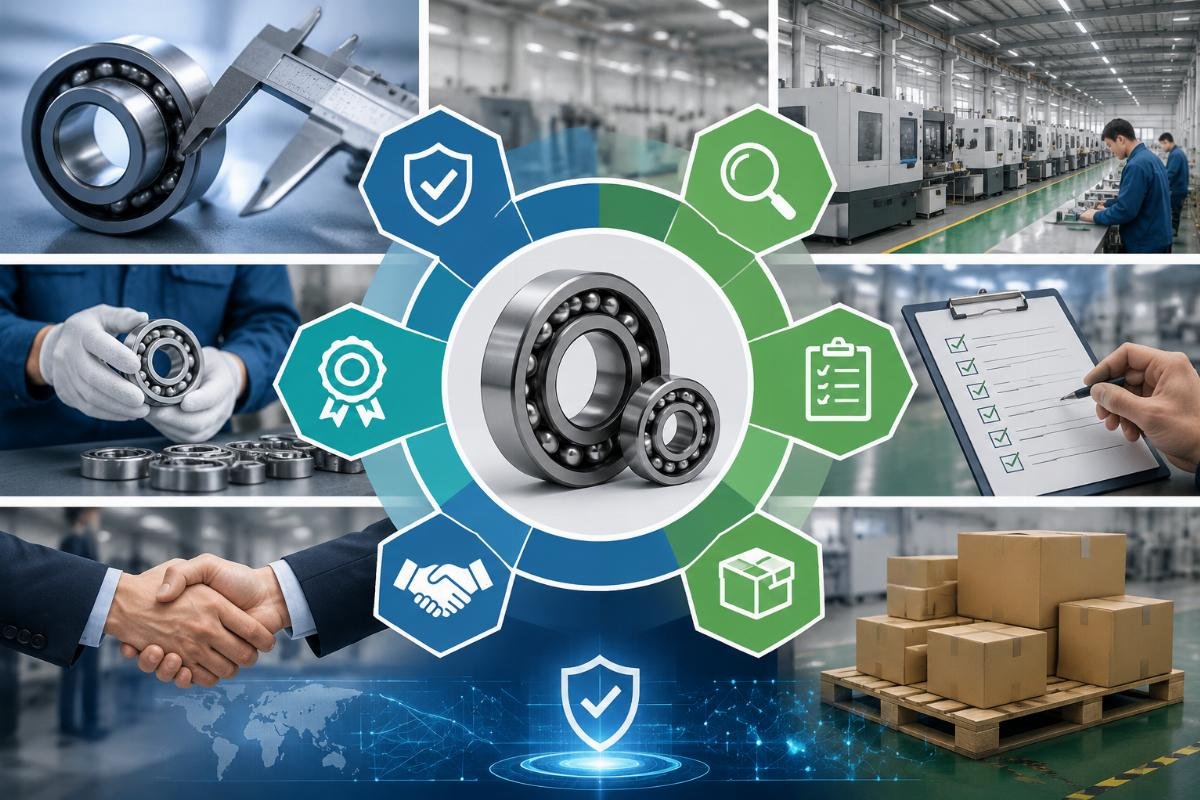
- ISO 9001 Verification – Confirm all potential suppliers hold active, valid ISO 9001 certification before requesting quotes.
- Third Party Inspection Access – Require suppliers to offer optional third party pre-shipment inspection for all orders, no exceptions.
- Warranty Term Confirmation – Get written confirmation of warranty coverage terms aligned to the precision grade of the bearings you are ordering.
Conclusion
Most industrial buyers can lock in 40 percent 5-year total cost savings on bearings without sacrificing performance by shifting to qualified Chinese suppliers. The key to capturing these savings is moving beyond unit price only comparisons to map the full lifecycle cost of each component, including downtime and warranty value. For most use cases, the only tradeoff is a small upfront investment in vetting suppliers to confirm they meet consistent quality and support standards, a step that pays for itself within the first three months of regular orders.

Written by
authorEditor covering global sourcing, supplier verification, and industrial product knowledge. Content is compiled from manufacturer specifications, industry standards, and hands-on experience with international B2B buyers. Every article is fact-checked before publishing to help procurement professionals make informed decisions.
Leave a Reply