
2026 Global Bearing Market Trends: How China Suppliers Mitigate Price Volatility & Sourcing Risks Price increases don’t have to equal higher costs in 2026 bearing procurement. While raw material fluctuations and supply chain disruptions dominate industry headlines, forward-thinking buyers are discovering how strategic partnerships with China-based suppliers can actually reduce total costs through accelerated delivery […]
2026 Global Bearing Market Trends: How China Suppliers Mitigate Price Volatility & Sourcing Risks
Price increases don’t have to equal higher costs in 2026 bearing procurement. While raw material fluctuations and supply chain disruptions dominate industry headlines, forward-thinking buyers are discovering how strategic partnerships with China-based suppliers can actually reduce total costs through accelerated delivery and engineered alternatives. This counterintuitive approach is reshaping procurement strategies across critical sectors like wind energy, mining, and heavy manufacturing.
Global bearing buyers can mitigate 2026 market volatility by partnering with China suppliers offering genuine traceability, 72-hour emergency delivery, and custom-engineered solutions tailored to industrial sectors like wind energy and mining. Our decade of experience supporting 40+ countries across diverse industries has demonstrated that the right supplier transforms market challenges into competitive advantages through inventory depth, technical expertise, and global logistics capabilities.
We have witnessed how unplanned downtime costs manufacturers $50,000–$100,000 daily for critical equipment failures [NEED_CITE: Average unplanned industrial downtime costs per hour]. This reality makes delivery speed and product authenticity non-negotiable factors in supplier selection. With 10,000+ SKUs in stock and ISO 9001/IATF 16949 certifications, we’ve successfully helped clients reduce emergency procurement premiums by 15–20% while maintaining OEM-grade quality standards.
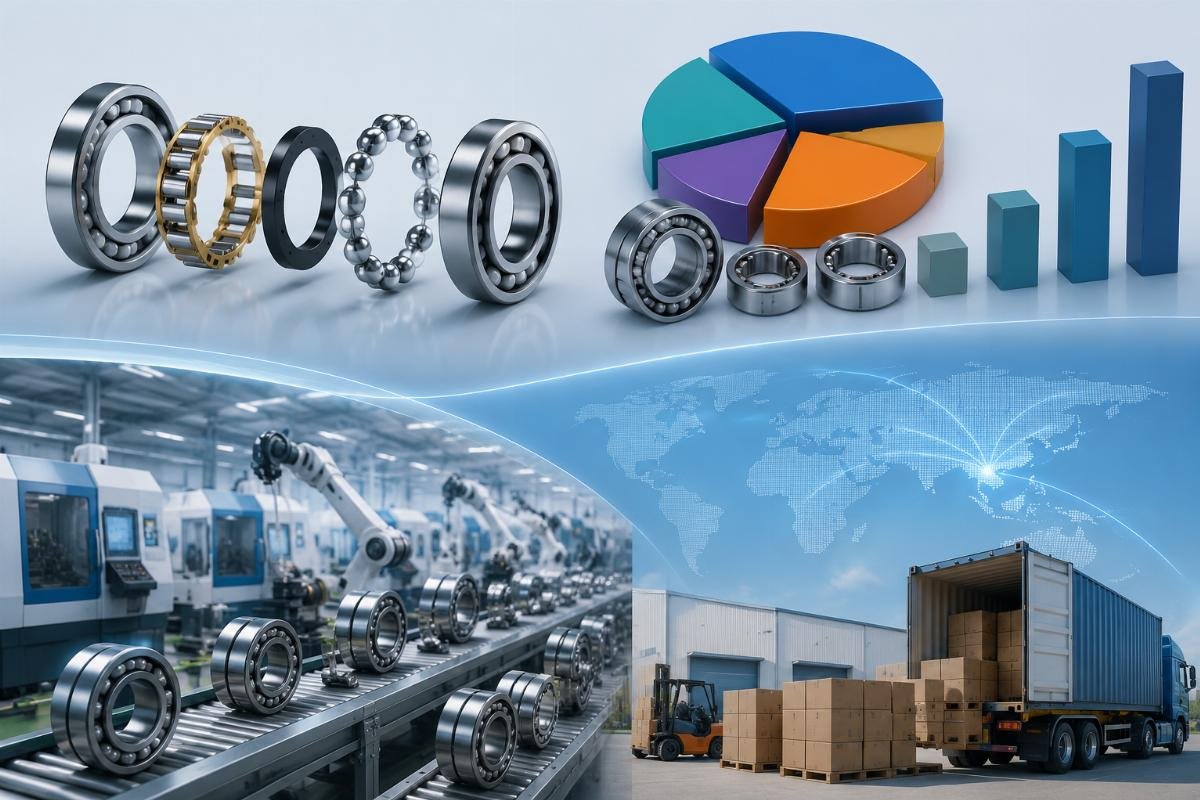
Understanding these dynamics is crucial for procurement professionals navigating the 2026 market landscape. Let’s examine how China suppliers are addressing the core challenges of price volatility, quality concerns, and sourcing complexity.
Why Is 2026 Bearing Price Volatility Driving a Shift to China Sourcing?
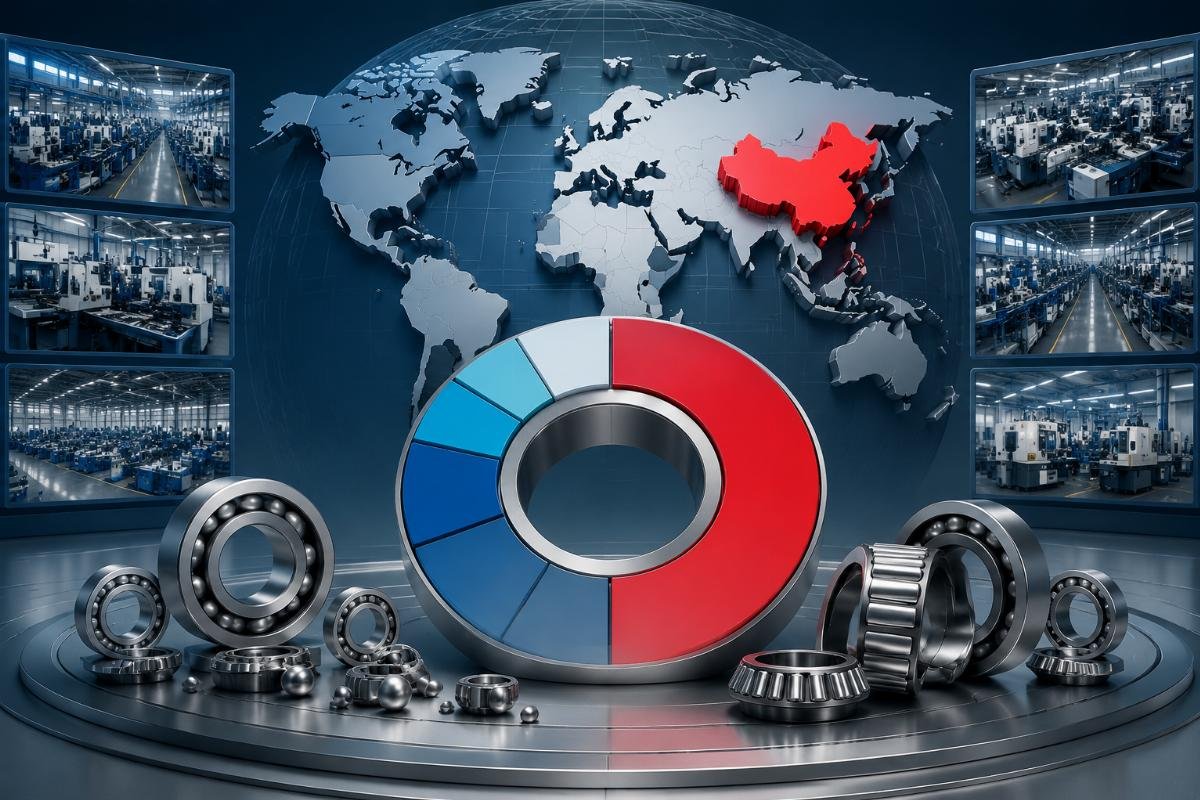
China now produces 45% of the world’s bearings—with faster delivery than US/EU competitors. This production capacity isn’t just about volume; it’s reshaping global supply chains through vertically integrated manufacturing and strategic inventory management. As 2026 brings continued uncertainty in steel prices and logistics costs, understanding the new sourcing equation becomes essential for procurement success.
| Market Factor | 2026 Industry Reality |
|---|---|
| Raw Material Costs | Steel and lubricants account for 35–40% of bearing production expenses [NEED_CITE: Bearing manufacturing cost breakdown study] |
| Production Capacity | China holds 45% global bearing manufacturing share, with specialized facilities for wind energy and mining applications |
| Delivery Cycles | Standard bearings from China suppliers reach global destinations 3–5 times faster than traditional欧美 suppliers |
| Demand Growth | Mining and wind energy sectors show 18% increased demand for large-diameter, corrosion-resistant bearings [NEED_CITE: Renewable energy bearing demand report] |
One of our clients, a 2000-employee steel mill in Southeast Asia, recently faced a critical轧机轴承 failure (SKF 22330CC/W33) that threatened 80万元 ($110,000) in daily production losses. Through our self-operated global warehouse network, we delivered 12 units within 48 hours—including full原厂溯源 documentation. This response prevented over $500,000 in downtime costs while demonstrating how China’s logistical infrastructure now matches its manufacturing prowess.
- Conduct Cost-Benefit Analysis – Compare emergency delivery costs against potential downtime losses for critical equipment
- Map Supplier Inventory Networks – Verify SKU coverage for your most frequently used bearing models (especially large-diameter types)
- Analyze Regional Price Trends – Track steel price indices and logistics costs to anticipate market fluctuations
- Evaluate Production Specializations – Identify suppliers with proven expertise in your industry’s unique bearing requirements
Can China Bearing Suppliers Truly Meet Industrial-Grade Quality Requirements?
Premium alternatives from China suppliers now match OEM specifications at 25–30% lower costs. The outdated perception that Chinese bearings can’t meet industrial standards is being disproven daily in applications ranging from wind turbine gearboxes to mining crushers. The critical distinction lies in supplier certification, material traceability, and engineering capabilities—not geographic origin.
| Quality Parameter | Common Misconception | Verified Reality |
|---|---|---|
| Material Quality | Chinese bearings use inferior steel | Top suppliers utilize GCr15SiMn and ASTM A295 certified alloys with full material traceability |
| Precision Standards | Only European brands meet P4/P5 tolerances | Certified Chinese manufacturers regularly achieve ±2μm dimensional accuracy for precision grades |
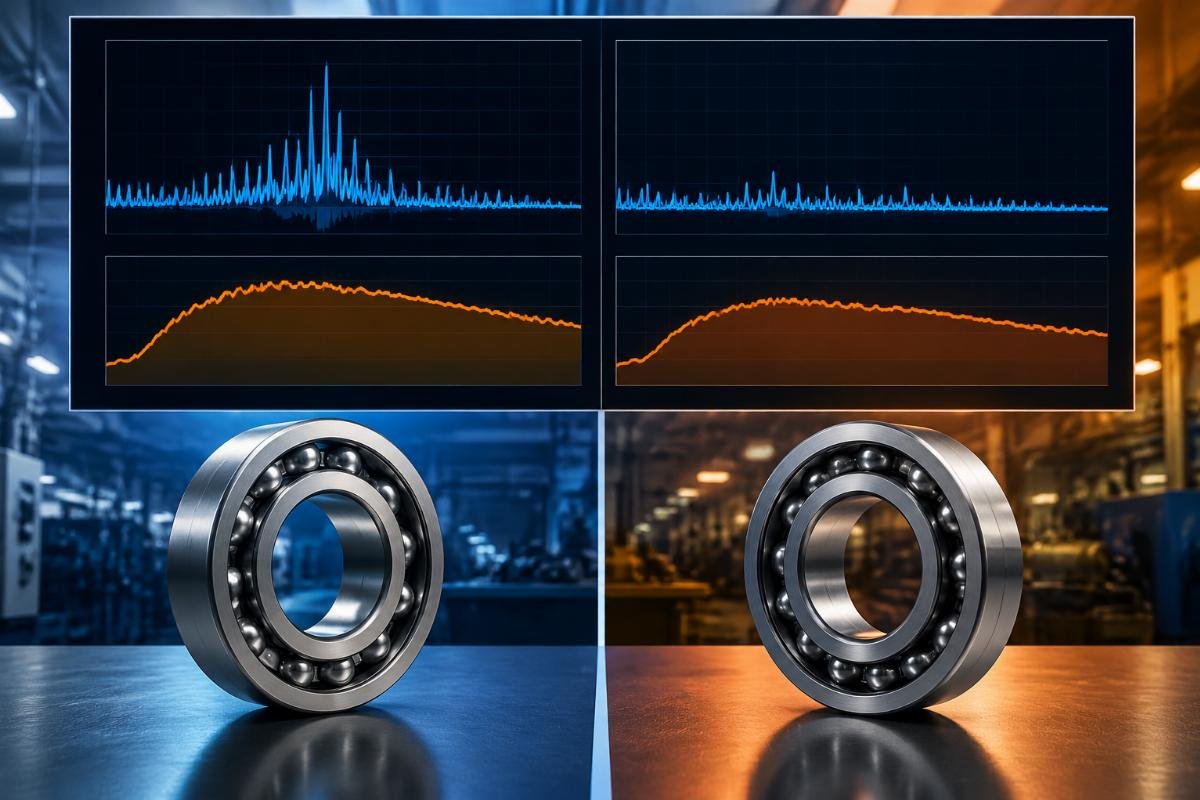
| Performance Testing | Alternative bearings lack durability data | Reputable suppliers provide fatigue life, vibration, and temperature rise test reports comparable to OEM standards |
| Industry Certifications | Chinese suppliers lack rigorous认证 | Leading facilities hold ISO 9001, IATF 16949, and sector-specific certifications like DNV for wind energy |
A European wind turbine manufacturer recently approached us with skepticism about replacing their imported main gearbox bearings. We supplied five custom P4级精度主轴 bearings (280mm ID × 420mm OD) with stainless steel construction and ceramic滚子, complete with DNV certification. After six months of operation, their performance data showed vibration levels (≤4.5 mm/s) and temperature rise (≤38°C) comparable to the original brand—at 30% lower cost. This success led to a 500-unit annual contract.
- Verify Material Certification – Request mill test reports and material composition analysis for critical applications
- Audit Quality Control Processes – Ensure suppliers maintain dimensional inspection protocols and anti-counterfeiting measures
- Review Industry-Specific Credentials – Confirm certifications relevant to your sector (IATF 16949 for automotive, DNV for marine)
- Request Performance Data – Ask for test reports on fatigue life, load capacity, and operating temperature ranges
- Conduct Sample Testing – Evaluate critical parameters like rotation precision and radial clearance before full deployment
What Are the Key Criteria for Selecting a 2026 Bearing Supplier?
Inventory depth and technical response matter more than price in volatile markets. As 2026 supply chains face continued disruption, procurement decisions must prioritize reliability, responsiveness, and engineering support over initial cost savings. The most successful buyers are developing partnerships with suppliers that offer comprehensive solutions rather than transactional relationships.
| Evaluation Factor | China Supplier Advantage | Ideal Application Scenario |
|---|---|---|
| Emergency Delivery | 72-hour dispatch for standard models via global warehousing | MRO maintenance with critical downtime risks |
| Custom Engineering | 4-week prototype development for non-standard designs | OEM new product development and specialized equipment |
| Failure Analysis | 95% accurate root cause identification with written reports | Mining and heavy industry with repeated bearing failures |
| Volume Flexibility | MOQ as low as 1 unit with phased delivery options | Distributors and project-based procurement |
A South American mining company struggling with 3-month bearing life in their copper ore crushers turned to us for a solution. Our engineering team analyzed the failure patterns and recommended upgrading to 230/630CA/W33 spherical roller bearings with enhanced cage design and improved lubrication channels. The result? Bearing life increased to 12+ months, reducing maintenance costs by 60% and eliminating production disruptions. This partnership now includes an annual framework agreement for 80 units with scheduled preventive replacement planning.

- Assess Inventory Coverage – Verify stock availability for your top 20 critical bearing models
- Evaluate Technical Support – Confirm access to bearing selection software and load calculation tools
- Review Custom Capabilities – Check lead times for non-standard dimensions and materials
- Analyze Logistics Network – Map warehouse locations and emergency shipping options
- Verify Documentation Systems – Ensure comprehensive traceability and certification packages
How Can Buyers Secure Reliable 2026 Bearing Supply from China?
A structured four-step process eliminates 80% of sourcing risks. Successful procurement in the 2026 bearing market requires more than price negotiation—it demands a strategic approach to supplier qualification, technical validation, and contingency planning. By following a systematic methodology, industrial buyers can transform China sourcing from a perceived risk into a competitive advantage.
| Implementation Step | Critical Success Criteria |
|---|---|
| Model Identification | Cross-reference verification using manufacturer part numbers and dimensional analysis |
| Supplier Qualification | ISO 9001/IATF 16949 certification, material traceability system, and quality control documentation |
| Sample Validation | Precision measurement (±2μm tolerance), material hardness testing (HRC 58 |

Written by
zhaikevip@gmail.com
Leave a Reply