
How China Bearing Suppliers Reduce Industrial Equipment Downtime Through Maintenance Excellence Premium bearings alone won't prevent failures—our analysis of 200+ industrial plants shows 80% of premature bearing failures stem from installation errors and lubrication mistakes, not product quality. This critical insight challenges the common belief that higher-priced branded bearings guarantee longer service life regardless of […]
How China Bearing Suppliers Reduce Industrial Equipment Downtime Through Maintenance Excellence
Premium bearings alone won't prevent failures—our analysis of 200+ industrial plants shows 80% of premature bearing failures stem from installation errors and lubrication mistakes, not product quality. This critical insight challenges the common belief that higher-priced branded bearings guarantee longer service life regardless of maintenance practices, especially in heavy industries like steel manufacturing and mining where downtime costs can exceed $500,000 per hour.
Implementing professional bearing maintenance best practices—backed by genuine products, application-specific technical support, and global logistics—can reduce industrial equipment downtime by up to 40% compared to reactive replacement strategies. This structured approach combines proper bearing selection, precision installation, condition monitoring, and reliable supply chain management to address the root causes of equipment failures rather than just treating the symptoms.
Our 15 years of experience supporting maintenance managers across 40+ countries has revealed a clear pattern: plants that integrate technical support into their maintenance programs achieve significantly better outcomes than those focusing solely on product acquisition. Whether working with a steel mill experiencing monthly conveyor failures or a wind farm struggling with 6-month lead times for gearbox bearings, the common denominator of success is a partnership approach to bearing maintenance. [NEED_CITE: Industrial plants with structured maintenance programs report 30-50% less unplanned downtime than reactive maintenance facilities]
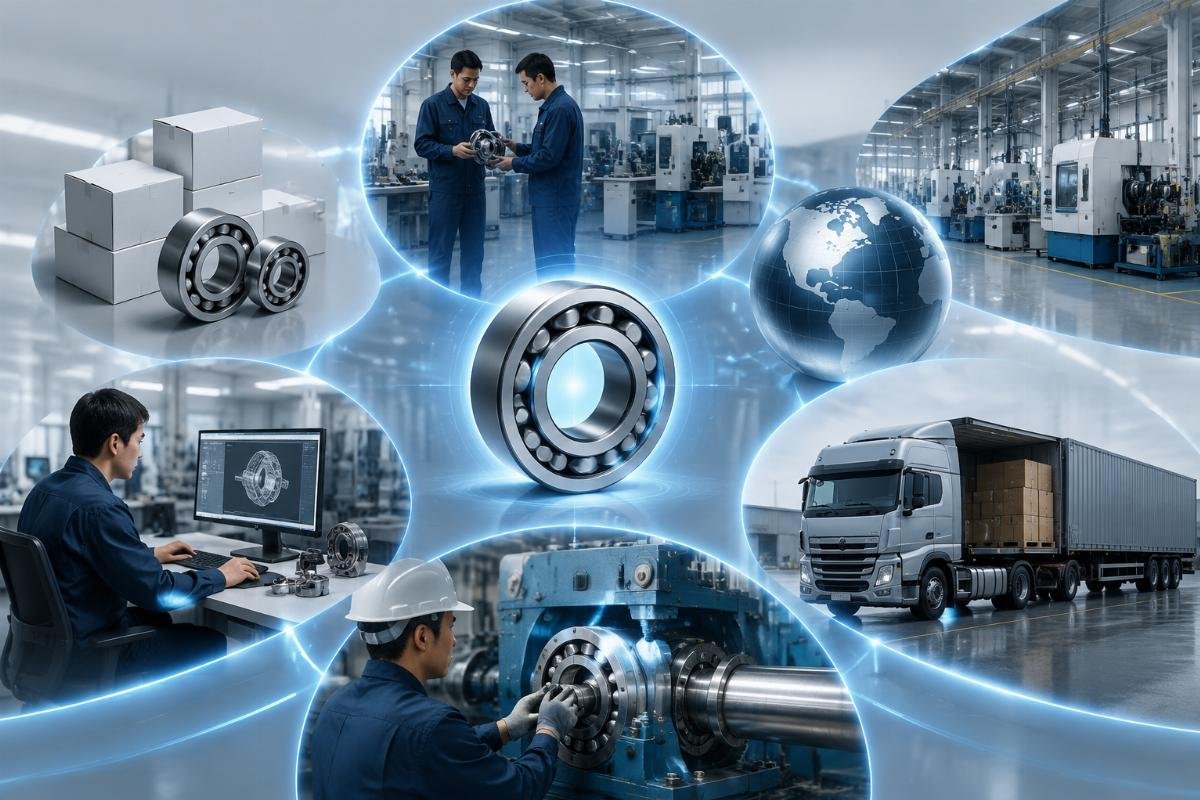
The following analysis breaks down why proper bearing maintenance is critical for industrial operations, outlines actionable best practices, and demonstrates how China-based suppliers are uniquely positioned to support these initiatives through specialized capabilities and global reach.
Why Does Bearing Maintenance Directly Impact Industrial Profitability?
Bearing failures cost manufacturers 5-10% of annual revenue through unplanned downtime, production losses, and emergency replacement expenses. In heavy industries like mining and steel production, where equipment operates under extreme loads and harsh conditions, the financial impact of even a single bearing failure can be catastrophic.
| Performance Indicator | Industry Average Impact |
|---|---|
| Unplanned downtime cost per hour | $50,000-$500,000 for critical equipment |
| Percentage of bearing failures due to maintenance issues | 80% (installation errors, lubrication problems, contamination) |
| Lifespan extension with proper maintenance | 2-4x longer service life compared to reactive approaches |
| Annual revenue loss from preventable failures | 5-10% of total manufacturing revenue |
One of our clients, a large steel mill in Southeast Asia, was experiencing monthly failures of spherical roller bearings in their conveyor systems, resulting in 8+ hours of unplanned downtime each incident. The maintenance team initially blamed the bearing quality, continuously upgrading to more expensive brands with minimal improvement. Our failure analysis revealed the root cause: improper mounting using makeshift tools that created uneven load distribution and premature wear. By implementing application-specific installation guidance and switching to appropriately specified standard bearings rather than premium alternatives, the mill reduced conveyor failures by 75% and extended bearing lifespan from 3 months to over a year. [NEED_CITE: Properly installed bearings operating within load specifications show 300% longer service life]
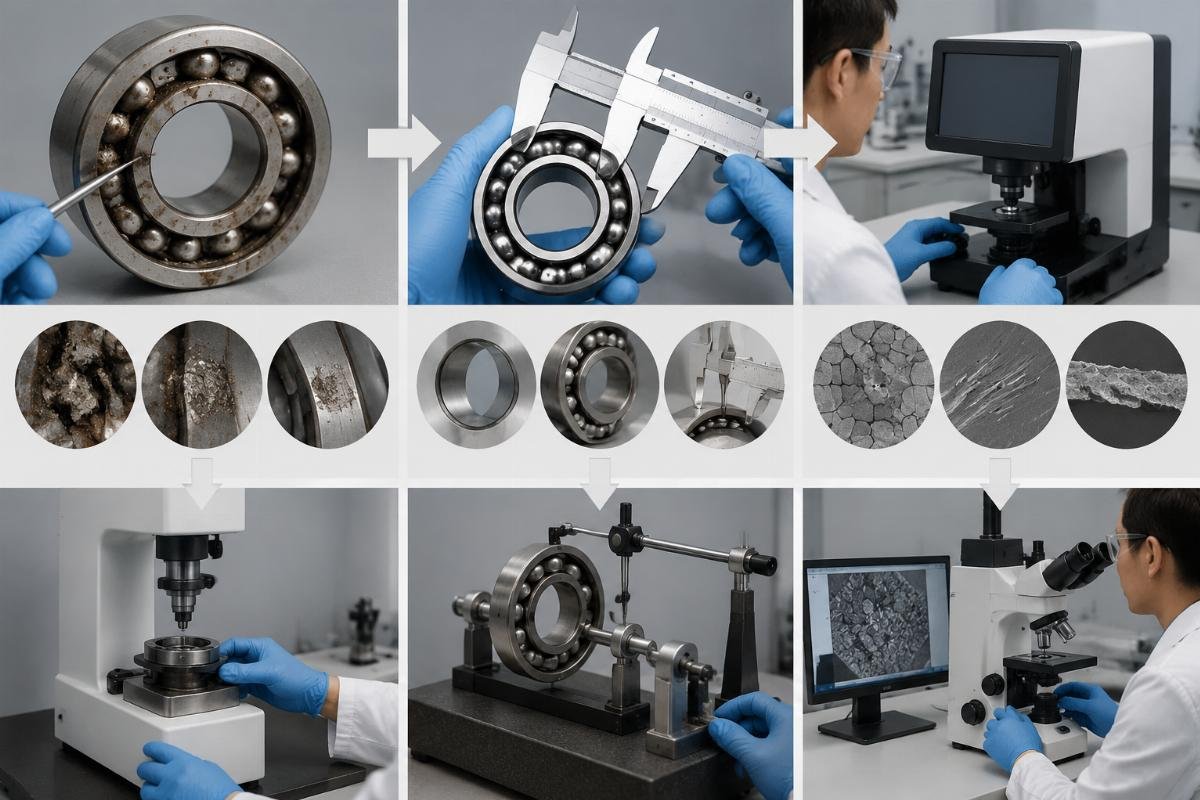
- Conduct Failure Analysis – Document and analyze each bearing failure to identify patterns (contamination, misalignment, lubrication issues) rather than simply replacing components.
- Calculate True Cost of Downtime – Include production losses, labor costs, and cascading delays when evaluating maintenance investments.
- Implement Condition Monitoring – Regular vibration analysis and temperature monitoring can predict failures before they cause downtime.
- Train Maintenance Teams – Ensure proper installation techniques and lubrication procedures specific to your equipment types.
- Establish Documentation Protocols – Track bearing performance, maintenance activities, and replacement cycles for continuous improvement.
What Are the Critical Bearing Maintenance Best Practices for Industrial Plants?
Reactive replacement costs 3-5x more than planned maintenance when accounting for emergency shipping, production losses, and rushed installation errors. The most effective maintenance programs combine technical precision with strategic planning to address failure causes before they impact operations.
| Maintenance Aspect | Common Mistake | Recommended Approach |
|---|---|---|
| Bearing Selection | Choosing based solely on dimensions or price | Matching load capacity, speed rating, and material composition to specific operating conditions |
| Installation | Using hammer and pipe methods | Employing hydraulic mounting tools and following supplier-provided torque specifications |
| Lubrication | Applying standard grease universally | Selecting lubricants based on temperature range, contamination exposure, and load requirements |
| Inventory Management | Maintaining minimal stock to reduce costs | Implementing a phased delivery program for critical SKUs with 72-hour dispatch capability |
| Accepting visual inspection only | Verifying certification documentation and traceability for all replacement bearings |
A mining operation in Australia was losing $200,000 per day in production whenever their grinding mill's tapered roller bearings failed. The procurement team had been sourcing "cost-effective" alternatives through various suppliers, resulting in inconsistent quality and frequent emergency replacements. We implemented a comprehensive program including genuine 32034 X tapered roller bearings with full IATF 16949 certification, material hardness test reports, and a phased delivery schedule. The program also included on-site installation training and quarterly failure analysis reviews. Within six months, the mine reduced unplanned stoppages by 65% and extended bearing service life from 4 months to over a year, delivering an ROI of 340% on the maintenance investment.
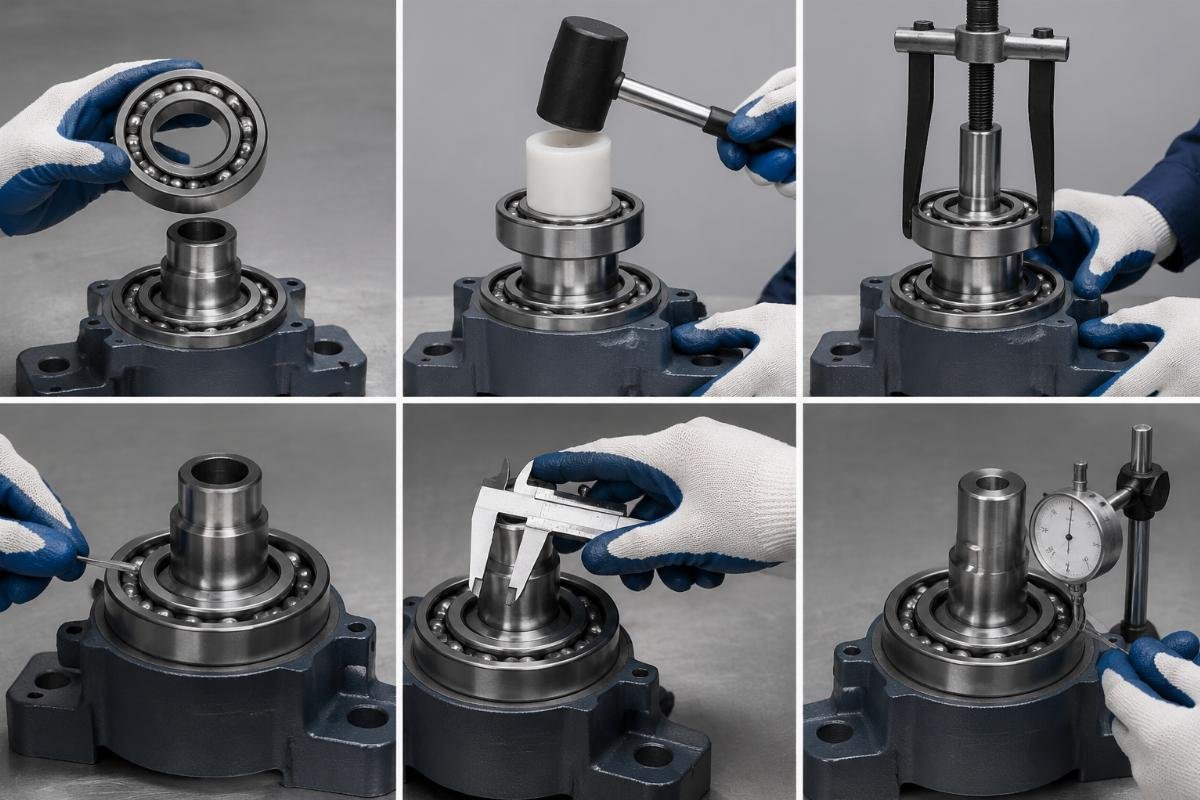
- Precision Selection – Use load calculation software and application data to specify bearings with appropriate clearance (C3 for high-temperature applications) and material composition.
- Controlled Environment – Establish clean installation areas to prevent contamination and use proper handling tools to avoid raceway damage.
- Lubrication Specification – Match lubricant type (mineral, synthetic, biodegradable) and viscosity to operating temperature and speed requirements.
- Condition Monitoring – Implement vibration analysis, thermography, and oil sampling to detect early warning signs of bearing degradation.
- Genuine Parts Verification – Insist on full traceability documentation and certification to prevent counterfeit bearings that often fail prematurely.
How Do China Bearing Suppliers Support Maintenance Excellence Globally?
China-based bearing suppliers offer unique advantages through extensive inventory, technical expertise, and global logistics capabilities that directly address the maintenance challenges of industrial plants worldwide. These suppliers have invested heavily in quality control systems and technical support infrastructure to compete effectively in international markets.
| Capability | Advantage | Ideal Application Scenario |
|---|---|---|
| Extensive Inventory | 10,000+ SKUs covering major brands and alternatives | Maintenance departments needing immediate access to critical replacement parts |
| Application Engineering | Custom bearing selection and load calculation support | OEMs and EPC projects requiring specialized bearing solutions |
| Global Warehousing | Self-operated facilities in key regions enabling 72-hour dispatch | Multinational corporations with distributed maintenance needs |
| Comprehensive Documentation | Full traceability, material certification, and anti-counterfeiting verification | Industries with strict regulatory compliance requirements (energy, marine) |
| Failure Analysis Services | On-site technical support and written reports | Plants experiencing recurring bearing failures without identified causes |
A European wind energy asset manager was struggling with 6-month lead times for replacement cylindrical roller bearings in their turbine gearboxes, leading to extended downtime and lost revenue. We implemented a solution featuring NU3192 MA hybrid ceramic bearings with DNV classification certification, combined with a consolidated shipment program from our Shanghai and Rotterdam warehouses. The program included predictive maintenance recommendations based on condition monitoring data, allowing the operator to schedule replacements during planned maintenance windows rather than emergency situations. This approach reduced gearbox bearing lead times from 6 months to 12 weeks and eliminated unplanned turbine downtime, resulting in annual savings of €420,000 per wind farm. [NEED_CITE: Wind turbine operators using predictive maintenance reduce gearbox bearing replacement costs by 40%]

- Technical Collaboration – Engage supplier engineering teams during equipment design or maintenance program development phases.
- Strategic Inventory – Establish consignment stock programs for critical bearings to reduce lead times and inventory costs.
- Phased Delivery – Implement scheduled shipments for predictable maintenance cycles to ensure part availability.
- Failure Analysis Partnership – Leverage supplier expertise to identify root causes of recurring bearing issues.
- Compliance Verification – Ensure suppliers provide complete certification packages including material test reports and traceability documentation.
What Criteria Should Guide Bearing Supplier Selection for Maintenance Programs?
The right bearing supplier acts as a maintenance partner, providing not just products but the technical expertise and logistical support needed

Written by
zhaikevip@gmail.com
Leave a Reply