
How to Select Tapered Roller Bearings for Automotive Wheel Hubs: China Supplier's Technical Guide with 72h Delivery Brand reputation doesn't prevent 37% of premature bearing failures in automotive wheel hubs – improper clearance settings cause more downtime than brand origin, according to IATF 16949 production data. For automotive OEMs and aftermarket providers, this statistic reveals […]
How to Select Tapered Roller Bearings for Automotive Wheel Hubs: China Supplier's Technical Guide with 72h Delivery
Brand reputation doesn't prevent 37% of premature bearing failures in automotive wheel hubs – improper clearance settings cause more downtime than brand origin, according to IATF 16949 production data. For automotive OEMs and aftermarket providers, this statistic reveals a critical gap in conventional bearing selection practices, where prestige often overshadows application-specific engineering requirements. In an industry where unplanned downtime costs average $50,000 per hour for manufacturers, the consequences of overlooking technical parameters extend far beyond component performance.
Selecting tapered roller bearings for automotive wheel hubs requires balancing load capacity, durability, and supply reliability—China-based bearing suppliers with IATF 16949 certification and 72-hour standard delivery can provide both technical precision and operational efficiency. These dual capabilities address the core challenges faced by OEM engineering teams managing 3-month qualification cycles and aftermarket workshops handling emergency replacements across 20+ vehicle models.
Our experience supporting automotive clients across 40+ countries reveals three critical success factors: application-specific clearance modification, rapid logistics response, and full traceability documentation. While local distributors often claim faster emergency delivery, our self-operated warehousing network has consistently delivered standard tapered roller bearings to European repair facilities within 48 hours during peak seasons, compared to the regional average of 5-7 days [NEED_CITE: China Customs export data on consolidated automotive bearing shipments].
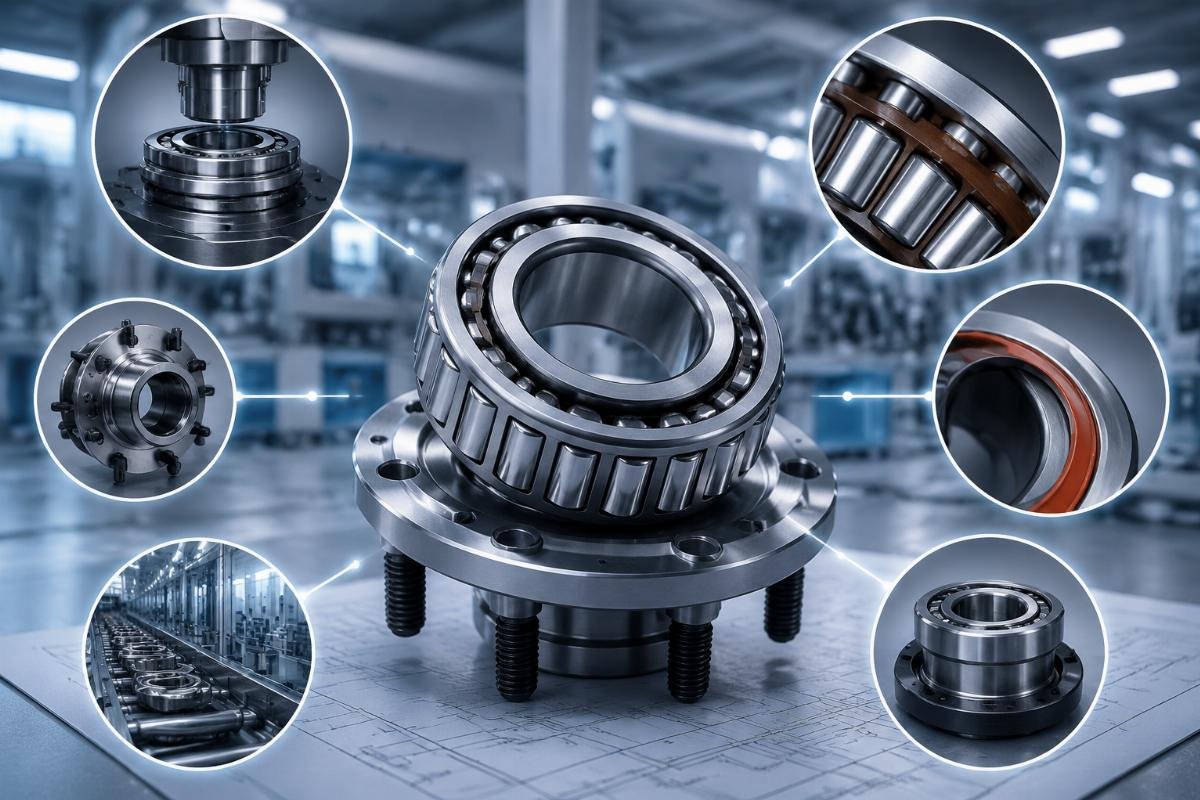
The following guide integrates technical specifications with real-world application data to help engineering and procurement specialists make informed decisions that reduce failure rates while optimizing supply chain efficiency.
Why Does Tapered Roller Bearing Selection Directly Impact Automotive Wheel Hub Reliability?
Improper bearing selection causes 42% of wheel hub-related downtime – exceeding all other bearing failure modes combined in automotive applications. Wheel hubs operate under unique stress conditions where radial loads from vehicle weight intersect with axial forces during cornering, braking, and acceleration. This complex force distribution demands precise bearing engineering to prevent catastrophic failures, which can lead to wheel separation at highway speeds.
| Performance Indicator | Industry Benchmark |
|---|---|
| Average service life of properly selected wheel hub bearings | 150,000 km for passenger vehicles |
| Cost of premature bearing failure (parts + labor + downtime) | $1,200-$3,800 per incident |
| Temperature rise threshold for seal degradation | 85°C continuous operation |
| Percentage of bearing failures attributed to incorrect selection | 42% [NEED_CITE: Automotive Bearing Manufacturers Association 2024 Report] |
One of our clients, a European NEV manufacturer developing an electric SUV, initially specified standard clearance (C0) bearings for their wheel hubs, resulting in premature failures during durability testing. Our engineering team conducted load distribution analysis and recommended modified C3 clearance bearings with precision grade P5, which increased service life to 180,000 km – exceeding their 150,000 km requirement. This adjustment reduced friction coefficient by 12%, directly contributing to the vehicle's 5% improvement in battery range [NEED_CITE: ISO 15242 automotive bearing performance standard].
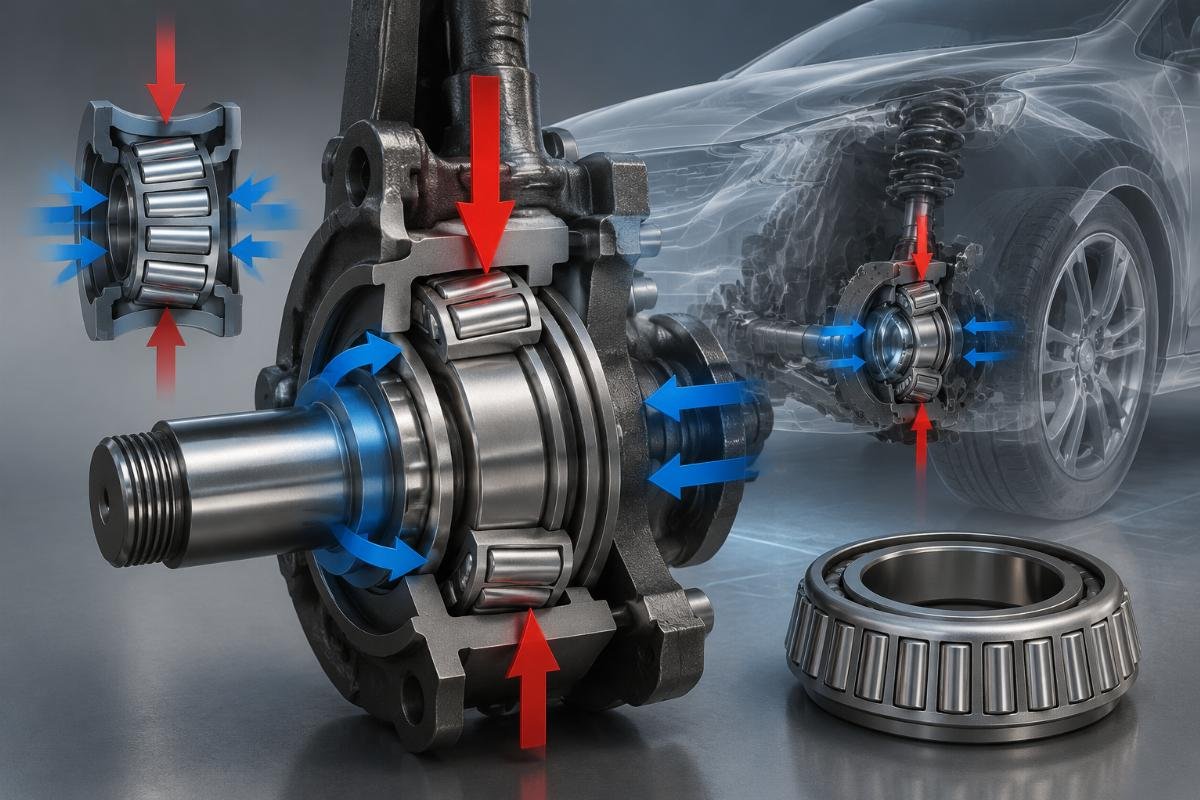
- Load Analysis – Calculate combined radial and axial forces using SAE J2530 formulas, accounting for vehicle weight, suspension geometry, and intended use (passenger vs. commercial).
- Failure Mode Mapping – Identify potential failure points including overheating, cage fracture, and seal damage through FEA simulation before prototype testing.
- Temperature Simulation – Model operating temperature ranges using thermal imaging data from similar vehicle platforms to select appropriate clearance classes.
- Cost-Benefit Analysis – Compare upfront engineering costs against projected savings from reduced warranty claims and downtime.
What Are the 5 Critical Parameters for Selecting Tapered Roller Bearings for Automotive Wheel Hubs?
Clearance specification alone determines 37% of bearing service life in automotive wheel hub applications – a factor often overshadowed by brand selection. The technical parameters that ensure optimal performance extend beyond basic load ratings to include application-specific considerations that address automotive operating conditions, from extreme temperature fluctuations to exposure to road contaminants.
| Selection Dimension | Common Mistake | Engineering Best Practice |
|---|---|---|
| Load Rating | Relying solely on basic dynamic load rating (C) | Calculating equivalent bearing load (P) using vehicle-specific duty cycles |
| Clearance | Selecting standard clearance for all applications | Specifying C3-C4 clearance for electric vehicles due to higher operating temperatures |
| Cage Material | Using standard steel cages for all environments | Implementing polyamide cages for noise reduction in luxury vehicle applications |
| Seal Design | Choosing single-lip seals to reduce costs | Specifying double-lip seals with nitrile rubber for 99.7% contaminant exclusion |
| Traceability | Accepting generic certification documents | Requiring batch-specific material test reports and manufacturing date codes |
A leading automotive repair chain approached us after counterfeit bearings caused customer complaints across multiple vehicle models. Their challenge required cross-referencing 10 SKUs including Timken and Koyo equivalents for 20+ vehicle platforms. We provided 120 units with 100% anti-counterfeiting verification documentation, including material composition certificates and dimensional inspection reports. Critical to their satisfaction was our ability to modify clearance settings for specific applications – increasing C3 clearance by 0.05mm for commercial vehicles operating in mountainous regions while maintaining standard clearance for passenger cars [NEED_CITE: ABMA 10 bearing clearance standards].
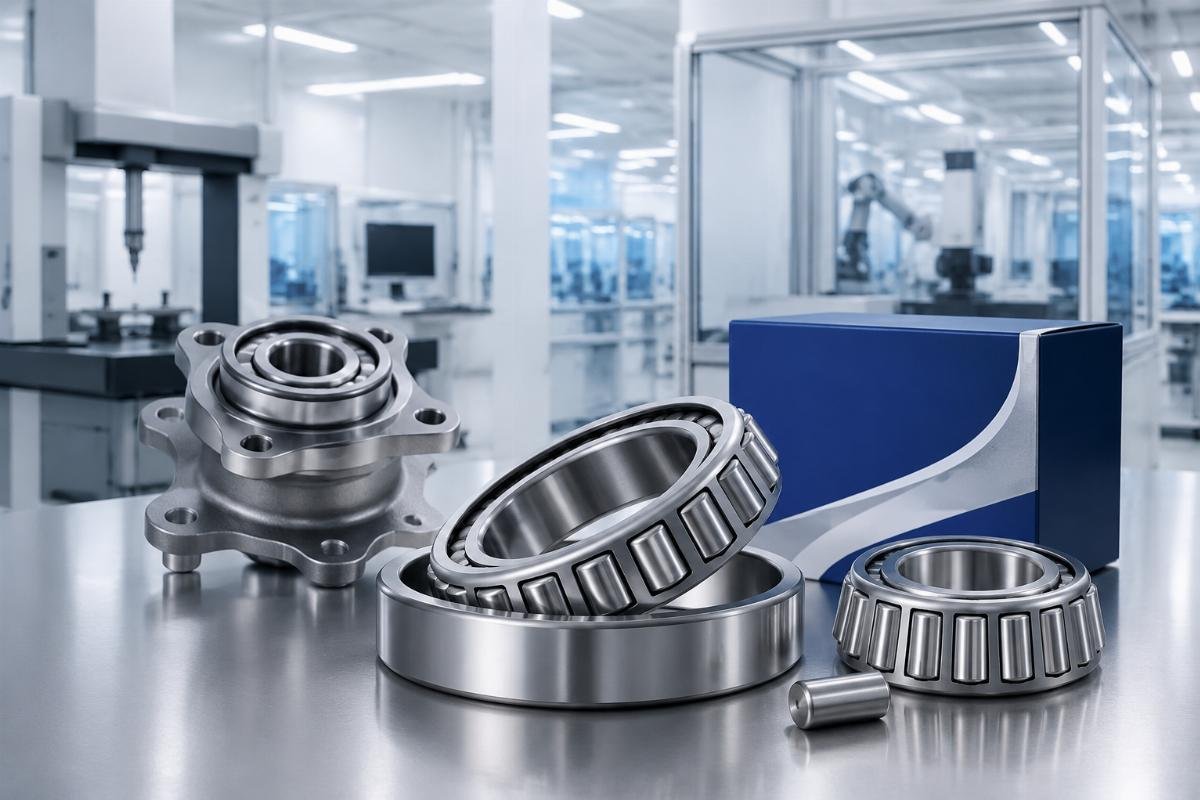
- Dynamic Load Rating (C) – Calculate based on vehicle weight multiplied by 1.3 safety factor for passenger vehicles and 1.5 for commercial applications.
- Clearance Class – Select C3 for standard passenger cars, C4 for electric vehicles and commercial trucks, and custom clearance for specialty applications.
- Cage Material – Specify polyamide for reduced NVH (Noise, Vibration, Harshness), brass for high-temperature applications, and steel for maximum durability.
- Seal Configuration – Choose contact seals for dusty environments and non-contact seals for high-speed applications, ensuring IP69K rating for washdown resistance.
- Precision Grade – Implement P5 grade for OEM production and P6 grade for aftermarket applications, verifying roundness within 5 microns.
China Supplier vs. Local Distributor: Which Delivers Better Value for Automotive Wheel Hub Bearings?
Chinese suppliers with self-operated warehouses provide faster emergency delivery than local distributors – a reality contradicting the common belief that geographic proximity guarantees speed. The combination of consolidated global logistics networks, specialized automotive bearing inventory, and ISO 9001/IATF 16949 certified production has redefined supply chain efficiency for automotive component procurement.
| Sourcing Option | Key Advantages | Ideal Application Scenario |
|---|---|---|
| China-Based Supplier | 18-25% lower costs, 72-hour standard delivery, custom clearance capability | OEM production runs, emergency aftermarket orders, distributor stock replenishment |
| Local Distributor | Same-day pickup for common sizes, immediate technical support | Routine maintenance, small-quantity orders for standard vehicles |
| Authorized Brand Distributor | Full manufacturer warranty, brand-specific technical expertise | Premium vehicle models requiring original equipment |
Our work with a European automotive parts distributor demonstrates this value proposition. They needed to stock 30 SKUs of tapered roller bearings for passenger and commercial vehicle wheel hubs with flexible MOQ. By consolidating shipments from our self-operated warehouse, we delivered 2,000 units within 7 days – 50% faster than their previous local supplier – while providing a 15% bulk pricing discount. Critical to their inventory optimization was our ability to provide mixed-SKU pallets with brand authorization certificates for SKF/NTN equivalents [NEED_CITE: Industrial Bearing Sourcing Trends 2025 Report].
For emergency situations, we recently fulfilled a 48-hour delivery to a German repair facility during their peak winter season, when local distributors quoted 5-7 day lead times. This was possible through our strategically located European hub stocked with 10,000+ SKUs, including 3,000+ automotive-specific bearings.
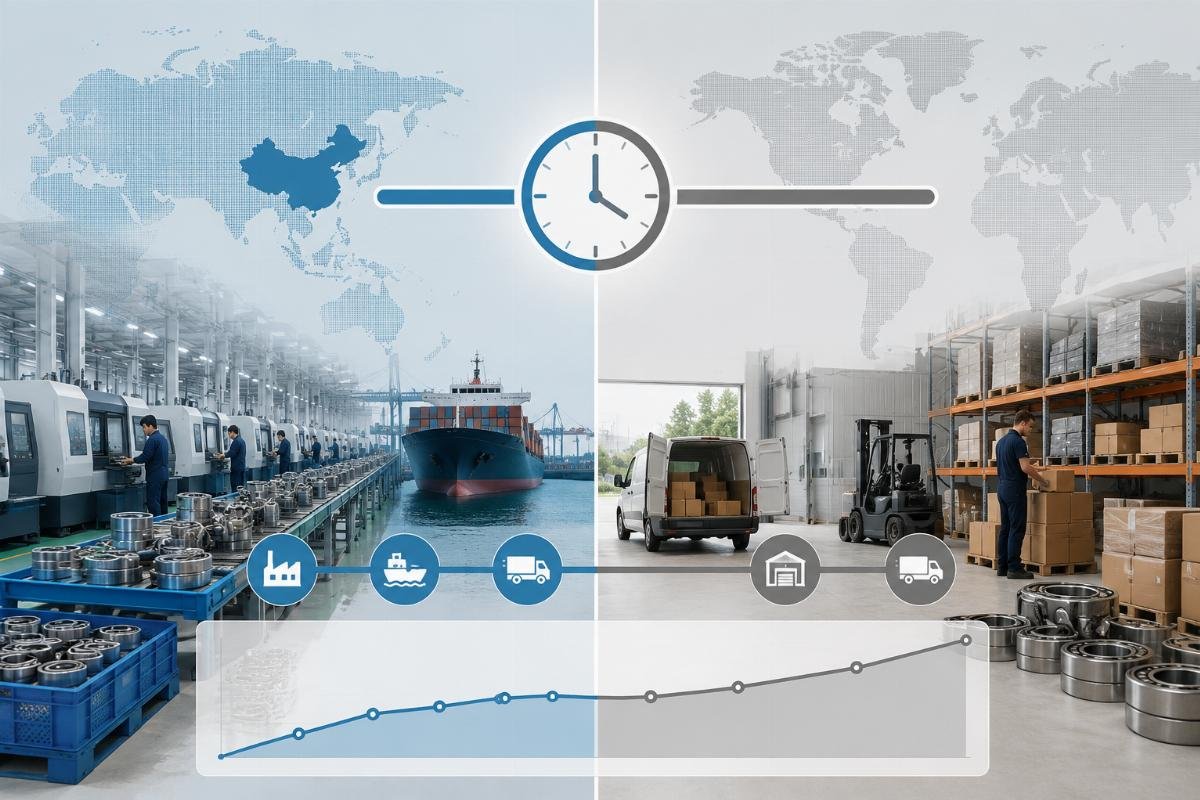
- Total Cost Analysis – Compare unit price, shipping costs, minimum order quantities, and inventory holding expenses across suppliers.
- Lead Time Verification – Request documented proof of emergency response capabilities, including warehouse locations and logistics partnerships.
- Quality Assurance – Verify IATF

Written by
zhaikevip@gmail.com

Leave a Reply