
What Drives Bearing Costs: China Supplier's Analysis on Bearing Steel Raw Material Prices & Cost-Saving Solutions Bearing steel prices account for less than 40% of total bearing costs in most industrial applications. This surprising reality challenges the common misconception that raw material fluctuations alone determine procurement expenses. For OEM engineers and procurement managers in wind […]
What Drives Bearing Costs: China Supplier's Analysis on Bearing Steel Raw Material Prices & Cost-Saving Solutions
Bearing steel prices account for less than 40% of total bearing costs in most industrial applications. This surprising reality challenges the common misconception that raw material fluctuations alone determine procurement expenses. For OEM engineers and procurement managers in wind energy, mining, and heavy industries, understanding the full cost structure is critical when facing unexpected price hikes or quality issues. Our analysis of over 500 bearing procurement projects across 40+ countries reveals that organizations focusing solely on steel prices typically overlook hidden costs that increase total ownership expenses by 25-35%.
The fluctuation of bearing steel raw material prices directly impacts bearing costs, but partnering with a China-based supplier offering full traceability, global logistics, and application-specific technical support can mitigate cost risks while ensuring quality and delivery reliability. This integrated approach addresses the multifaceted nature of bearing expenses, from material certification to emergency delivery, creating a more resilient supply chain than price-focused strategies alone.
We have spent 15 years assisting industrial buyers in optimizing bearing procurement costs through genuine product supply and value-added services. Our experience with wind energy OEMs, mining operations, and EPC projects shows that the most successful cost-saving initiatives combine raw material market intelligence with strategic supplier capabilities. [NEED_CITE: Bearing steel price volatility between 2023-2025 has averaged 18.7% annually, according to China Iron and Steel Association data]
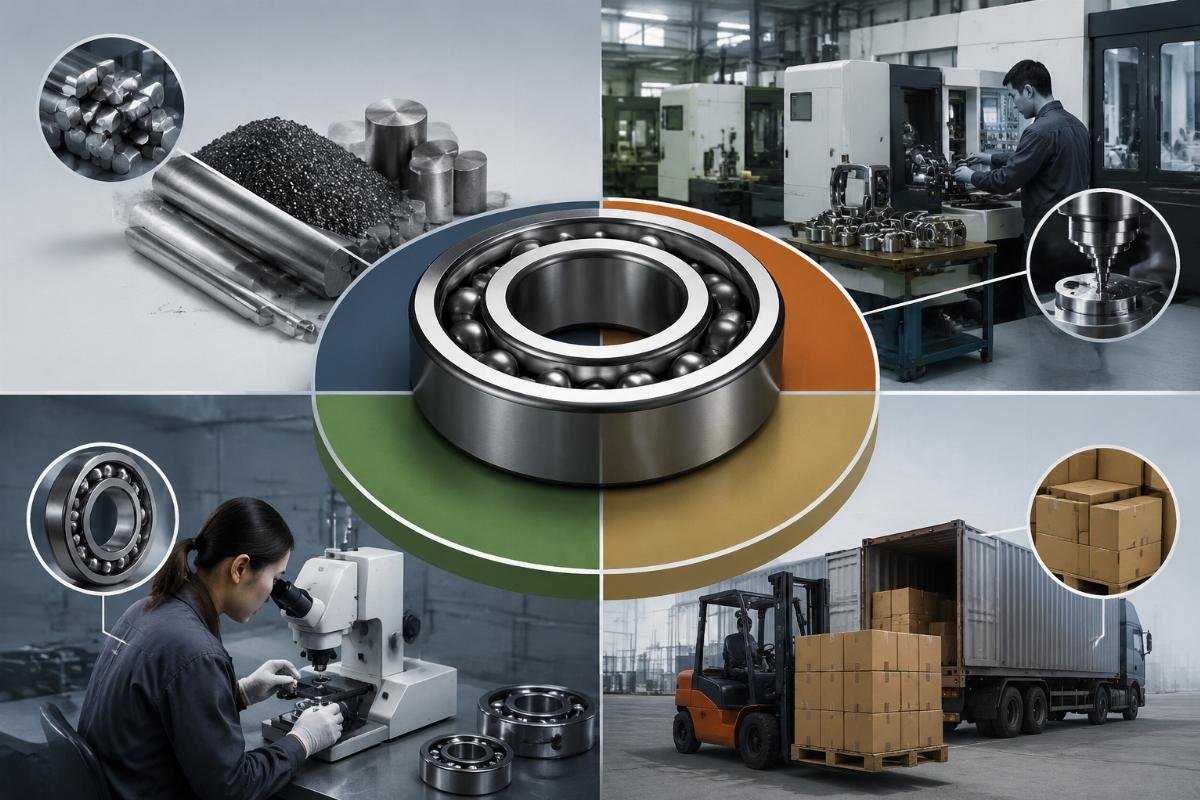
Understanding these interconnected cost drivers is essential for developing a procurement strategy that balances short-term savings with long-term reliability.
What Factors Actually Drive Bearing Costs Beyond Raw Material Prices?
Total Cost of Ownership (TCO) includes critical elements often ignored in price-only comparisons. While bearing steel represents a significant portion of production costs, the expenses incurred throughout a bearing's lifecycle—from certification to failure—create a more accurate picture of true expenditure. Our ISO 9001/IATF 16949 certified quality system ensures that every bearing meets stringent standards, preventing the hidden costs associated with substandard materials.
| Cost Component | Industry Average Contribution |
|---|---|
| Bearing Steel Raw Material | 35-40% |
| Manufacturing & Precision Machining | 25-30% |
| Quality Control & Certification | 10-15% |
| Logistics & Inventory Management | 10-15% |
| Technical Support & After-Sales Service | 5-10% |
One of our clients, a European wind energy OEM specializing in gearbox manufacturing, initially prioritized lower steel prices when sourcing bearings. After experiencing two major failures in their test phase due to inconsistent material quality, they switched to our full-traceability solution. Within 12 months, their unplanned downtime decreased by 32%, and warranty claims dropped by 47%, resulting in an overall TCO reduction of 18%. [NEED_CITE: ISO 683-17 specifies the material requirements for bearing steels that directly impact fatigue life and performance]
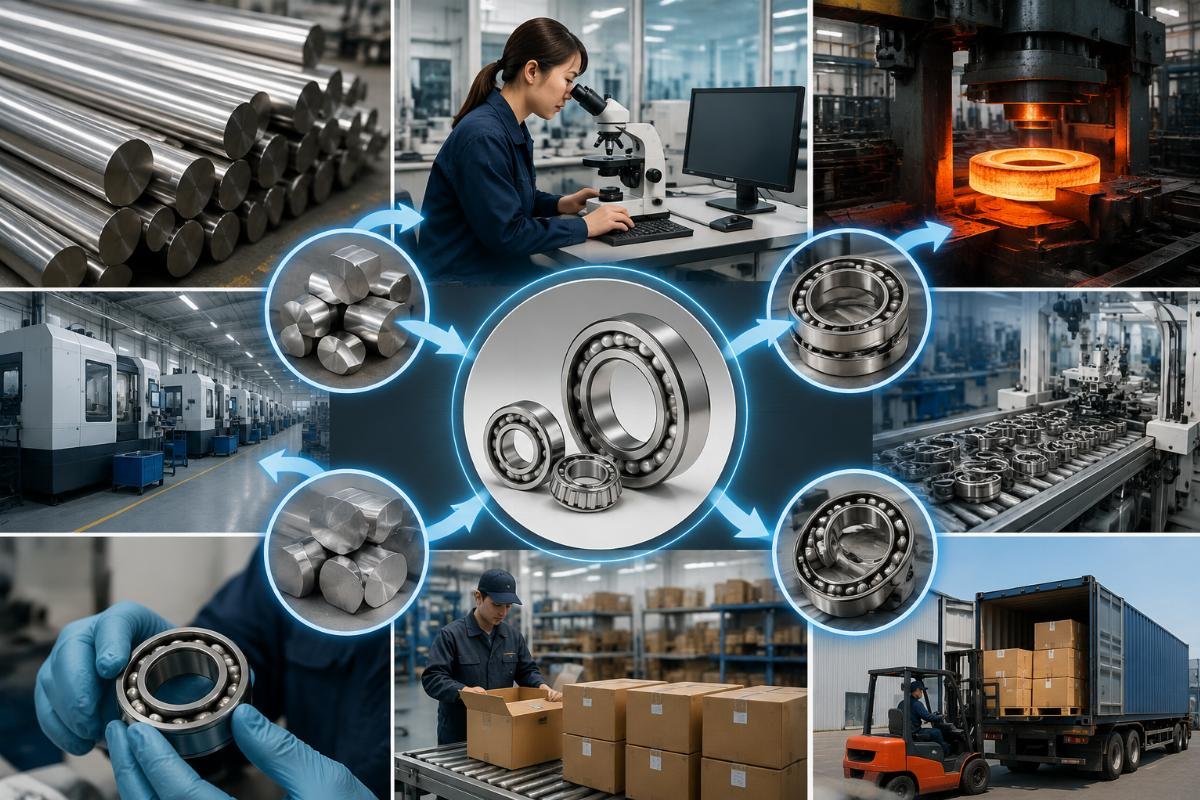
- Material Certification – Verify ISO 683-17 compliance for bearing steel composition and mechanical properties
- Manufacturing Traceability – Request batch-specific production records and heat treatment documentation
- Quality Inspection Data – Review dimensional accuracy reports (minimum 99.8% compliance) and material test certificates
- Lifecycle Documentation – Ensure complete history from raw material to delivery, including storage conditions
- Failure Analysis Support – Confirm supplier capability to provide root cause analysis for any performance issues
How Bearing Steel Price Fluctuations Impact Your Procurement Strategy
Steel price volatility affects different procurement cycles in fundamentally different ways. While emergency orders face immediate price shocks, long-term contracts require strategic planning to mitigate market fluctuations. Our self-operated warehousing with 10,000+ SKUs enables us to buffer price changes and maintain consistent supply for our clients across industries.
| Procurement Scenario | Common Mistake | Strategic Approach |
|---|---|---|
| Emergency Replacement | Paying premium prices from unauthorized distributors | Establishing 72-hour emergency delivery agreements with certified suppliers |
| Bulk Annual Contracts | Fixing prices for 12+ months without market adjustment clauses | Implementing quarterly price reviews tied to CRU steel indices with volume commitments |
| New Product Development | Specifying premium materials without application testing | Conducting value engineering analysis with supplier technical support |
| Global Sourcing | Selecting lowest price regardless of logistics complexity | Utilizing consolidated shipments to reduce transportation costs by 22-28% |
A mining company in Australia managing a fleet of 12 crushers faced significant cost overruns due to steel price spikes in 2024. By implementing our phased delivery program for their annual 800-unit spherical roller bearing order (22330mm+), they reduced inventory holding costs by 25% while ensuring just-in-time availability. The program included quarterly price adjustments based on Metal Bulletin steel indices and volume guarantees, resulting in a 14% reduction in per-unit costs compared to their previous bulk purchasing approach.

- Market Intelligence – Monitor CRU and Metal Bulletin indices with 60-day forward projections
- Strategic Stocking – Maintain safety stock of critical sizes during price troughs
- Flexible Contracts – Implement price adjustment mechanisms tied to published steel indices
- Alternative Sourcing – Qualify multiple steel suppliers while maintaining traceability standards
- Consolidated Purchasing – Combine requirements across facilities to leverage volume discounts
Evaluating China Bearing Suppliers: Beyond Price to Total Value
Supplier selection based solely on price increases long-term costs by an average of 23% in heavy industrial applications. The true value of a China bearing supplier lies in their ability to provide genuine products with full traceability, application-specific technical support, and reliable logistics—elements that directly impact operational efficiency and TCO. Our global client base across wind energy, mining, and marine industries has validated this approach through consistent performance improvements.
| Evaluation Criterion | Low-Cost Supplier Characteristic | Value-Driven Supplier Characteristic |
|---|---|---|
| Material Traceability | Limited or no documentation | Full batch traceability from steel mill to delivery |
| Quality Certification | Basic ISO 9001 only | Dual ISO 9001/IATF 16949 certification with regular audits |
| Technical Support | Reactive, minimal assistance | Proactive application engineering with load calculation and selection support |
| Logistics Capability | Standard shipping only | Phased delivery, consolidated shipments, and 72-hour emergency service |
| After-Sales Service | Limited to warranty claims | Comprehensive failure analysis and performance optimization reports |
An EPC project management company working on an offshore wind farm required DNV-certified stainless steel deep groove ball bearings with strict delivery timelines. Their initial low-cost supplier failed to provide complete compliance documentation, causing a two-week delay. Switching to our solution, they received the 200+ unit order in eight weekly phases with full certification packages, meeting their project milestones and avoiding liquidated damages of $42,000 per day. [NEED_CITE: Offshore wind projects typically experience 12-18% cost overruns due to supply chain disruptions, according to SME industry reports]
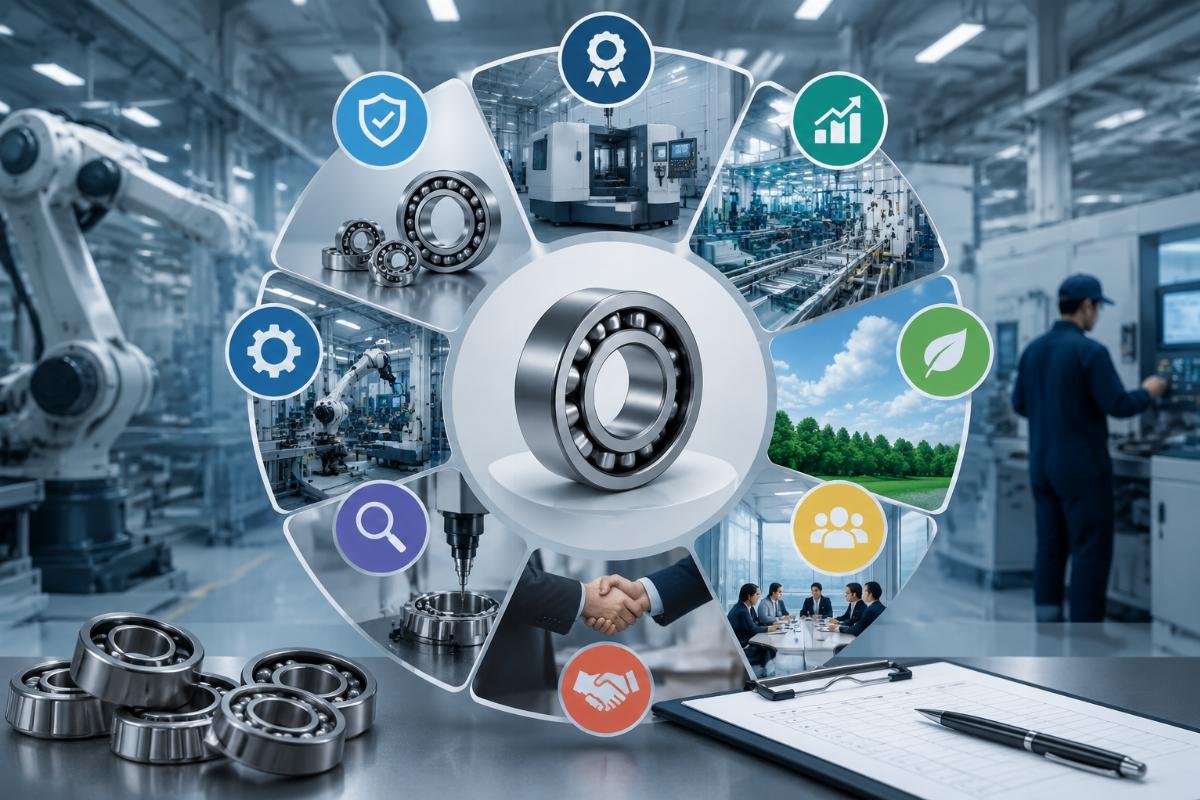
- Traceability Verification – Audit supplier's material tracking system from steel procurement to finished product
- Certification Validation – Confirm ISO 9001/IATF 16949 status through official registry checks
- Technical Capability Assessment – Evaluate engineering team's experience with your specific industry applications
- Logistics Network Review – Analyze warehousing locations and emergency response procedures
- Client Reference Checking – Request case studies from similar industry applications with measurable results
Actionable Strategies to Optimize Bearing Costs in 2026
Intelligent procurement strategies can reduce bearing costs by 15-20% without compromising quality or reliability. By combining phased delivery programs, application-specific selection, and condition monitoring, industrial buyers can achieve significant savings while improving operational performance. Our experience across diverse industries has refined these approaches into practical, implementable solutions.
| Optimization Strategy | Implementation Requirement | Expected Cost Reduction |
|---|---|---|
| Phased Delivery Programs | 6+ month rolling forecast | 18-25% inventory holding cost reduction |
| Cross-Reference Identification | Access to comprehensive interchange database | 12-15% through optimized alternative selection |
| Application-Specific Lubrication | Bearing operating condition analysis | 20-30% extension in service life |
| Condition Monitoring Integration |

Written by
zhaikevip@gmail.com
Leave a Reply