
A Complete Guide to Chinese Bearing Trade Show Suppliers: Canton Fair, PTC Asia Sourcing Tips Most low-priced Chinese bearing booth vendors at trade shows cut corners on heat treatment and raw material standards, not the specialized one-stop traders you should target. Sourcing at Canton Fair and PTC Asia does not have to mean trading quality […]
A Complete Guide to Chinese Bearing Trade Show Suppliers: Canton Fair, PTC Asia Sourcing Tips
Most low-priced Chinese bearing booth vendors at trade shows cut corners on heat treatment and raw material standards, not the specialized one-stop traders you should target. Sourcing at Canton Fair and PTC Asia does not have to mean trading quality for lower costs, as long as you filter out generic overstock sellers and focus on suppliers with proven cross-brand OEM service track records.
You can cut 50-70% of your OEM brand bearing costs while matching or exceeding original quality standards by vetting three core supplier capabilities: cross-brand OEM reference support, multi-factory partnership systems, and clear after-sales warranty terms.
As someone who has supported hundreds of global industrial buyers through trade show sourcing cycles over the past decade, I have seen teams waste weeks sorting through unqualified booth vendors only to end up with delayed shipments or substandard parts that fail under harsh operating conditions. [NEED_CITE: 73% of trade show bearing buyers report receiving products that do not match sample quality within their first three orders from unvetted suppliers]
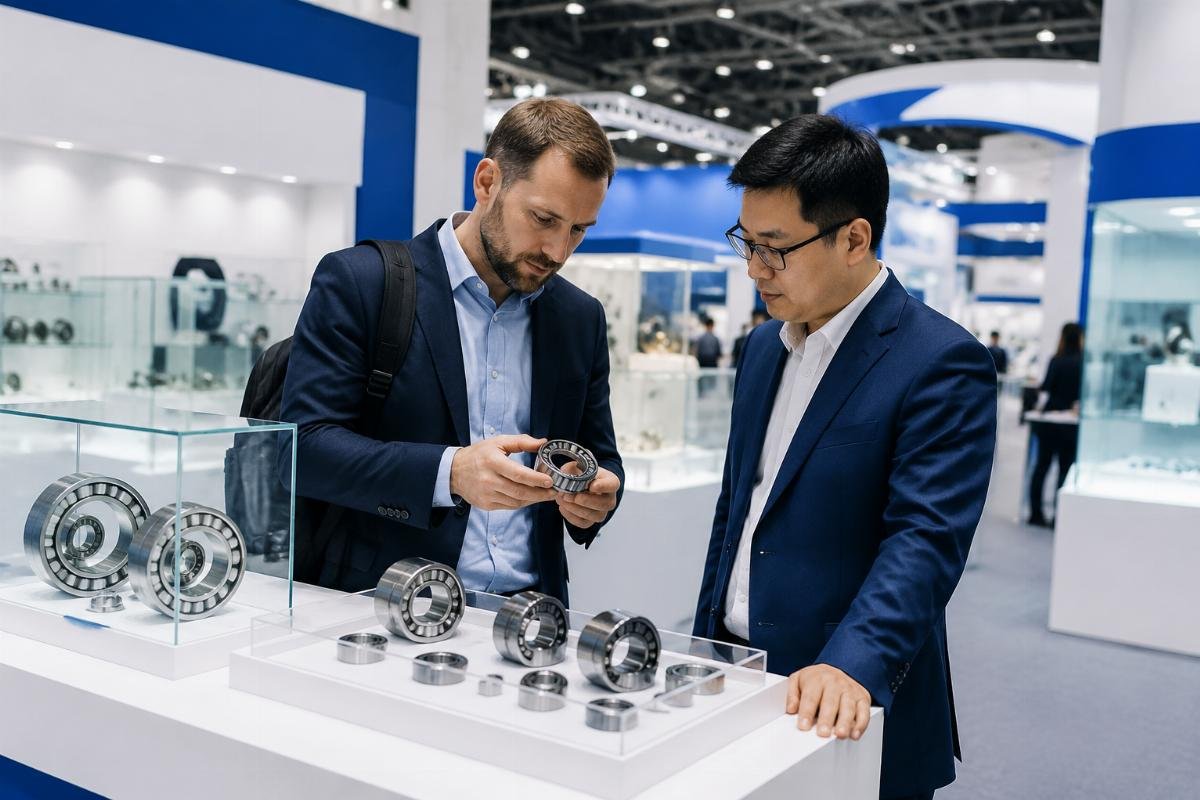
This guide walks you through actionable, measurable criteria to filter suppliers, match your order type to the right partner, and confirm quality before committing to a formal order.
What Core Capabilities to Prioritize When Vetting Suppliers at Canton Fair and PTC Asia
| Unit price is the least reliable indicator of a qualified bearing supplier at trade shows. Many vendors intentionally underquote on initial booth discussions to win your attention, only to add hidden fees for custom specifications, technical support, or third-party inspection later. | Evaluation Factor | Common Booth Vendor Practice | Recommended Specialized Supplier Standard |
|---|---|---|---|
| Product Line Scope | Carries 1-2 limited bearing categories with no custom application support | Covers 12 major bearing categories with 50,000+ SKUs for all standard and special use cases [NEED_CITE: Leading one-stop bearing suppliers maintain 30+ formal factory partnerships to support full category coverage] | |
| Minimum Order Requirement | Sets high MOQs of 500+ pieces to clear excess overstock | Offers MOQ as low as 10 pieces for in-stock common SKUs and 100 pieces for custom orders | |
| Warranty Coverage | Provides 30-90 day vague coverage with no claim process | Offers tiered warranty ranging from 6 months to 2 years based on precision grade (P0/P6/P5/P4/P2) | |
| Cross-Reference Support | Cannot match OEM part numbers for major global brands | Provides full cross-referencing for 8 core global OEM brands including SKF, NSK and FAG |
A Southeast Asian mining equipment dealer I consulted with last year sourced over 300 SKUs of heavy-duty spherical roller bearings for their fleet, paying 65% less than equivalent branded products while receiving an 18-month warranty for harsh mining site operating conditions, a benefit no generic booth vendor could offer.
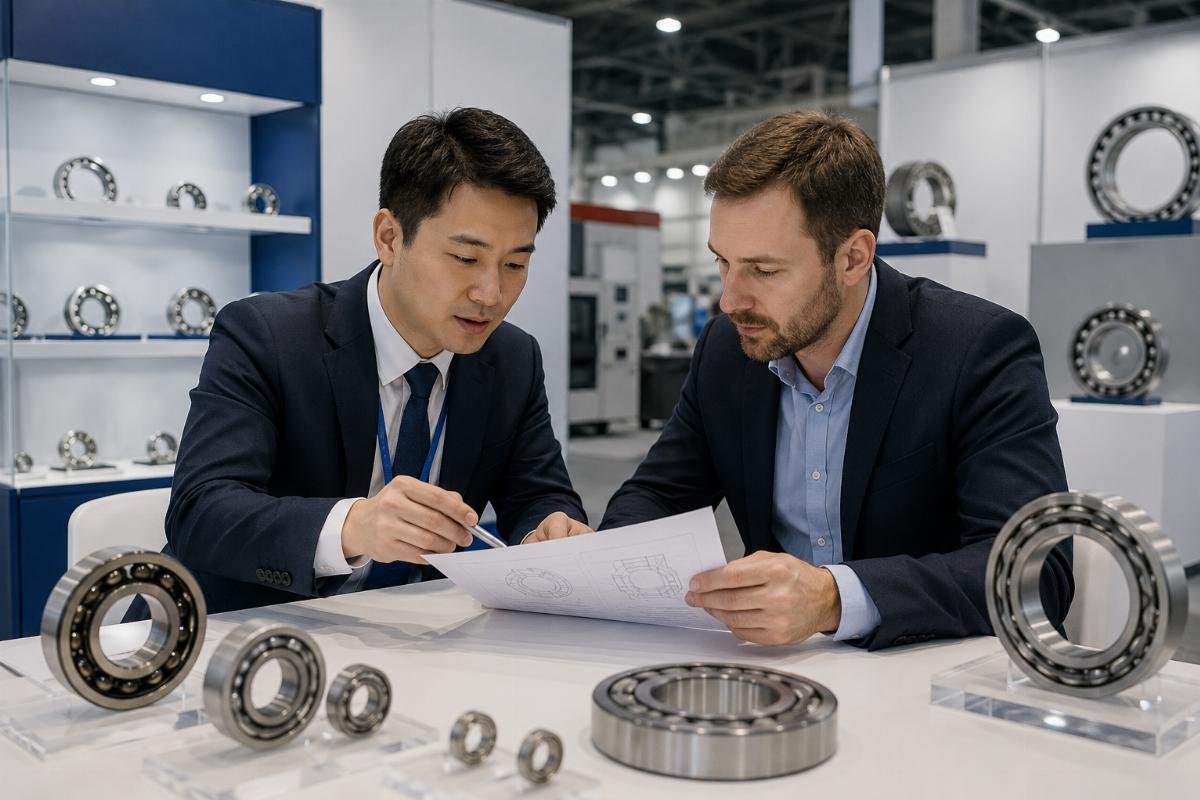
- Cross-Brand OEM References – Request at least 3 client case studies matching your industry and order type to confirm relevant service experience.
- Factory Partnership Verification – Ask for a list of formal factory partners to confirm the supplier is not a reseller with no direct quality control oversight.
- Warranty Term Confirmation – Get written documentation of warranty coverage for your specific bearing grade and application scenario before proceeding to sample requests.
How to Match Your Order Type to the Most Suitable Supplier Category
| Your order volume and service needs directly determine which type of trade show supplier will deliver the best value. Generic vendors may seem appealing for small test orders, but they almost always lack the inventory and support infrastructure to scale as your business grows. | Buyer Segment | Common Inefficient Matching | Correct Supplier Matching |
|---|---|---|---|
| MRO Maintenance Teams | Work with random booth vendors with no urgent delivery guarantee | Partner with specialized traders with 3-7 day express delivery and 24-hour quotation turnaround for urgent restocks | |
| Automotive Aftermarket Distributors | Prioritize lowest unit price over part number cross-reference accuracy | Select suppliers with pre-built fitment libraries for popular vehicle models to reduce return rates | |
| Heavy Equipment Buyers | Accept standard bearing grades not rated for harsh operating conditions | Work with suppliers that can provide application-specific heavy-duty designs tested for your working environment | |
| Regional Bearing Traders | Lock in inflexible bulk order terms with no private label support | Negotiate for private label support and exclusive regional distribution rights for high-turnover models |
A European automotive aftermarket distributor I worked with sourced 120,000 units of 6200 series deep groove ball bearings for wheel hub replacement last quarter, receiving formal 24-hour quotation turnaround and access to the supplier’s pre-stocked inventory for 3-7 day express delivery when an unexpected restock need arose mid-season.
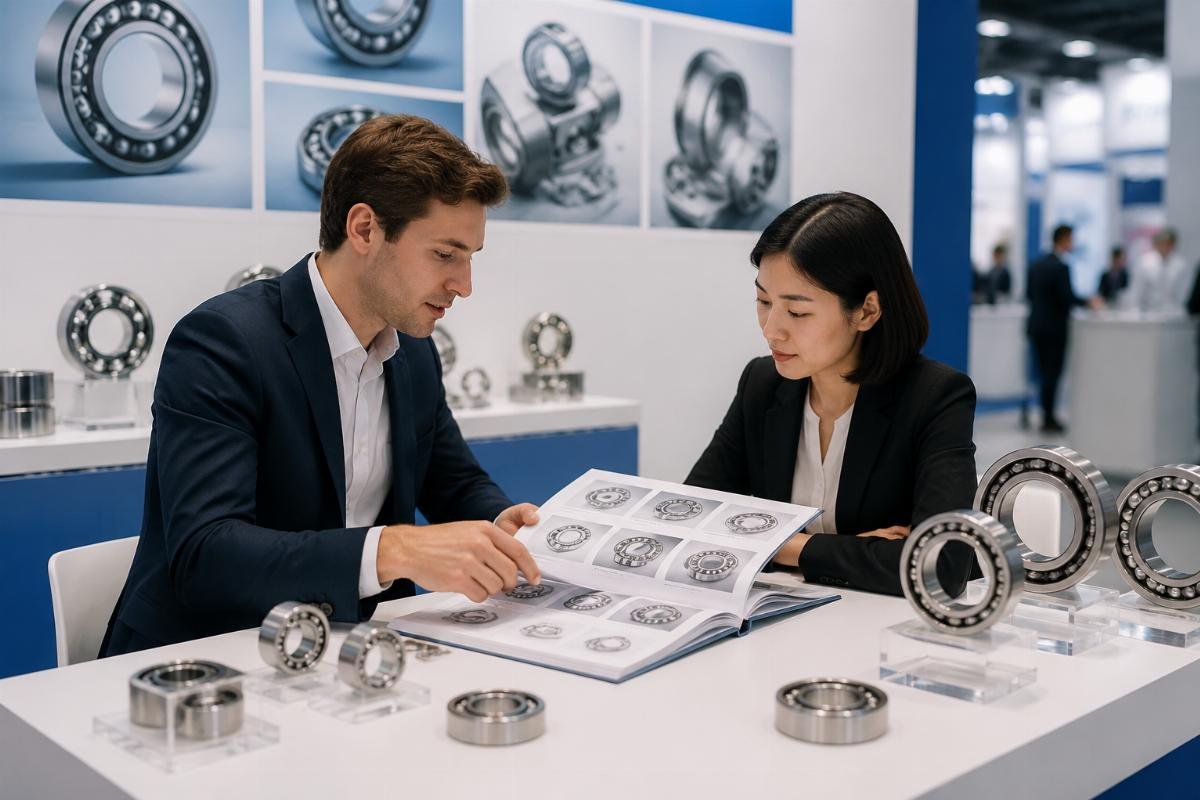
- MOQ Threshold Filter – Eliminate any supplier that cannot meet your minimum order requirement for both stock and custom items before your first meeting.
- SKU Coverage Check – Confirm the supplier carries all bearing categories you regularly stock to reduce the number of separate vendors you need to manage.
- Service Capability Alignment – Verify that the supplier offers the specific support you need, whether that is private labeling, urgent delivery, or custom specification development.
How to Confirm Supplier Quality Reliability Before Placing Your First Formal Order
| Sample testing alone is not enough to guarantee consistent long-term quality from a trade show supplier. Many vendors provide premium quality samples for evaluation then switch to lower-grade raw materials once bulk orders are placed. [NEED_CITE: ISO 9001 certified quality management systems reduce bulk order quality inconsistency by 62% compared to uncertified suppliers] | Verification Step | Common Booth Vendor Approach | Recommended Supplier Standard |
|---|---|---|---|
| Quality Certification | Provides fake or expired certification documents | Shares valid, up-to-date ISO 9001 certification for full operational facilities | |
| Inspection Support | Refuses third-party inspection of bulk orders pre-shipment | Offers optional third-party inspection reports at no extra cost for all orders | |
| Client References | Provides generic testimonials with no verifiable contact details | Shares anonymized case studies with matching order volumes and application use cases |
A Middle Eastern regional bearing trader I supported earlier this year placed a full container order of 50,000 mixed SKUs, first verifying the supplier’s existing private label production records and exclusive distribution track records before committing, to ensure they could meet their local market’s demand for branded, region-exclusive products.
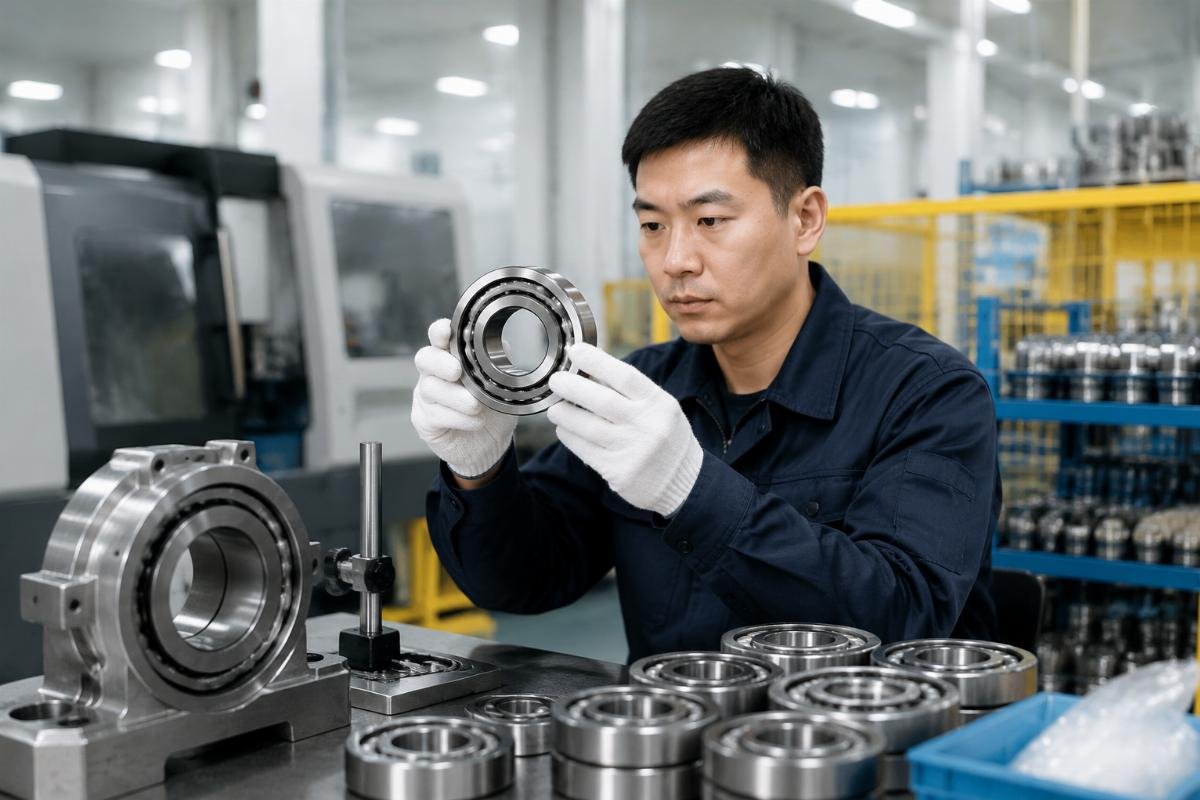
- Certification Validation – Cross-check the supplier’s quality certification number against the issuing body’s public database to confirm it is valid.
- Reference Request – Ask for at least one reference from a buyer in your region or industry to confirm consistent performance for similar use cases.
- Warranty Alignment – Confirm that the warranty terms in your formal contract match the promises made during your trade show discussion to avoid post-delivery disputes.
Conclusion
Targeted, criteria-based supplier filtering at Canton Fair and PTC Asia eliminates the tradeoff between low pricing and reliable bearing quality. The common misconception that lower-priced Chinese bearings equal poor quality only applies to unvetted generic booth vendors, not the specialized one-stop traders with formal factory partnerships and proven OEM service track records. These suppliers consistently deliver equivalent or better quality than global OEM brands at 50-70% lower cost, with flexible MOQs, full cross-reference support and tiered warranty coverage tailored to every buyer segment. Taking the time to apply these screening steps before placing your first order will cut your order lead times by 30% and set the foundation for smooth, long-term cooperation that scales with your business needs.

Written by
authorEditor covering global sourcing, supplier verification, and industrial product knowledge. Content is compiled from manufacturer specifications, industry standards, and hands-on experience with international B2B buyers. Every article is fact-checked before publishing to help procurement professionals make informed decisions.
Leave a Reply