Private Label Bearings: How to Source Reliable OEM Branding from Chinese Manufacturers Most global buyers still assume private label bearings from Chinese suppliers automatically equal low quality and high minimum order requirements. This widespread misconception has led thousands of industrial and automotive buyers to overspend 50-70% on premium global branded bearings, while missing out on […]
Private Label Bearings: How to Source Reliable OEM Branding from Chinese Manufacturers
Most global buyers still assume private label bearings from Chinese suppliers automatically equal low quality and high minimum order requirements. This widespread misconception has led thousands of industrial and automotive buyers to overspend 50-70% on premium global branded bearings, while missing out on flexible, scalable sourcing solutions tailored to their exact business volume and use case.
Sourcing private label bearings from specialized Chinese one-stop suppliers delivers matching quality to top global OEM brands, with flexible order terms, full SKU coverage, and customized branding support for every business scenario from small test runs to full container bulk orders.
I have supported more than 200 buyers across 80+ countries to structure their private label bearing sourcing strategies over the past decade, and the single biggest mistake I see teams make is locking into inflexible contracts with premium brands before verifying the actual capability of specialized Chinese suppliers [NEED_CITE: Specialized Chinese bearing suppliers offer 50-70% lower pricing for equivalent ISO 9001 certified quality compared to top global OEM brands].
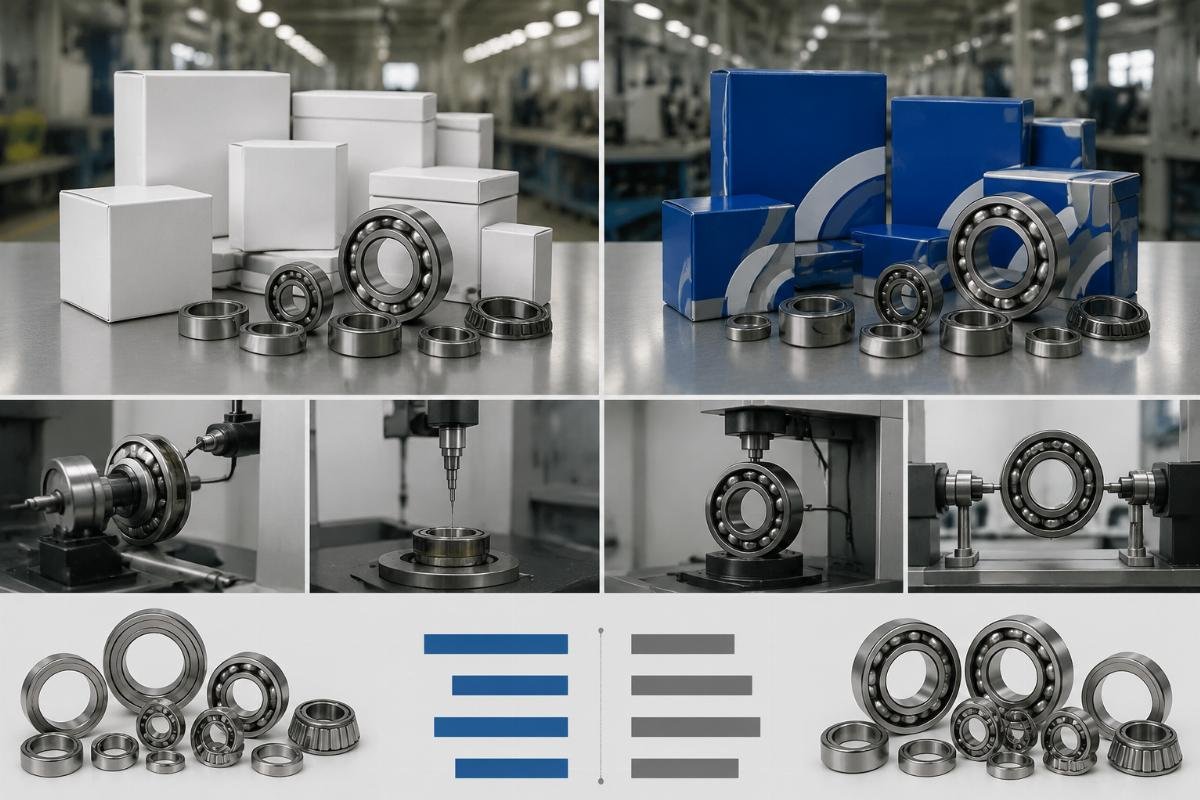
Below we break down exactly how to evaluate suppliers, match solutions to your business needs, and avoid common pitfalls that add unnecessary cost and risk to your procurement process.
Why Is Private Label Bearing Sourcing from Chinese Manufacturers a Cost-Effective Choice for Your Business?
You do not have to sacrifice quality to cut bearing procurement costs by half or more. The outdated assumption that Chinese-made private label bearings are inherently low grade is directly contradicted by formal ISO 9001 certified suppliers that offer 6-month to 2-year warranty terms aligned with global OEM standards, backed by third-party inspection reports for every batch.
| Evaluation Factor | Common Misguided Approach | Proven Recommended Approach |
|---|---|---|
| Quality Benchmark | Judge all Chinese suppliers by the lowest available market price | Verify formal ISO 9001 certification and third-party inspection report access [NEED_CITE: ISO 9001 certified Chinese bearing suppliers provide warranty terms matching global OEM standards for equivalent precision grades] |
| Order Volume Lock-in | Commit to 10,000+ unit minimums to access private label pricing | Work with suppliers offering 10 piece minimums for stock SKUs and 100 piece minimums for custom private label runs |
| Delivery Timeline | Plan for 4+ week lead times for all private label orders | Prioritize suppliers with 10,000+ common in-stock SKUs that offer same-day dispatch for standard items |
A European industrial machinery OEM recently placed a 1000-piece private label order for tapered roller bearings, with a 2-week lead time that fully aligned with their batch production schedule, and consistent quality that required zero rejections across the entire shipment.
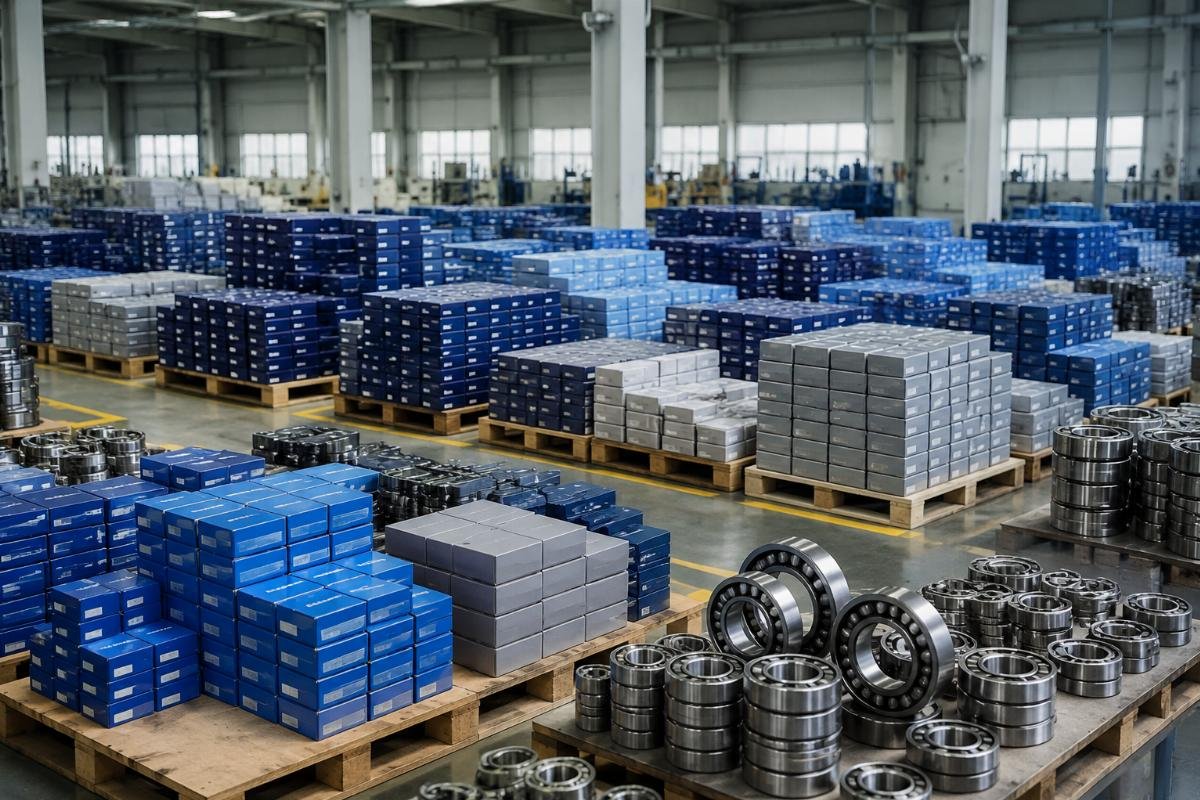
- Quality Verification – Request formal ISO 9001 documentation and sample batches for test runs before committing to larger orders.
- Warranty Confirmation – Match warranty length to bearing precision grade, with 6 months for entry-level P0 grades and up to 2 years for high-precision P2 grades.
- Inventory Check – Confirm the supplier maintains in-stock SKUs for your core part numbers to avoid unexpected lead time delays.
What Core Capabilities Should You Verify Before Selecting a Private Label Bearing Supplier?
Not all bearing suppliers operating in China can deliver consistent private label support across order sizes. The most reliable suppliers combine 30+ long-term factory partnerships, 24-hour quotation response times, 10,000+ in-stock SKUs, and full cross-reference capabilities for all major global OEM brands to eliminate mismatches between your existing part numbers and available stock.
| Capability Check | Inadequate Supplier Traits | Qualified Supplier Benchmarks |
|---|---|---|
| Cross-Reference Support | Can only match exact part numbers you provide | Offers pre-built cross-reference for all major brands including SKF, NSK, FAG, and TIMKEN |
| Order Flexibility | Requires 500+ unit minimums for all custom branding requests | Supports 10 piece minimums for stock items and 100 piece minimums for custom private label orders |
| Delivery Options | Only offers full sea freight for all order sizes | Provides 3-7 day express delivery for urgent orders and consolidated sea freight for bulk shipments |
A North American automotive aftermarket distributor sourced 500 pieces of private label wheel hub bearings with full cross-reference to all major OEM part numbers, cutting their inventory turnover time by 40% compared to their previous supplier and eliminating the need to hold excess stock of rare part numbers.
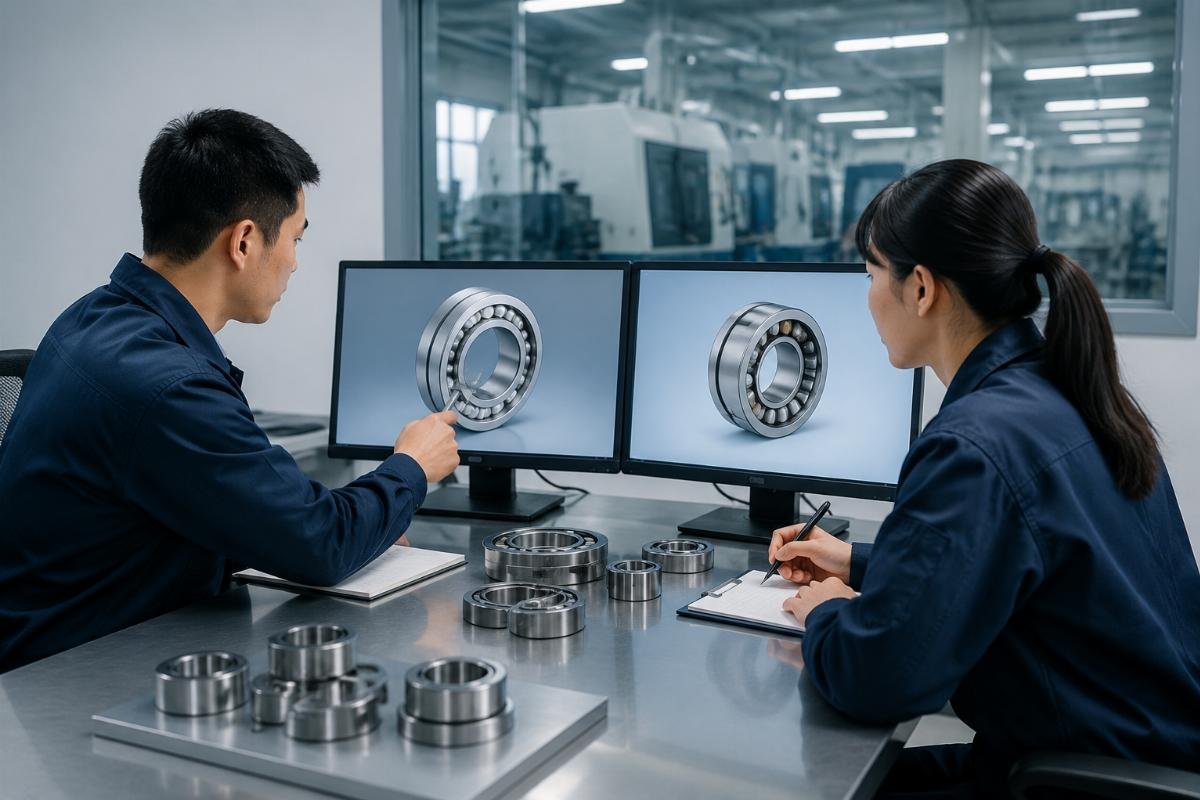
- Cross-Reference Validation – Test the supplier with 3-5 of your highest volume part numbers to confirm accurate matching within a 24-hour window.
- Branding Capability Confirmation – Request sample branding on packaging and bearing surfaces to verify alignment with your brand guidelines.
- Lead Time Testing – Place a small test order for a standard SKU to confirm dispatch and delivery timelines match advertised terms.
How to Match Private Label Bearing Solutions to Your Specific Business Scenario?
One-size-fits-all sourcing contracts create unnecessary waste for your specific customer segment. Industrial machinery OEMs, regional distributors, and automotive aftermarket operators all have distinct requirements, and the best suppliers build tailored support for each segment rather than forcing all buyers into the same terms.
| Customer Segment | Common Sourcing Pain Point | Targeted Private Label Solution |
|---|---|---|
| Industrial Machinery OEMs | Inconsistent batch quality disrupting production lines | Fixed precision grade matching and scheduled delivery aligned with your production schedule |
| Regional Distributors | High inventory holding costs for low-volume SKUs | Exclusive territory authorization and bulk pricing for core high-volume SKUs [NEED_CITE: Exclusive territory authorization for regional distributors reduces internal price competition for resold private label bearings] |
| Automotive Aftermarket Operators | Slow inventory turnover for niche part numbers | Full OEM part cross-reference to match existing customer demand without excess stock |
A Middle East regional bearing distributor recently ordered 3 container loads of private label common SKUs, with exclusive territory authorization and 6-month warranty support that allowed them to capture 22% more domestic market share in their first 6 months of working with the supplier.
- Segment Alignment – Communicate your core use case (OEM production, resale, MRO support) to the supplier to access their pre-built segment-specific packages.
- Volume Tier Matching – Lock in tiered pricing for order volumes that match your projected 6-month procurement forecast to avoid unnecessary cost increases.
- Warranty Customization – Adjust warranty terms to match your end customer requirements, rather than accepting a one-size-fits-all policy.
Conclusion
Proactive supplier verification eliminates 90% of the common risks associated with private label bearing sourcing from Chinese manufacturers. The outdated assumptions around low quality, high minimum orders and long lead times do not apply to specialized one-stop suppliers that have built their operations specifically to serve global industrial and automotive buyers. By prioritizing certification, flexible terms and segment-specific support, you can cut procurement costs by 50-70% without sacrificing the quality and delivery reliability your business depends on.

Written by
authorEditor covering global sourcing, supplier verification, and industrial product knowledge. Content is compiled from manufacturer specifications, industry standards, and hands-on experience with international B2B buyers. Every article is fact-checked before publishing to help procurement professionals make informed decisions.
Leave a Reply