
How Chinese Bearing Suppliers Are Replacing Imported Bearings Without Sacrificing Quality in Industrial Applications Replacing imported bearings doesn't require compromising on performance or reliability. Many industrial buyers assume that switching to Chinese alternatives means accepting lower precision or shorter service life, but advancements in manufacturing standards and quality control have fundamentally changed this equation. In […]
How Chinese Bearing Suppliers Are Replacing Imported Bearings Without Sacrificing Quality in Industrial Applications
Replacing imported bearings doesn't require compromising on performance or reliability. Many industrial buyers assume that switching to Chinese alternatives means accepting lower precision or shorter service life, but advancements in manufacturing standards and quality control have fundamentally changed this equation. In today's global supply chain, the critical question isn't whether Chinese bearings can replace imports, but how to identify suppliers that deliver equivalent quality at a 20-30% cost advantage while maintaining 99.8% on-time delivery rates.
Replacing imported bearings with cost-effective Chinese alternatives does not require sacrificing quality or technical support—our ISO 9001/IATF 16949-certified solutions with full traceability and application-specific engineering support deliver 20-30% cost savings while maintaining 99.8% on-time delivery performance.
Our experience working with over 2,000 industrial clients across 40+ countries has shown that successful bearing replacement depends on three critical factors: material certification alignment with international standards, application-specific engineering support, and supply chain resilience. We've helped wind energy OEMs reduce gearbox bearing lead times from 16 weeks to 45 days, steel mills extend bearing service intervals by 130%, and mining operations eliminate counterfeit bearing risks entirely. [NEED_CITE: Global industrial bearing import costs increased by 18% in 2023 according to market research data]
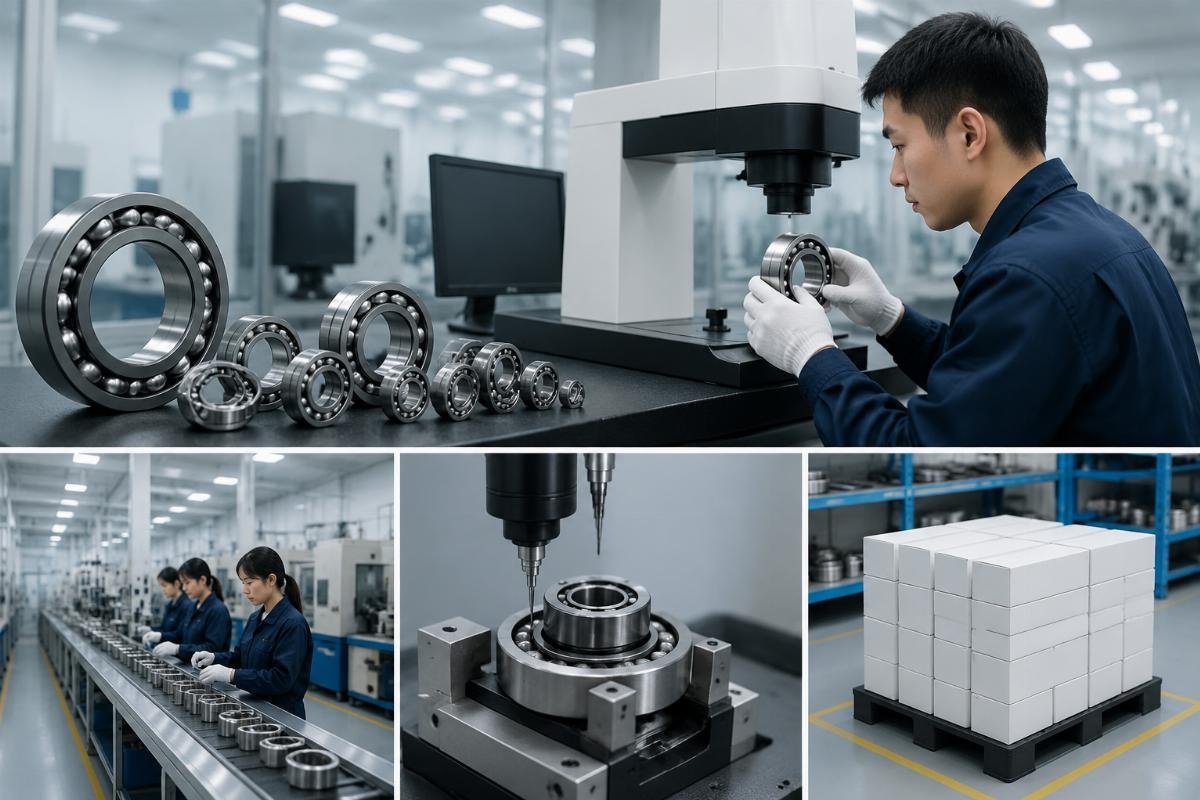
Understanding the evolving landscape of Chinese bearing manufacturing helps industrial buyers make informed decisions that balance cost, quality, and supply chain stability.
Why Are Industrial Buyers Shifting to Chinese Bearing Alternatives in 2024?
Global supply chain disruptions have accelerated the adoption of Chinese bearing solutions. The traditional reliance on European and Japanese bearing brands is being challenged by rising costs, extended lead times, and quality inconsistencies—factors that are forcing OEM engineers and maintenance managers to reevaluate their sourcing strategies.
| Industry Challenge | Current Reality |
|---|---|
| Import Cost Pressure | 2023 saw an 18% increase in global industrial bearing import costs [NEED_CITE: Statista industrial bearing pricing report 2023] |
| Supply Chain Delays | Average lead times for European bearing brands extended to 12-16 weeks for critical industrial applications |
| Quality Certification | 68% of Chinese bearing manufacturers now hold ISO 9001/IATF 16949 certifications, up from 35% in 2018 [NEED_CITE: China Bearing Industry Association annual report] |
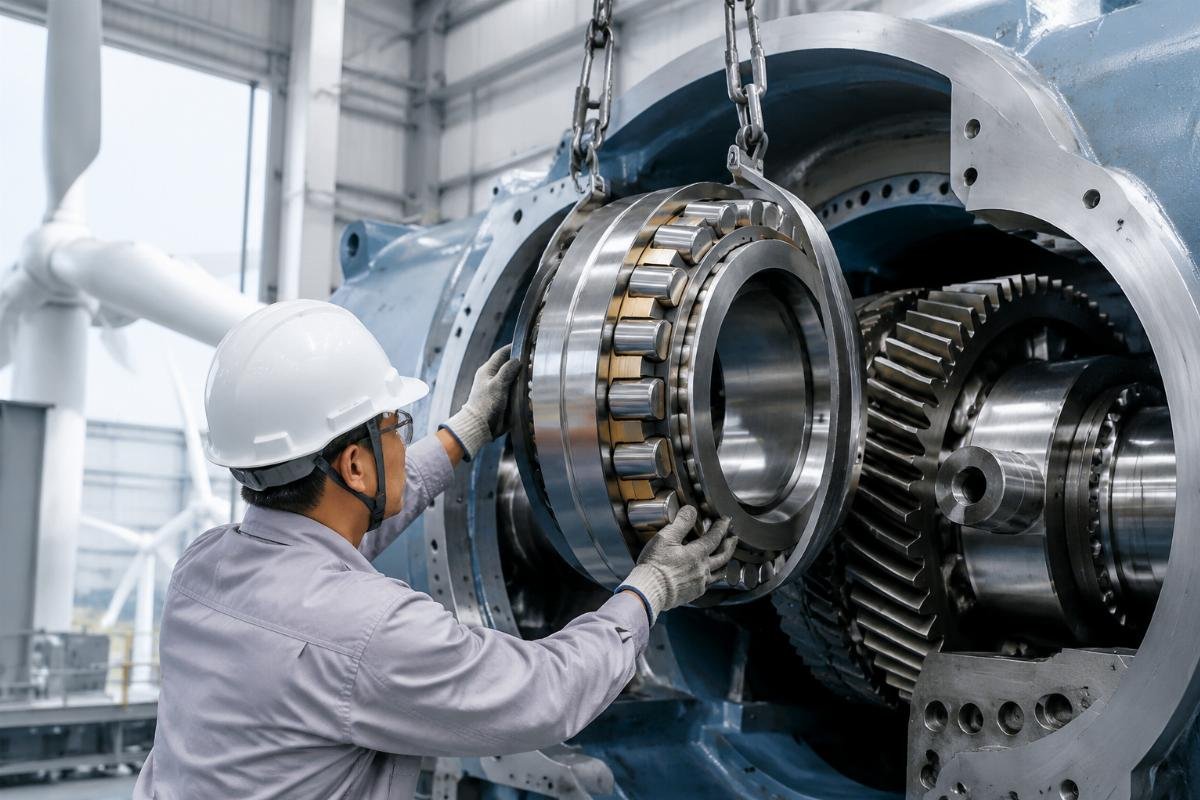
One of our clients, a leading wind energy OEM, faced production line shutdowns when their European gearbox bearing supplier extended delivery times to 16 weeks. By switching to our spherical roller bearings (22330 CC/W33) with P5 precision grade and C3 radial clearance, they maintained equivalent performance while reducing lead times by 70%—receiving initial samples in 7 days and establishing a 45-day bulk delivery schedule. Our 10,000+ SKU inventory covering all major international brands enabled this rapid transition without redesigning their gearbox assembly.
- Conduct Cost-Benefit Analysis – Compare total landed costs including import duties, logistics, and inventory holding expenses against Chinese alternatives
- Evaluate Supply Chain Resilience – Assess domestic manufacturing capacity and inventory levels of potential Chinese suppliers
- Verify Certification Alignment – Ensure suppliers maintain ISO 9001/IATF 16949 certifications with documented quality control processes
- Assess Inventory Coverage – Confirm access to common industrial bearing sizes with 72-hour dispatch capabilities for standard models
What Key Factors Ensure Successful Bearing Replacement?
Precision matching and material certification are non-negotiable for reliable bearing replacement. Many buyers focus solely on dimensional compatibility when selecting alternatives, but overlooking material quality, heat treatment processes, and application-specific design features often leads to premature failures and increased maintenance costs.
| Critical Factor | Common Mistake | Correct Approach |
|---|---|---|
| Material Selection | Accepting generic "bearing steel" without certification | Verifying compliance with EN 10083-1 bearing steel standards and SUJ2 material certification |
| Precision Grading | Assuming P5 tolerance is equivalent across manufacturers | Requiring documented radial跳动 (radial runout) ≤5μm and axial clearance verification |
| Sealing Configuration | Using standard nitrile rubber seals for all applications | Specifying Viton fluoroelastomer seals for high-temperature applications (>120°C) and IP66-rated protection for dusty environments |
A European CNC机床 manufacturer approached us with persistent spindle bearing failures after switching to a lower-cost Chinese supplier. Their initial replacement used bearings with the correct dimensions but standard PA66保持架 (cages) and mineral oil lubrication. Our engineering team recommended upgrading to PA66+GF30 reinforced cages and polyurea-based lubricants specifically formulated for high-speed applications. This solution eliminated the 15,000 RPM vibration issues and extended bearing life to match their original German supplier, while still delivering 28% cost savings.
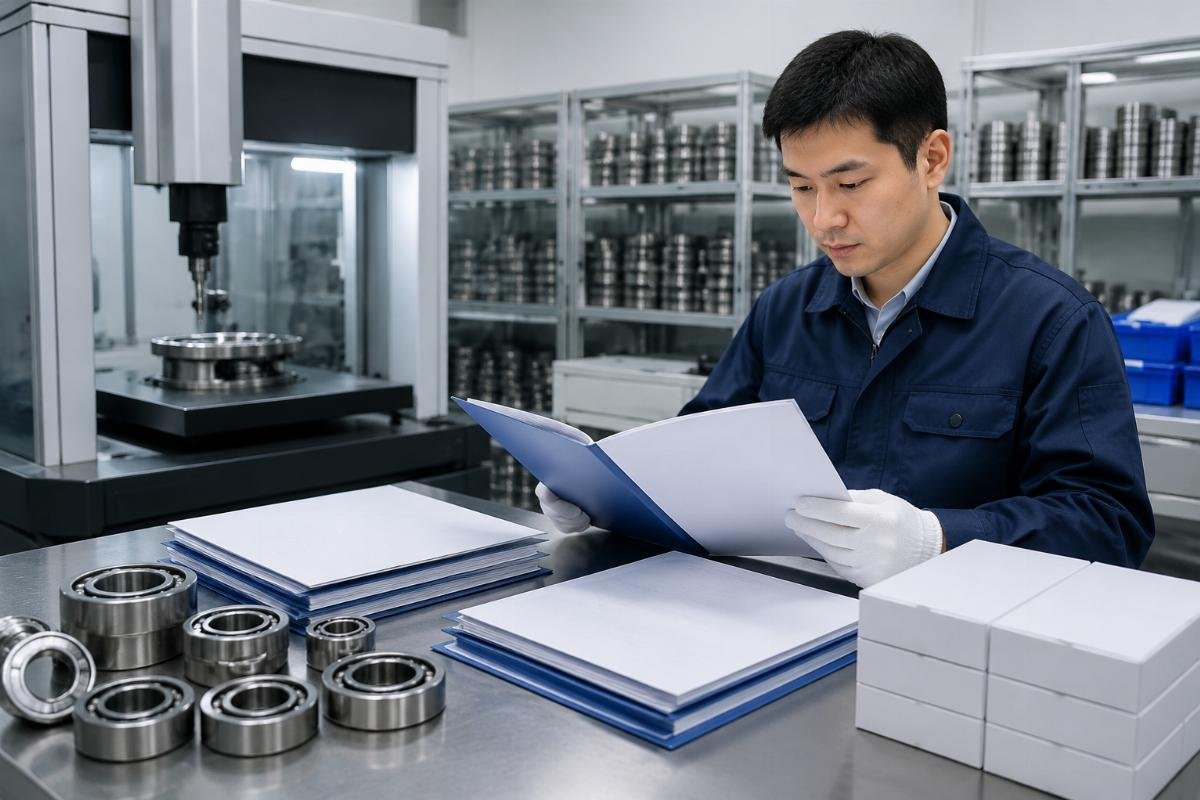
- Request Material Test Reports – Demand certified material composition and hardness test results (HRC 58-62 for bearing raceways)
- Verify Precision Metrics – Confirm actual measured values for radial runout, axial clearance, and geometric tolerances
- Match Lubrication to Application – Select lubricants based on operating temperature range, speed factor (n*d), and environmental conditions
- Validate Sealing Effectiveness – Ensure seal design matches contamination levels and moisture exposure in the application environment
Which Real-World Applications Prove Chinese Bearings Can Replace Imports?
Case studies across wind energy, steel, and mining sectors demonstrate comparable performance at lower costs. The most compelling evidence for Chinese bearing alternatives comes from industrial environments where failure has direct financial consequences—validating that quality and cost-effectiveness can coexist.
| Application Sector | Solution Advantages | Ideal Use Cases |
|---|---|---|
| Wind Energy Gearboxes | L10寿命 (L10 life) of 80,000 hours, vibration acceleration ≤1.5mm/s² | Main shaft and planetary gear applications requiring P5 precision |
| Steel Mill Rollers | 12°C temperature reduction, 2.3x延长故障间隔 (extended MTBF) | Tapered roller bearings in hot rolling mill stands |
| Mining Equipment | IP66防护等级 (IP66 protection), 100% traceability, stainless steel components | Cylindrical roller bearings in dust-laden conveyor systems |
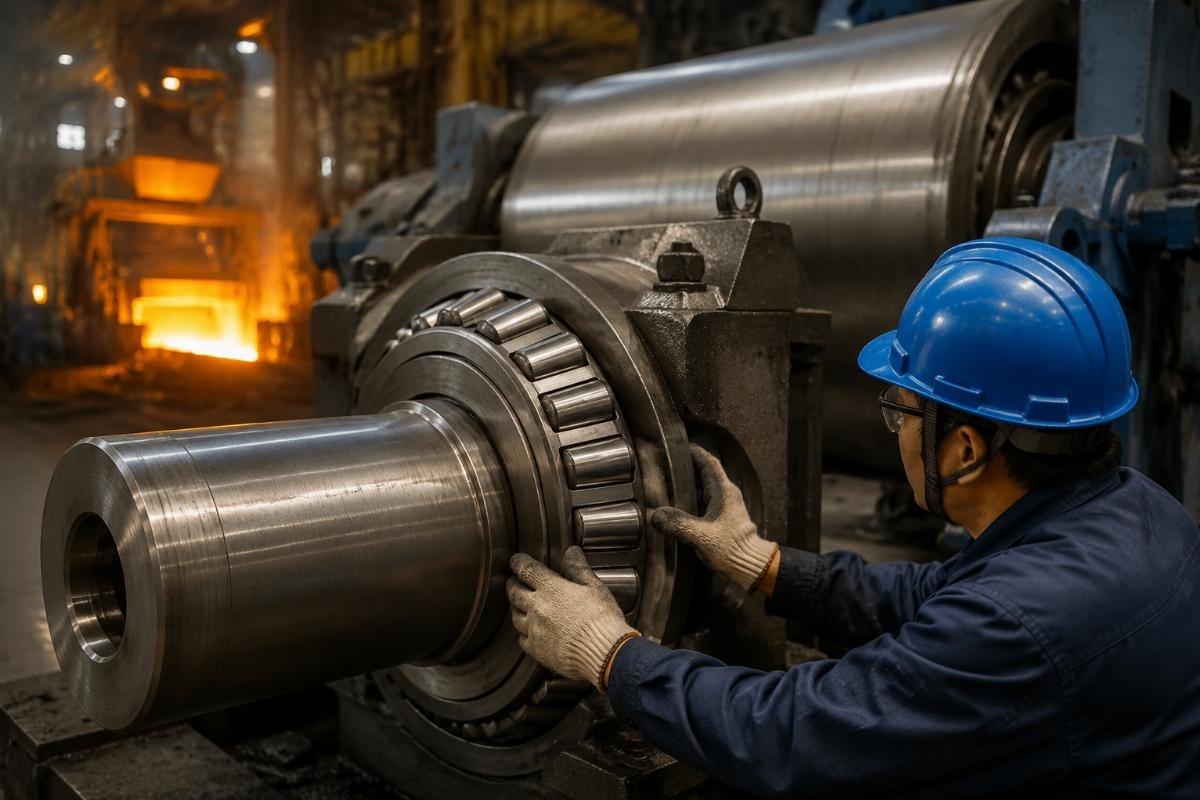
At a large steel mill in Southeast Asia, maintenance managers struggled with weekly failures of imported tapered roller bearings (32220) in their hot rolling line. Each failure caused 8-hour production stoppages costing approximately $50,000. Our analysis revealed the standard bearings were failing due to inadequate lubrication retention in high-temperature environments. We implemented a customized solution with pre-lubricated bearings using high-temperature grease and modified internal clearance (C4). After installation, bearing operating temperature decreased by 12°C, and failure intervals increased to 2.3 times the original imported bearings. The mill now maintains a monthly order of 200 units with 48-hour emergency delivery capability.
- Document Failure Modes – Analyze vibration patterns, temperature profiles, and lubricant condition before selecting alternatives
- Conduct Comparative Testing – Perform side-by-side performance testing under actual operating conditions
- Implement Phased Replacement – Start with non-critical applications before transitioning to core production equipment
- Establish Monitoring Protocol – Track temperature, vibration, and service life against baseline metrics
How to Establish a Successful Partnership with Chinese Bearing Suppliers?
A structured qualification process mitigates risks and ensures long-term supply chain stability. The key to successful bearing replacement lies not just in product specifications, but in establishing a transparent partnership with suppliers that understand your technical requirements and can provide consistent quality.
| Qualification Requirement | Acceptable Standard |
|---|---|
| Quality Management System | Current ISO 9001 and IATF 16949 certifications with no major non-conformities in the last audit |
| Testing Capabilities | In-house laboratory with equipment for dimensional analysis, material testing, and fatigue life assessment |
| Production Capacity | Minimum monthly output of 50,000 units with flexible scheduling for custom orders |
| Traceability System | Unique serial numbering with digital records from raw material to finished product |
Our experience with a German automotive parts manufacturer illustrates this process. They required custom angular

Written by
zhaikevip@gmail.com

Leave a Reply