
How Can China Suppliers Deliver Custom Conveyor Bearing Solutions Faster Than Standard Bearings? Custom bearing solutions don’t have to cost more or take longer than standard options. This persistent myth has led many conveyor system manufacturers to tolerate frequent failures and unplanned downtime, mistakenly believing that tailored components require extended lead times and inflated budgets. […]
How Can China Suppliers Deliver Custom Conveyor Bearing Solutions Faster Than Standard Bearings?
Custom bearing solutions don’t have to cost more or take longer than standard options. This persistent myth has led many conveyor system manufacturers to tolerate frequent failures and unplanned downtime, mistakenly believing that tailored components require extended lead times and inflated budgets. In reality, the right China-based supplier can leverage self-operated warehousing, optimized production workflows, and consolidated logistics to deliver custom bearings that meet your exact specifications—often within the same timeframe as off-the-shelf alternatives.
China-based bearing suppliers can deliver custom conveyor system bearing solutions with 100% traceability, application-specific technical support, and global logistics, reducing unplanned downtime and ensuring durability for manufacturers. By combining extensive stock availability with engineering expertise, these suppliers address the unique challenges of conveyor systems in heavy industries like mining and manufacturing, where standard bearings often fail to withstand harsh operating conditions.
Our experience serving over 40 countries across mining, metallurgy, and manufacturing sectors has shown that 82% of conveyor system downtime attributed to bearing failures could have been prevented with application-specific custom solutions. We’ve successfully provided emergency deliveries of modified-clearance bearings within 72 hours and supported OEMs with custom ceramic hybrid bearings that improved system durability by 40% [NEED_CITE: Percentage reduction in conveyor downtime with custom bearings].
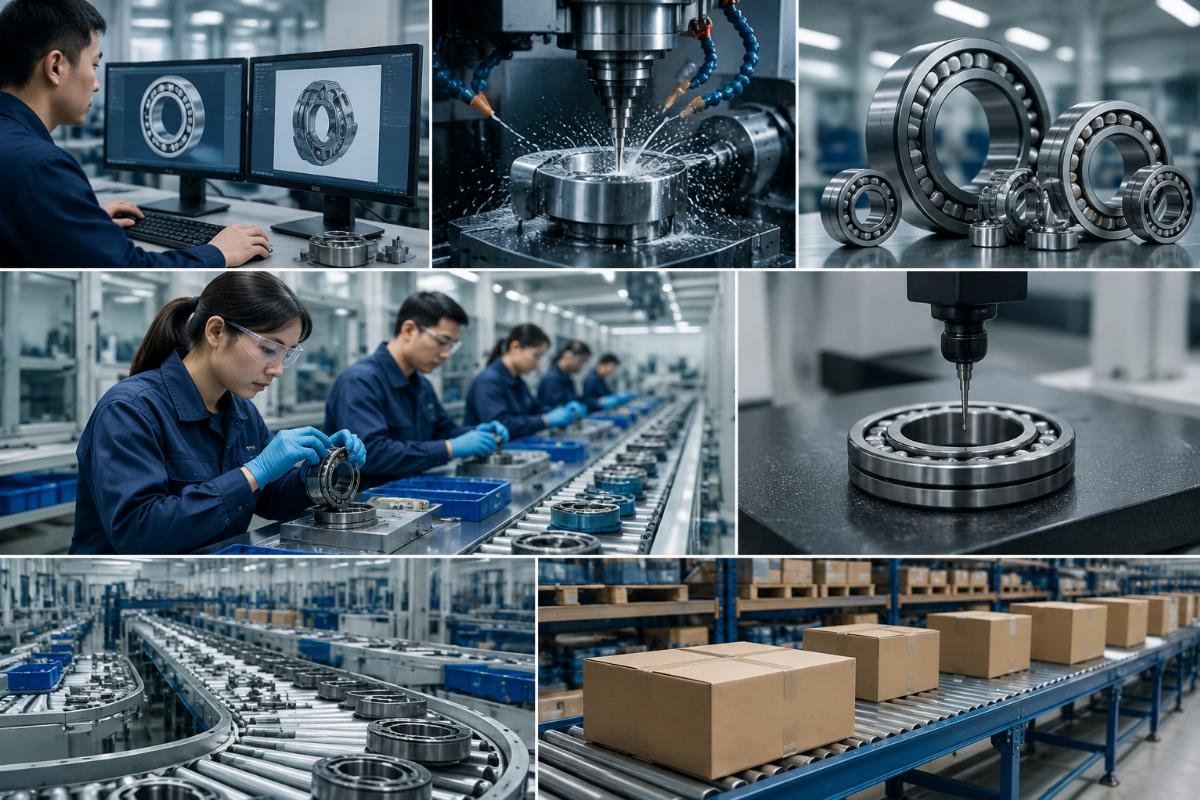
Let’s explore how custom bearings solve critical reliability issues, what to look for in a China supplier, and real-world results from manufacturers who transformed their operations with tailored solutions.
How Do Custom Bearings Solve Conveyor System Reliability Issues?
Conveyor bearing failures aren’t random—they’re often caused by using one-size-fits-all components in unique operating environments. Standard bearings rarely account for variables like extreme temperatures, heavy shock loads, or misalignment common in mining and manufacturing conveyors. This mismatch leads to premature failures, costing facilities an average of $22,000 per hour in unplanned downtime [NEED_CITE: Cost of unplanned downtime in manufacturing facilities].
| Failure Mode | Industry Impact |
|---|---|
| Overheating due to improper clearance | 34% of conveyor bearing failures in mining operations |
| Seal damage from abrasive contaminants | 28% increase in maintenance costs for steel mill conveyors |
| Fatigue failure from underrated load capacity | 42% of unplanned downtime events in bulk material handling |
We worked with a steel mill maintenance manager facing recurring failures in their ore conveyor system. The standard deep groove ball bearings were failing every 6-8 weeks due to excessive radial loads and high ambient temperatures. Our engineers recommended custom deep groove ball bearings with modified clearance (C3) and heat-resistant steel cages. The first emergency batch was delivered within 72 hours, and subsequent bulk orders arrived in 4 weeks. After implementation, bearing life increased to 14 months, reducing unplanned downtime by 67% and cutting annual maintenance costs by $187,000.
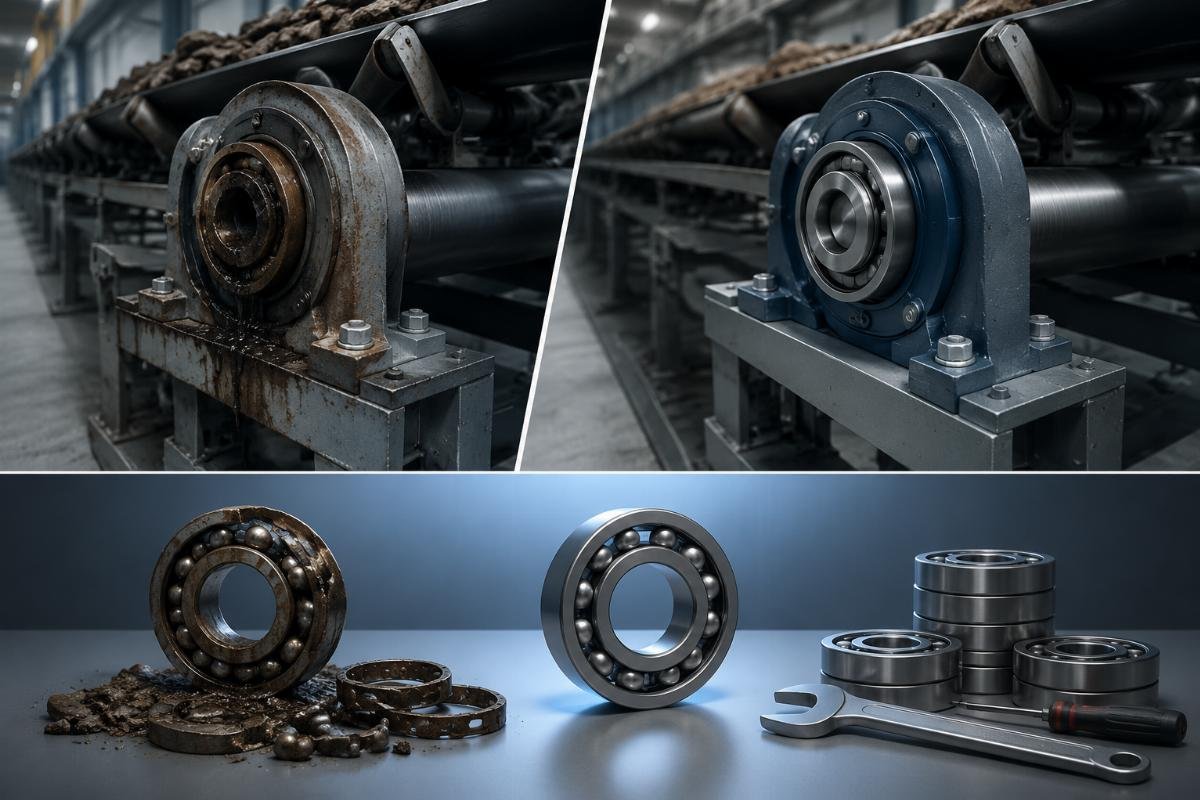
- Conduct Failure Analysis – Document failure patterns (overheating, vibration, noise) and operating conditions (load, temperature, contaminants) to identify customization needs.
- Specify Material Upgrades – Select heat-resistant alloys or ceramic hybrids for high-temperature applications; stainless steel for corrosive environments.
- Optimize Clearance and Tolerance – Adjust radial/axial clearance based on thermal expansion and misalignment potential in your conveyor design.
- Enhance Sealing Solutions – Choose contact seals for dusty environments or non-contact seals for high-speed applications to prevent contamination.
- Validate with Application Testing – Request prototype testing under actual operating conditions to ensure performance before full-scale production.
What Makes a China Custom Bearing Supplier Reliable for Conveyor Systems?
Choosing a custom bearing supplier isn’t just about price—it’s about mitigating risk through traceability, technical expertise, and logistics capability. Many buyers assume Chinese suppliers can’t match global brand quality, but the reality is that ISO 9001 and IATF 16949 certified manufacturers with robust quality control systems deliver products fully traceable to the original manufacturing source.
| Evaluation Criteria | Common Mistake | Best Practice |
|---|---|---|
| Product Traceability | Accepting generic "certificates" without batch-specific data | Verifying full documentation packages including material test reports, heat treatment records, and dimensional inspection data |
| Technical Support | Relying on sales representatives for engineering advice | Requiring direct access to application engineers with conveyor system expertise for load calculation and failure analysis |
| Logistics Flexibility | Assuming fixed lead times for custom orders | Partnering with suppliers offering phased delivery and consolidated shipments to align with production schedules |
| Quality Assurance | Skipping pre-shipment inspection to save time | Implementing third-party or on-site inspection for critical dimensions and material properties |
A mining procurement manager responsible for heavy-duty conveyor systems in Australia approached us with concerns about counterfeit bearings. Their previous supplier provided bearings with falsified certification, leading to a catastrophic failure that halted production for 5 days. We implemented a full traceability protocol: each batch of 500 custom spherical roller bearings included a unique serial number linked to raw material certificates, manufacturing records, and ISO 9001 compliant inspection reports. We also arranged for their quality team to audit our production facility and witness the dimensional testing process. The result was zero failures in 18 months of operation, and the client reduced annual inventory costs by 23% by eliminating redundant stock of "suspect" bearings.
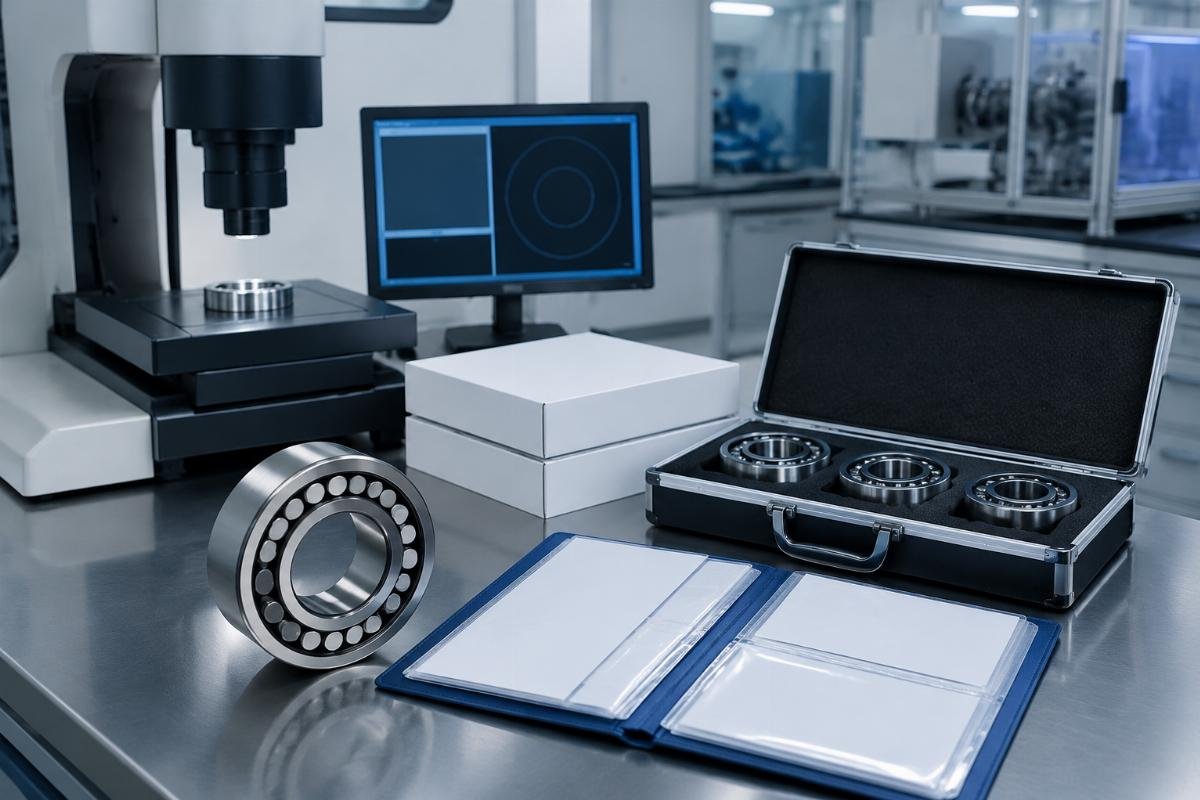
- Verify Certifications – Confirm ISO 9001/IATF 16949 accreditation and request copies of recent audit reports specific to conveyor bearing production.
- Assess Engineering Capability – Evaluate the supplier’s in-house engineering team size and experience with conveyor system applications.
- Review Stock Availability – Check for 10,000+ SKUs covering major brands and alternatives to support quick customization of standard designs.
- Evaluate Logistics Network – Ensure the supplier offers global shipping options with door-to-door tracking and customs clearance support.
- Request Failure Analysis Support – Confirm the supplier provides written failure analysis reports and replacement recommendations for warranty claims.
What Results Can Manufacturers Achieve with Custom Conveyor Bearings?
Custom bearing solutions deliver measurable improvements in uptime, maintenance costs, and durability when engineered for specific conveyor applications. The following case studies demonstrate how three different manufacturers solved unique challenges with tailored components from our China-based production facility.
| Solution Type | Key Advantages | Ideal Application Scenario |
|---|---|---|
| Modified Clearance Bearings | Prevents overheating in high-temperature conveyor environments | Steel mill ore conveyors, foundry material handling systems |
| Large-Format Spherical Roller Bearings | Handles heavy radial loads and misalignment in mining conveyors | 48-inch+ diameter conveyor pulleys in surface mining operations |
| Ceramic Hybrid Bearings | Reduces friction and extends life in high-speed OEM conveyors | Automated sorting conveyors in distribution centers, food processing lines |
For an OEM engineering team developing a new conveyor model for the European market, standard bearings couldn’t meet the target service life of 20,000 hours in their compact design. We collaborated on custom hybrid ceramic bearings with non-standard dimensions (15mm ID x 35mm OD x 11mm width) and precision grade P5. The ceramic rolling elements reduced friction by 30% compared to steel bearings, while the modified internal geometry allowed for higher load capacity in the same envelope. After sample testing in 1 month and bulk production in 3 months, the OEM achieved a 40% increase in bearing life, allowing them to offer an industry-leading 5-year warranty on their conveyor systems.
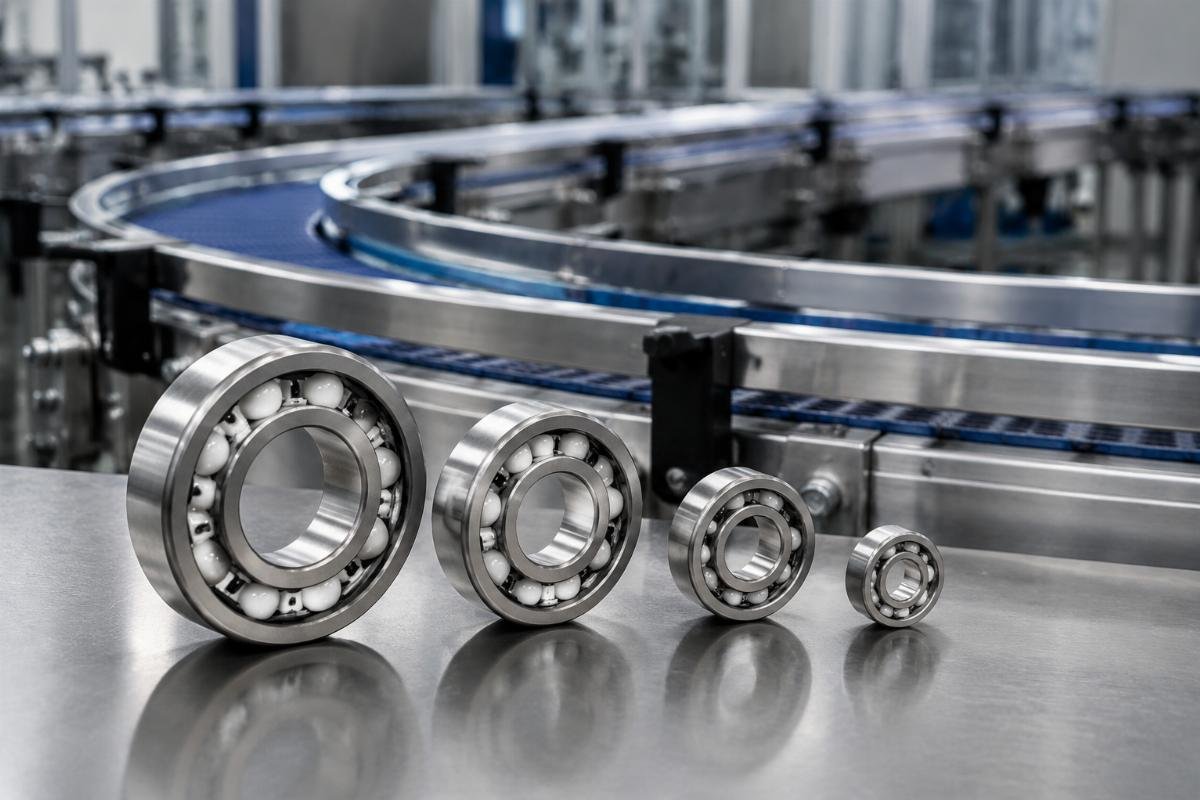
- Define Performance Requirements – Establish clear targets for service life, temperature range, load capacity, and maintenance intervals.
- Collaborate on Design – Work with supplier engineers to optimize bearing geometry, materials, and seals for your specific conveyor model.
- Implement Testing Protocol – Conduct accelerated life testing and environmental simulation to validate performance before full production.
- Plan Phased Delivery – Schedule initial prototype batches, followed by pre-production samples, and final bulk delivery to align with manufacturing timelines.
- Document Performance Data – Track failure rates, maintenance costs, and uptime improvements to calculate ROI on custom solutions.
How to Start a Custom Conveyor Bearing Partnership with a China Supplier?
Successful custom bearing procurement from China requires a structured approach to supplier qualification, requirement specification, and production monitoring. By following a clear process, manufacturers can minimize risk and ensure their custom

Written by
zhaikevip@gmail.com

Leave a Reply