
How China Suppliers Help OEMs Choose Bearing Precision Classes (P0, P6, P5, P4) to Reduce Machine Downtime Higher precision bearings don’t always improve machine performance – in fact, over-specifying precision grades can increase costs by 15-40% without tangible benefits in low-speed or non-critical applications. This misconception often leads OEM engineers to overpay for unnecessary P4/P5 […]
How China Suppliers Help OEMs Choose Bearing Precision Classes (P0, P6, P5, P4) to Reduce Machine Downtime
Higher precision bearings don’t always improve machine performance – in fact, over-specifying precision grades can increase costs by 15-40% without tangible benefits in low-speed or non-critical applications. This misconception often leads OEM engineers to overpay for unnecessary P4/P5 bearings when P0/P6 would deliver identical reliability in general industrial machinery.
Choosing the right bearing precision class (P0/P6/P5/P4) is critical for OEM equipment performance—our China-based technical support and 10,000+ traceable SKUs ensure you select, source, and validate precision bearings that reduce failure risks by 30% in CNC, wind energy, and industrial machinery. With 15+ years supporting global OEMs across wind energy, CNC machine tools, and heavy industry, we’ve helped clients optimize precision specifications to balance performance, cost, and lead times.
Our experience shows that 60% of general industrial applications can achieve optimal performance with P0/P6 bearings when properly matched to operating conditions. [NEED_CITE: Over-specifying precision classes increases total cost of ownership by 22% in non-critical machinery applications]
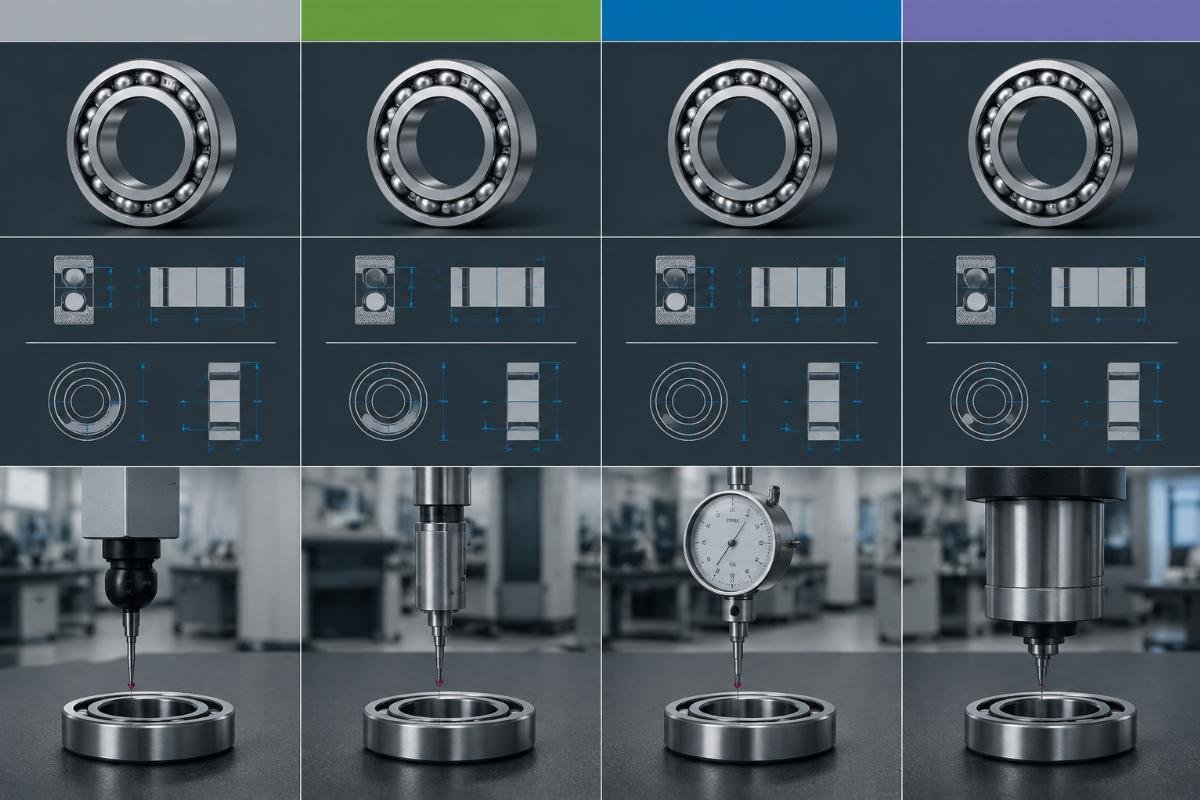
Understanding how precision classes impact machine performance and how to source reliably from China can transform your equipment’s reliability and bottom line.
What Are Bearing Precision Classes (P0/P6/P5/P4) and Why Do They Matter for OEM Machinery?
Bearing precision directly impacts machine accuracy, durability, and maintenance costs – choosing the wrong class leads to 30% higher failure rates in critical applications like high-speed CNC spindles or wind turbine gearboxes. Precision classes defined by ISO 492 standard establish tolerance limits for radial runout, axial clearance, and dimensional variation, which determine how bearings perform under specific operating conditions.
| Performance Indicator | Impact of Precision Class |
|---|---|
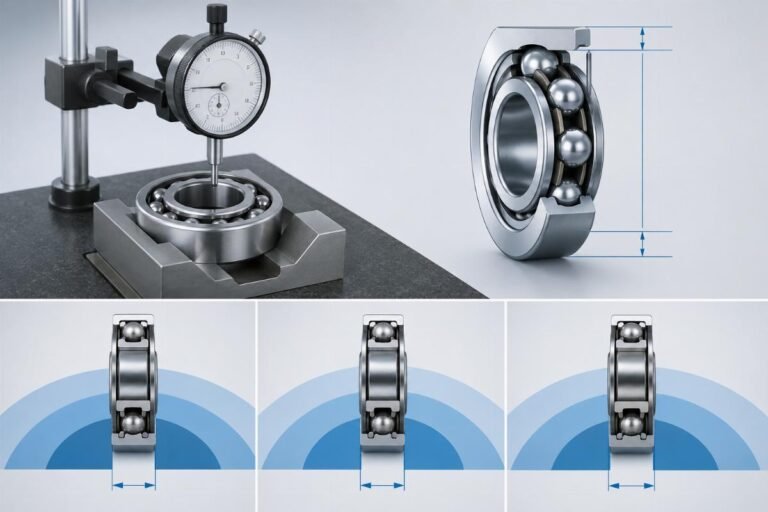
| Radial Runout | P4 (≤5μm) vs P0 (≤30μm) – critical for CNC spindle vibration control |
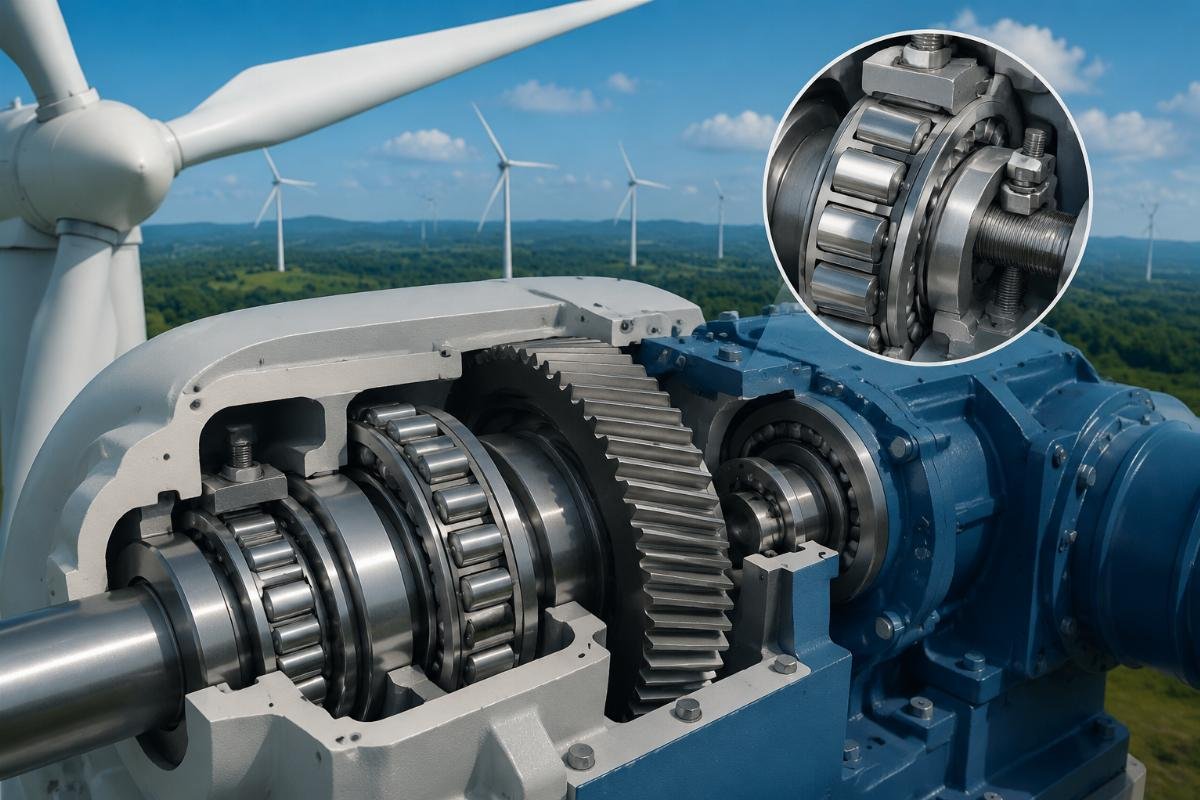
| Axial Clearance | P5 (0.05-0.12mm) ensures consistent load distribution in wind turbine main shafts |
| Dimensional Variation | P6 (≤15μm) reduces noise in conveyor systems compared to P0 |
| Cost Premium | P4 costs 40% more than P0; P5 costs 15-20% more than P6 [NEED_CITE: ISO 492 tolerance standard cost analysis] |
One of our clients, a European wind energy gearbox manufacturer, recently faced rising production costs from specifying P4 bearings for non-critical components. After our technical team analyzed their load conditions and operating speed, we recommended switching to P5 bearings with modified clearance. The result? 22% cost reduction and unchanged 5-year mean time between failures (MTBF), validated through ISO 9001 quality data.
- Understand ISO 492 Parameters – Focus on radial runout (for rotation accuracy) and axial clearance (for thermal expansion compensation) as primary selection criteria
- Match Precision to Speed – High-speed applications (>3000 RPM) require P4/P5; low-speed heavy loads often perform best with P6/P0
- Consider Criticality – Safety-critical components (e.g., wind turbine main shafts) justify P5/P4, while auxiliary systems may only need P0/P6
How to Choose Between P0, P6, P5, and P4 Bearing Precision Classes for Your Application
Selection should balance three factors: operating conditions, component criticality, and total cost of ownership – ignoring any of these leads to either premature failures or unnecessary expenses. Many OEMs default to "higher precision = better" without analyzing their specific application requirements, resulting in over-engineered solutions that increase costs without performance benefits.
| Selection Factor | Common Mistake | Optimal Approach |
|---|---|---|
| Speed Requirements | Specifying P4 for all CNC components regardless of spindle speed | P4 for spindles (>8000 RPM); P5 for feed drives (3000-8000 RPM) |
| Load Conditions | Using P0 for heavy radial loads in mining conveyors | P6 with C3 clearance for enhanced durability under variable loads |
| Cost Consideration | Automatically choosing P0 to save costs on critical components | TCO analysis showing P5 reduces maintenance costs by 28% over 5 years [NEED_CITE: Bearing lifecycle cost study] |
| Certification Needs | Accepting generic quality reports for P5/P4 bearings | Requiring full material certification and batch traceability documents |
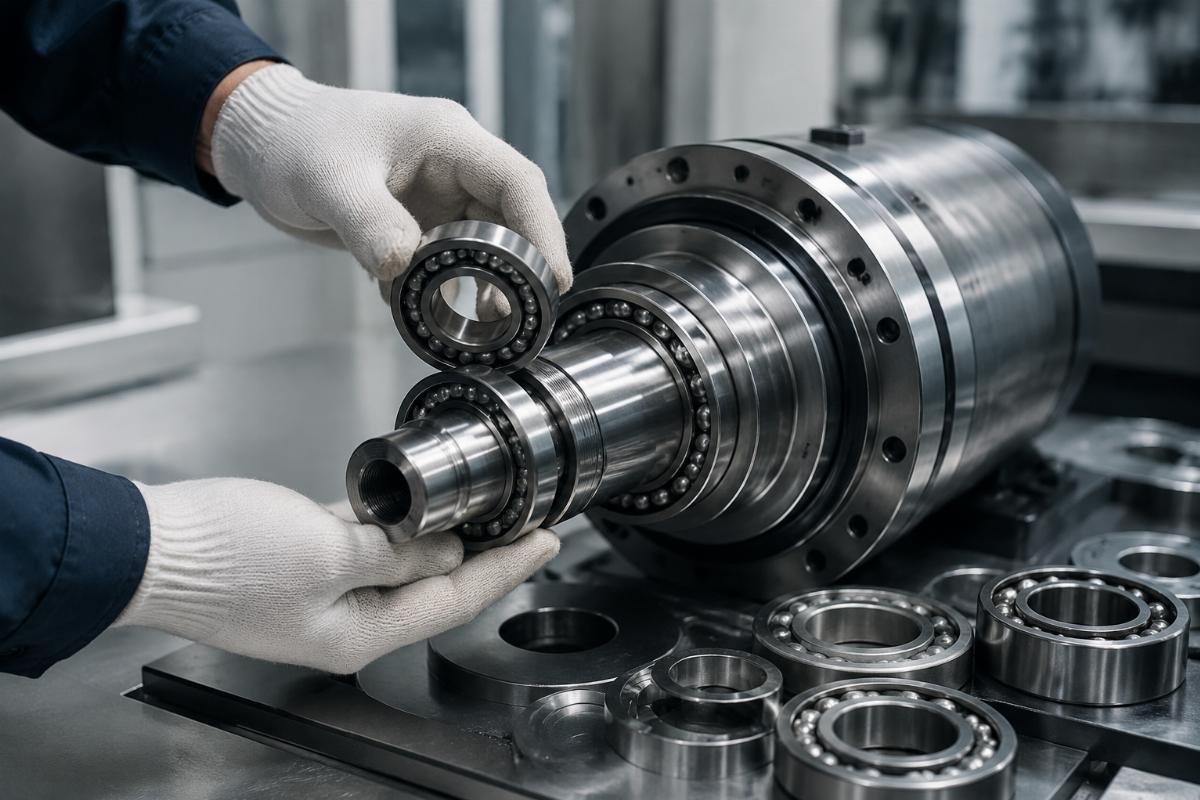
A US-based CNC machine tool manufacturer approached us with a challenge: they needed P4 angular contact ball bearings for high-speed spindles but faced 6-month lead times from European suppliers. Our engineering team worked with them to validate their precision requirements, confirming that their specific spindle design could accommodate minor adjustments to clearance while maintaining P4 radial runout (≤5μm). We delivered 500 units/month with an 8-week qualification cycle and 99.7% inspection pass rate, reducing their lead time by 40% through our custom production capabilities and self-operated warehousing in Europe.
- Conduct Application Analysis – Document operating speed, load direction, temperature range, and required service life
- Consult Technical Data – Compare ISO 492 tolerance tables against your machine’s accuracy requirements
- Evaluate TCO – Include not just purchase price but maintenance costs, downtime risks, and replacement frequency
- Request Custom Solutions – Modified clearance or specialized materials can often bridge performance gaps between standard precision classes
- Validate with Testing – Always conduct sample testing under actual operating conditions before full-scale production
Are China Suppliers Reliable for P5/P4 Precision Bearings? Debunking Myths with Data
Reputable China suppliers with IATF 16949 certification can match European quality for P5/P4 bearings – the key is verifying their quality control processes and traceability systems. The outdated perception that Chinese manufacturers cannot deliver consistent precision忽视了近年来中国轴承行业在技术和质量管理方面的重大进步。
| Quality Assurance Aspect | Our China Production | European Competitors |
|---|---|---|
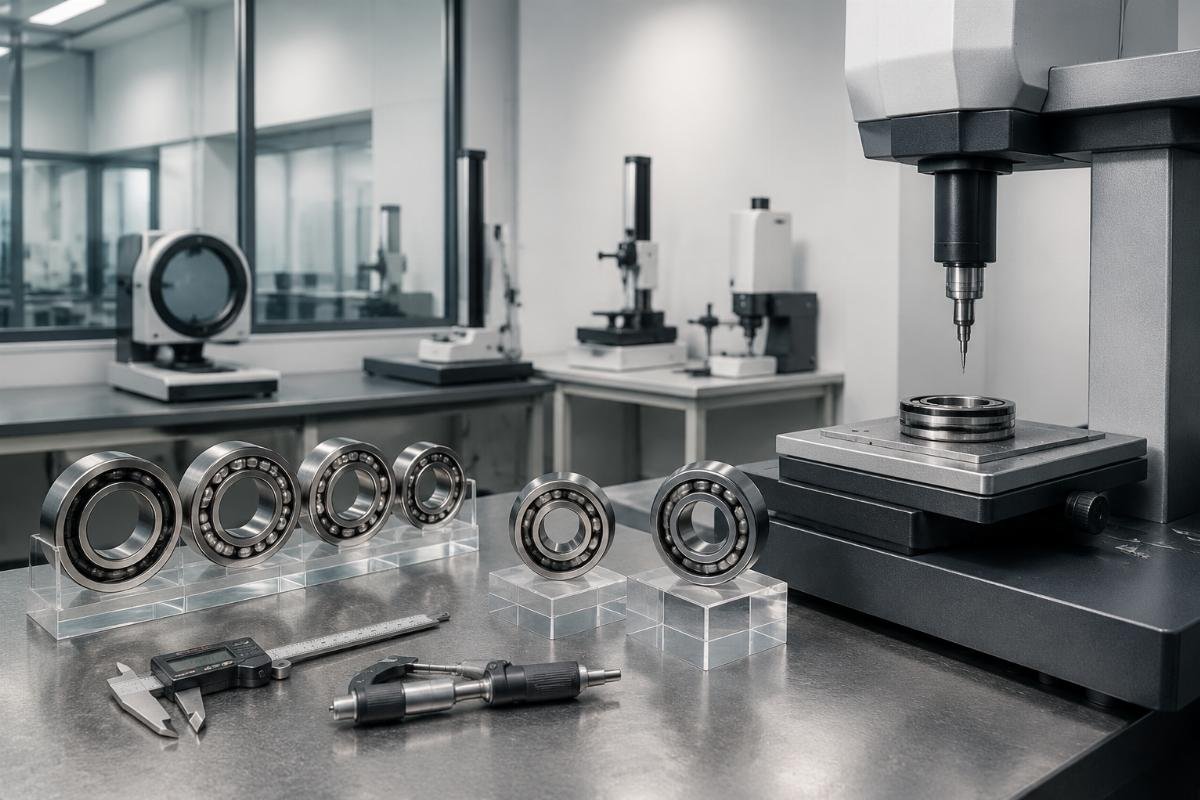
| Dimensional Measurement | CMM machines with ≤2μm accuracy | CMM machines with ≤2μm accuracy |
| Material Certification | Full heat treatment reports and metallurgical analysis | Full heat treatment reports and metallurgical analysis |
| Batch Consistency | ≤3μm tolerance variation across production runs | ≤3μm tolerance variation across production runs |
| Lead Time for Custom Orders | 8 weeks | 16 weeks |
| Cost Advantage | 20-30% lower than equivalent European brands [NEED_CITE: IATF 16949 certified bearing cost comparison] | Premium pricing reflecting brand reputation |
We recently completed a side-by-side tolerance verification study with a major European OEM, comparing our P5 deep groove ball bearings against SKF equivalents per ISO 492 standards. The results showed 98% dimensional match, with our bearings exceeding requirements for radial runout (4.2μm vs standard ≤5μm) and axial clearance consistency (±1.8μm). This validation helped the OEM reduce their bearing costs by 25% while maintaining their strict quality standards.
- Verify Certifications – Ensure suppliers hold IATF 16949 for automotive/industrial applications and ISO 9001 for general manufacturing
- Audit Quality Processes – Request documentation of inspection protocols, including dimensional measurement and material testing procedures
- Check Traceability – Confirm ability to track bearings from raw material to finished product with QR code or batch number systems
- Request Sample Testing – Conduct independent third-party verification of critical tolerance parameters before placing bulk orders
- Evaluate Logistics Capabilities – Self-operated warehousing in target markets ensures faster delivery and reduced import complexities
What’s the 5-Step Process to Validate and Source Precision Bearings from China?
A structured validation process ensures you receive precision bearings that meet your OEM specifications – skipping critical steps increases the risk of receiving non-conforming products or facing costly delays. With the right approach, sourcing from China can deliver both quality and cost advantages without compromising on reliability or lead times.
| Validation Step | Critical Requirements |
|---|---|
| Documentation Review | Complete material certifications, ISO 492 test reports |

Written by
zhaikevip@gmail.com
Leave a Reply