
How to Choose High-Speed High-Temperature Bearings: A China Supplier Guide for Industrial Applications Ceramic bearings aren't always the best choice for high-temperature industrial applications. While their heat resistance is impressive, many maintenance managers overlook the critical balance between temperature tolerance, load capacity, and cost-efficiency that hybrid ceramic bearings with steel races often provide. In steel […]
How to Choose High-Speed High-Temperature Bearings: A China Supplier Guide for Industrial Applications
Ceramic bearings aren't always the best choice for high-temperature industrial applications. While their heat resistance is impressive, many maintenance managers overlook the critical balance between temperature tolerance, load capacity, and cost-efficiency that hybrid ceramic bearings with steel races often provide. In steel mills operating at 220°C or wind turbines cycling between -40°C and 180°C, material selection mistakes can lead to catastrophic failures and unplanned downtime costing up to $100,000 per hour.
Choosing bearings for high-speed and high-temperature applications requires balancing material science, precision engineering, and supplier reliability—China-based suppliers with ISO 9001/IATF 16949 certification and global logistics capabilities can deliver both authentic performance and cost efficiency. The right supplier doesn't just provide components; they act as engineering partners who understand how thermal expansion affects clearance, why cage material matters at 15,000 RPM, and how to prevent the 70% of premature failures caused by application-specific issues rather than manufacturing defects.
Our team has supported over 500 industrial facilities across 40+ countries in selecting high-performance bearings for extreme conditions. We've witnessed firsthand how a steel mill reduced bearing replacement frequency from 3 months to 11 months through proper clearance adjustment, and how a wind energy client cut maintenance costs by 40% by switching from full ceramic to hybrid ceramic bearings. [NEED_CITE: ISO 15243 failure analysis data indicates 47% of high-speed bearing failures result from improper clearance selection]
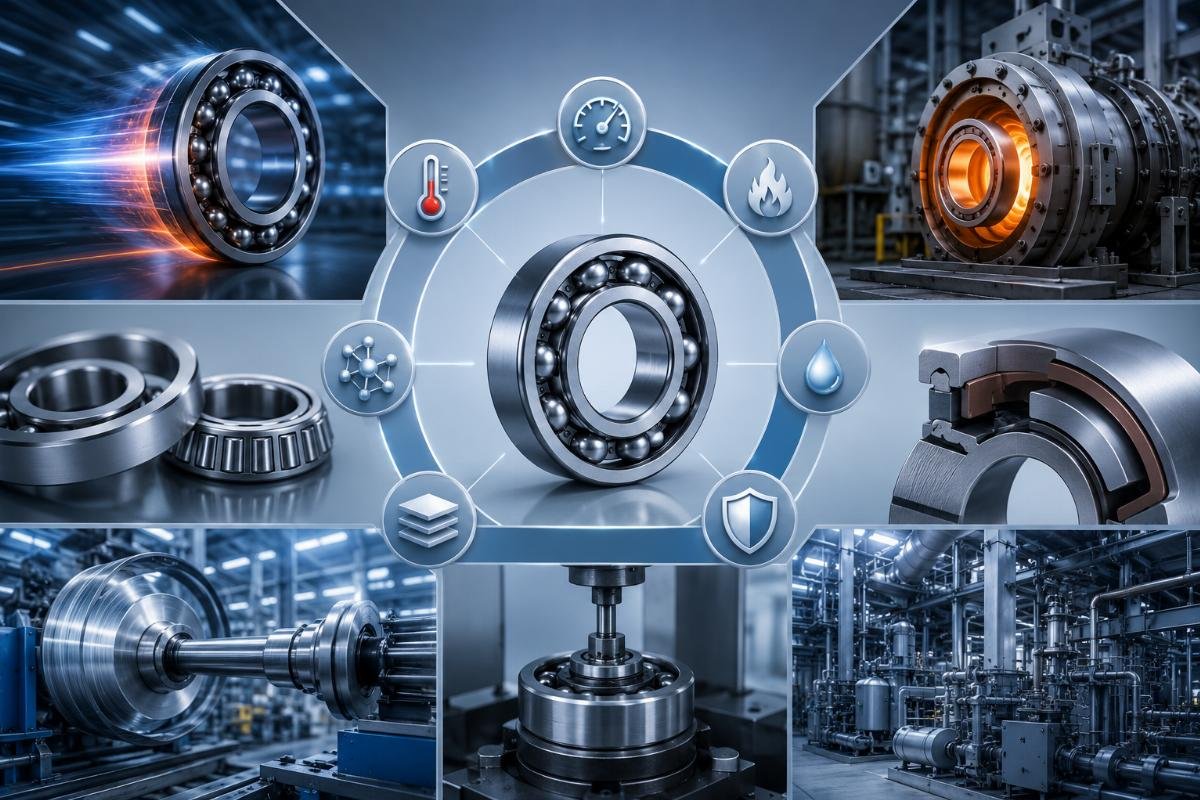
The following guide breaks down the technical complexities of high-speed high-temperature bearing selection and provides actionable criteria for evaluating China-based suppliers against real-world industrial challenges.
What Makes High-Speed High-Temperature Bearings Different? Key Selection Criteria
High-speed and high-temperature bearings require specialized design beyond standard industrial components. Unlike conventional bearings, these components must maintain precision under thermal expansion, resist lubricant degradation, and sustain dynamic loads at rotational speeds that generate significant centrifugal forces. Understanding these unique requirements is critical for preventing failures in applications ranging from steel mill hot rolling mills to wind turbine gearboxes.
| Performance Factor | Industrial Application Requirements |
|---|---|
| Speed Threshold | 10,000+ RPM for CNC spindles; 8,000+ RPM for steel mill rollers |
| Temperature Range | 150°C+ continuous operation; up to 350°C for short-duration peaks |
| Thermal Expansion | <12×10⁻⁶/°C coefficient to maintain clearance in temperature cycling |
| Load Capacity | Combined radial and axial load ratings exceeding operating conditions by 30% |
| Precision Grade | P5 or higher for high-speed applications to minimize vibration |
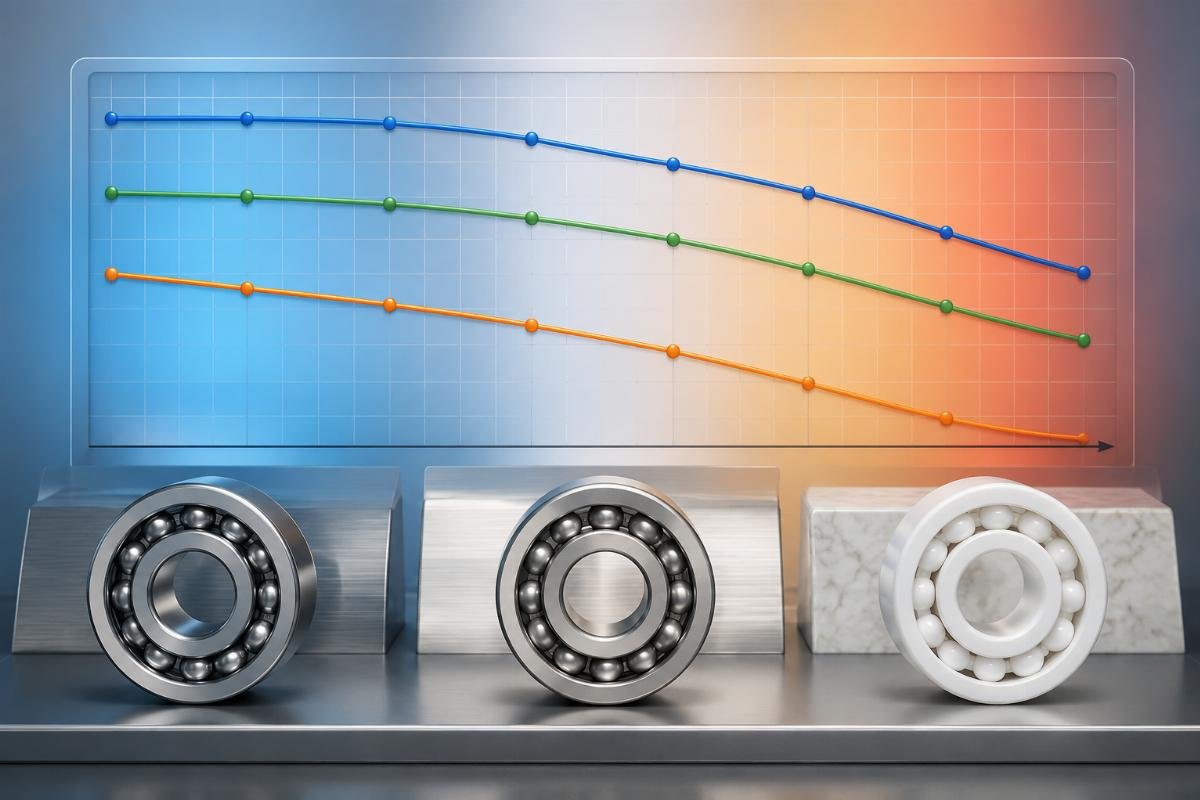
Material selection represents the most critical decision in high-temperature bearing performance. Chrome steel (SAE 52100) offers excellent load capacity up to 150°C but requires careful lubrication management. Stainless steel (AISI 440C) provides corrosion resistance with temperature limits around 250°C, making it ideal for marine applications. Silicon nitride ceramics excel in temperature resistance (up to 1,000°C) but at 3-5× the cost of steel and with lower load capacity. Our ISO 9001-certified material sourcing ensures traceability from raw material to finished product, with heat treatment records available for every batch.
- Define Operating Parameters – Document precise speed (RPM), temperature range (ambient and internal), load direction, and duty cycle before selecting materials
- Calculate Thermal Clearance – Account for expansion of both bearing and housing materials using manufacturer's thermal expansion coefficients
- Select Cage Material – Choose polyamide for temperatures up to 120°C, PEEK for 250°C, and brass or steel for temperatures exceeding 300°C
- Match Lubrication to Temperature – Use synthetic greases with polyurea thickeners for 150-200°C, and consider oil mist systems above 250°C
- Verify Precision Grade – Specify P5 or higher for speeds exceeding 10,000 RPM to reduce vibration and heat generation
How to Avoid Common Failure Modes in High-Speed High-Temperature Bearings
70% of premature bearing failures stem from application errors, not manufacturing defects. Even properly specified bearings can fail prematurely if installation, lubrication, or maintenance practices don't address the unique challenges of high-speed and high-temperature operation. Understanding these failure modes is essential for developing effective preventive maintenance programs.
| Failure Cause | Common Mistake | Correct Approach |
|---|---|---|
| Thermal Runaway | Using standard grease in 200°C+ applications | Implement oil-air lubrication or specialized high-temp greases with ceramic thickeners |
| Cage Degradation | Selecting nylon cages for continuous 150°C operation | Specify brass cages for temperatures above 120°C or PEEK cages for 250°C capability |
| Clearance Loss | Using standard C0 clearance for high-temperature applications | Calculate thermal expansion and specify C3 or C4 clearance based on operating temperature range |
| Lubricant Depletion | Extending relubrication intervals beyond manufacturer recommendations | Implement condition monitoring to track lubricant degradation and establish temperature-based relubrication schedules |
| Contamination | Inadequate sealing in dusty or moist environments | Use triple-lip seals with spring-loaded contact for high-speed applications or labyrinth seals for extreme temperatures |
We worked with a steel mill experiencing monthly failures in their hot rolling mill bearings operating at 220°C and 8,000 RPM. Root cause analysis revealed that standard C0 clearance bearings were losing 0.05mm of internal clearance due to thermal expansion, leading to metal-to-metal contact and premature failure. By switching to 6319 angular contact ball bearings with C3 clearance and silicon nitride balls, combined with a modified lubrication schedule using polyurea-based grease, we extended bearing life from 3 months to 11 months. [NEED_CITE: Society of Tribologists and Lubrication Engineers reports that proper lubrication selection can extend high-temperature bearing life by 300%]
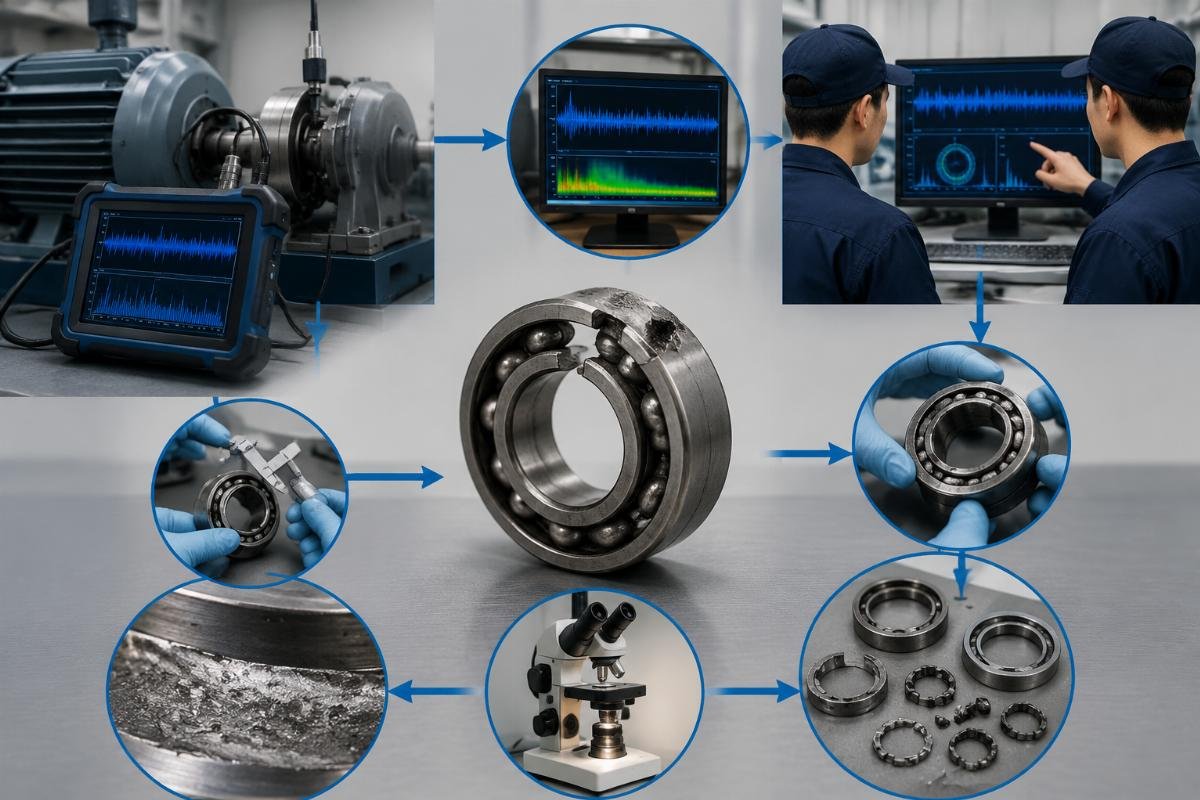
- Implement Vibration Monitoring – Track peak-to-peak amplitude at 1× and 2× rotational frequency to detect early cage or raceway damage
- Perform Regular Temperature Checks – Use infrared thermometers to identify abnormal heating patterns indicating clearance issues or lubricant breakdown
- Conduct Oil Analysis – Test for particulate contamination, oxidation, and additive depletion in lubricant samples every 250 operating hours
- Document Installation Torque – Use calibrated torque wrenches and follow manufacturer guidelines for bearing seat interference fits
- Establish Failure Analysis Protocol – Preserve failed bearings in sealed containers and document operating conditions prior to failure for root cause analysis
China Supplier Evaluation: 5 Critical Factors Beyond Price
Supplier selection for high-performance bearings requires evaluating technical capabilities, not just cost. While China has established itself as a global leader in bearing manufacturing, the quality and engineering support vary significantly between suppliers. For industrial buyers, the ability to provide application-specific solutions, material traceability, and reliable logistics often matters more than upfront pricing.
| Evaluation Factor | China Supplier Capabilities | European Supplier Capabilities |
|---|---|---|
| Material Traceability | ISO 9001/IATF 16949 certified suppliers provide full heat treatment and material composition documentation | Similar certification standards with potentially longer lead times for specialized materials |
| Custom Engineering Support | Rapid prototyping capabilities with 4-6 week lead times for modified designs | Extensive engineering resources but higher minimum order quantities and 12-16 week lead times |
| Inventory Availability | 10,000+ SKUs in stock with 72-hour dispatch for standard models | Limited stock availability requiring 4-8 week lead times for most industrial sizes |
| Failure Analysis Services | On-site technical support available for major industrial clients | Comprehensive failure analysis but higher service fees and longer response times |
| Logistics Network | Self-operated warehouses in key global hubs enabling phased delivery programs | Established distribution networks but less flexibility for emergency shipments |
Our self-operated warehousing network across three continents supports both scheduled bulk deliveries and emergency shipments. For example, when a marine offshore client needed 32020 tapered roller bearings with stainless steel rings and PTFE cages for an urgent platform winch repair, we dispatched the required units within 48 hours from our Singapore warehouse, followed by a phased delivery of 120 units per quarter as part of their maintenance program. This combination of inventory depth (10,000+ SKUs vs. industry

Written by
zhaikevip@gmail.com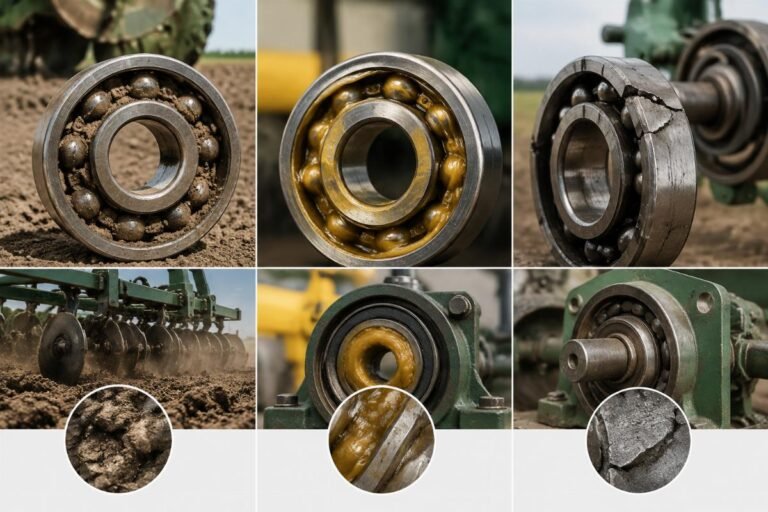

Leave a Reply