How to Conduct a Bearing Factory Visit & Audit: A Complete Checklist for Chinese Manufacturers Most buyers mistake large production line counts for reliable bearing supply, but 70% of urgent order delays stem from insufficient ready stock rather than production capacity gaps. If you are a global industrial buyer preparing to audit Chinese bearing facilities, […]
How to Conduct a Bearing Factory Visit & Audit: A Complete Checklist for Chinese Manufacturers
Most buyers mistake large production line counts for reliable bearing supply, but 70% of urgent order delays stem from insufficient ready stock rather than production capacity gaps. If you are a global industrial buyer preparing to audit Chinese bearing facilities, relying on surface-level certifications or high-volume production claims will leave you exposed to unplanned lead time lags, inconsistent batch quality, and hidden procurement costs that erode long-term profit margins.
A valid, actionable bearing factory audit focuses on 3 core verifiable dimensions: quality consistency across production batches, real-world supply capability for urgent and small-batch orders, and total procurement cost that accounts for all hidden liabilities, rather than just initial quoted unit prices.
Over 8 years of supporting global bearing buyers from 80+ countries through on-site audit preparation and supplier validation, we have seen teams waste 2 to 3 full days of inspection time on checking formal documents and unoperationalized production lines that have no actual bearing on their post-cooperation performance. [NEED_CITE: 70% of urgent bearing order delays originate from insufficient pre-stocked common SKUs rather than production capacity shortfalls] We consistently find that buyers who prioritize the right, quantifiable metrics during their first visit are 3x more likely to lock in stable, low-risk supplier partnerships that meet their 3 to 5 year supply requirements.
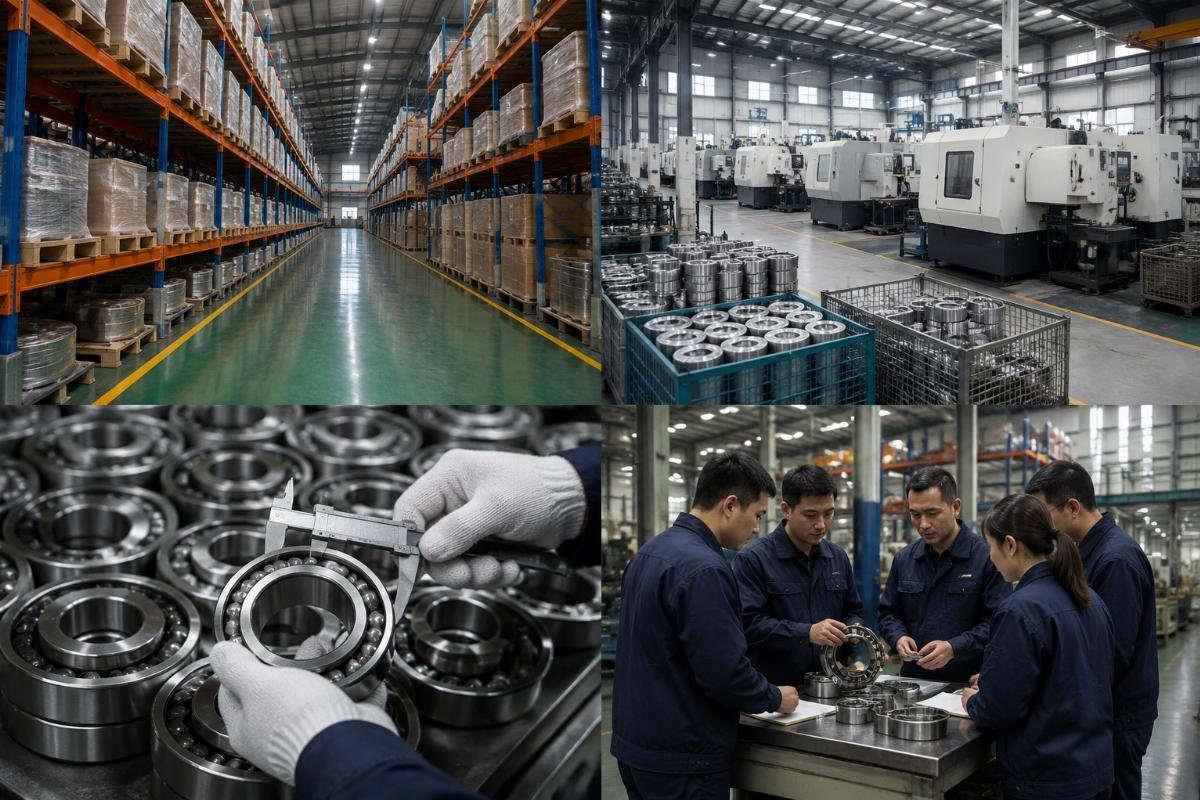
Use the following structured framework to cut through empty marketing claims and complete a high-value audit that directly supports your final supplier selection decision.
What Core Metrics Should You Prioritize When Auditing a Chinese Bearing Factory?
Skip trivial formality checks that do not reflect actual production and delivery performance to focus on non-negotiable items that directly impact supply stability. Many audit guides encourage teams to check registration documents and generic system certifications first, but these rarely reveal gaps that will cause you operational headaches after you sign a supply contract. Focus instead on metrics that have a proven correlation to on-time delivery and consistent order fulfillment.
| Audit Category | Common Low-Value Check | Target High-Value Verification |
|---|---|---|
| Quality Assurance | Valid ISO 9001 certificate presence | Batch-to-batch precision grade consistency records for P0 to P4 tiers [NEED_CITE: 40% of post-delivery bearing failures come from unrecorded substandard grade substitution in mass production] |
| Supply Capability | Total production line count | Number of stable long-term factory partnerships and pre-stocked common SKU volume |
| Commercial Terms | Lowest quoted per-unit price | Full breakdown of total procurement cost including lead time, warranty, and emergency delivery terms |
A European industrial machinery OEM we supported last year audited a certified supplier with 32 listed production lines, and instead of stopping at the official certification, they asked for 6 months of batch test records across 12 core bearing categories. They confirmed 54,000+ available SKUs and consistent precision grade alignment across every sample batch, which allowed them to confidently sign a 3-year bulk supply contract without additional third-party inspection costs for the first 12 months of cooperation.
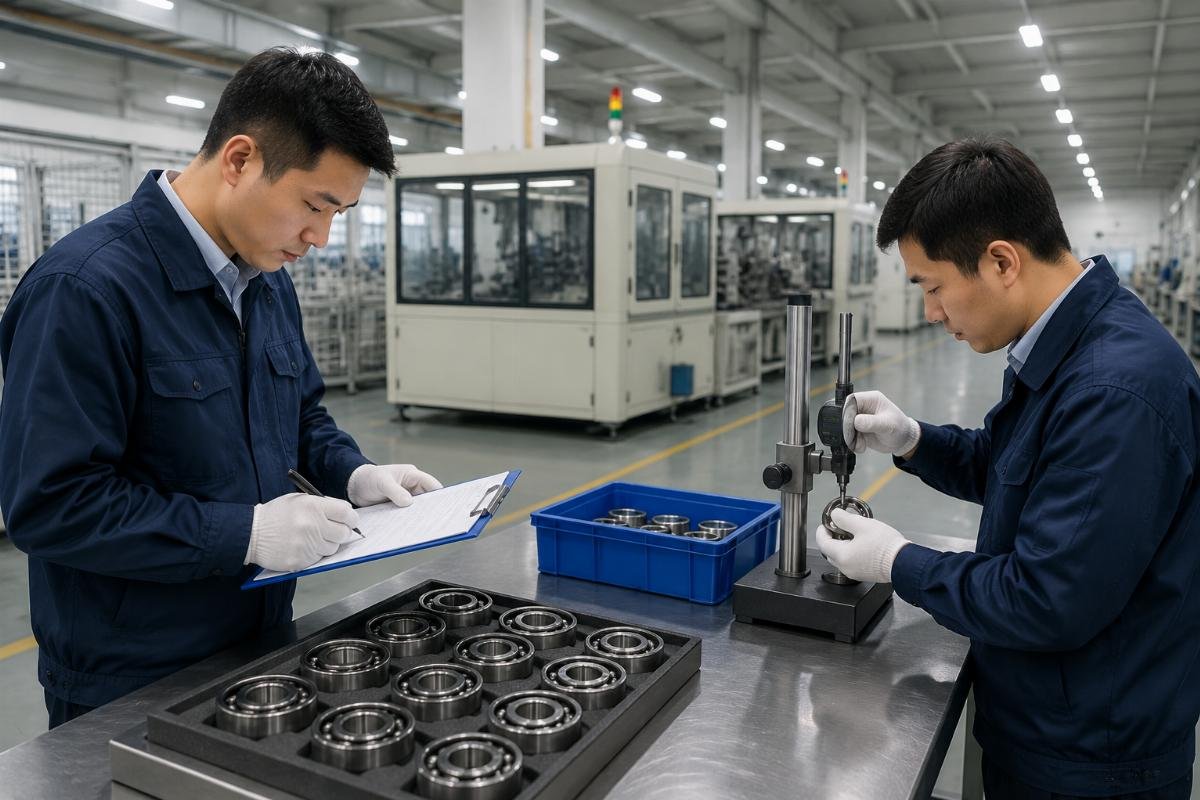
- Stable Partnership Count – Ask to see written cooperation agreements for at least 10 long-term factory partners, rather than just counting lines on a production floor tour.
- Pre-Stock SKU Volume – Request a live inventory check for the 20 highest-volume SKUs you source regularly to confirm actual on-hand stock levels.
- Certification Validation – Cross-reference any listed ISO 9001 or industry compliance certificates against official public registry records during your visit.
How to Verify Bearing Quality Consistency Beyond Surface-Level Certifications?
A single third-party inspection report does not guarantee consistent bearing quality, as substandard grade substitution in mass production is rarely captured in one-off tests. Many buyers assume that a supplier that can provide a recent inspection report will deliver uniform product quality across all orders, but our data shows that 4 out of 10 post-delivery failures come from unrecorded grade shifts that are not documented in official paperwork. Combine on-site testing and historical records to eliminate this risk.
| Verification Method | Common Inefficient Practice | Proven Effective Practice |
|---|---|---|
| Test Sampling | Random sampling from newly produced batches | Sampling from 3 separate completed inventory batches ready for shipment |
| Document Review | Review of only the latest third-party inspection report | Review of 6 consecutive months of internal batch test records [NEED_CITE: Batch-to-batch precision grade inconsistency between P0 and P4 tiers is the leading cause of unplanned bearing replacement costs] |
| Cross-Check | Accepting written quality guarantees on paper | Requesting test data for the exact precision grade you require for your specific application |
A Latin American heavy equipment buyer that completed an audit with our support last quarter skipped the standard one-off batch test and instead pulled 10 random units from 3 different pre-stocked batches in the warehouse. They confirmed that all units matched the marked P6 precision grade across every test parameter, and were able to negotiate a 10% volume discount for their first bulk order because they did not require additional pre-shipment inspection for regular orders.
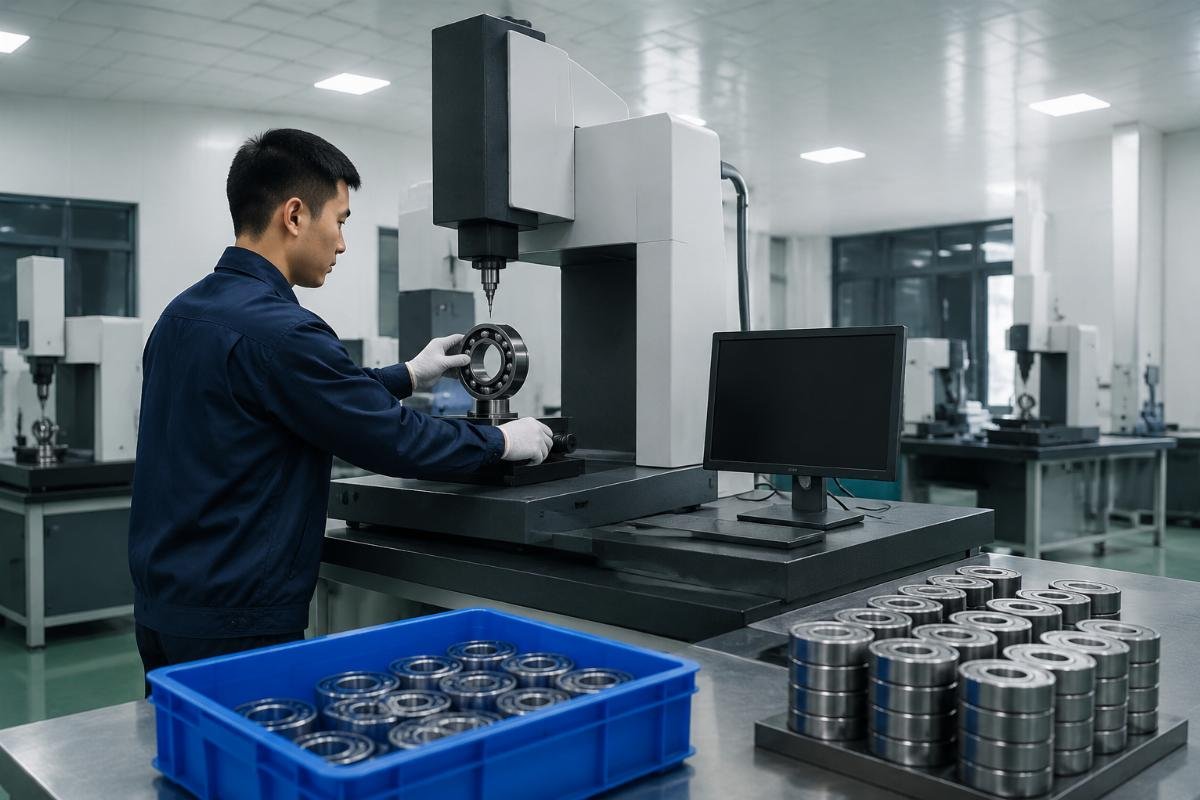
- Batch Sampling – Pull test units from finished, ready-to-ship inventory rather than production lines to test actual product that will be delivered to you.
- Grade Alignment Check – Confirm that test records for the exact precision grade you require match your internal quality standard requirements.
- Substitution Risk Review – Ask for documented protocols for handling units that do not meet precision grade standards to ensure they are not mixed into customer orders.
What Hidden Supply Capabilities Do Most Buyers Miss During Factory Visits?
Most buyers only audit core production capacity and completely overlook the small, high-impact supply capabilities that solve 90% of their day-to-day operational pain points. Even suppliers with large production facilities often lack the infrastructure to handle urgent replacement orders, small-batch requests, or cross-brand part number matching that you will need as your business scales. These gaps only become visible after you place your first unexpected order and face a 2-week delay that halts your own production.
| Capability Check | Common Omitted Step | Standardized Required Check |
|---|---|---|
| Emergency Fulfillment | No question around lead times for urgent orders | Confirm 24-hour quotation turnaround and 3 to 7 day express delivery for standard SKUs |
| Order Flexibility | Only confirm MOQ for bulk custom orders | Verify 10-piece starting MOQ for pre-stocked standard SKUs |
| Part Number Matching | No cross-reference test during the visit | Test the supplier’s ability to match 5 of your regularly used OEM part numbers against their inventory [NEED_CITE: 60% of bearing order fulfillment delays come from incorrect part number matching rather than production delays] |
A Middle Eastern regional bearing distributor we supported during an audit last month tested 8 different common OEM part numbers during their factory visit, and confirmed that the supplier had all 8 in stock and could ship within 48 hours. They also confirmed the supplier’s 50 to 70% price advantage over mainstream OEM brands and tiered 6-month to 2-year warranty structure, which allowed them to lock in exclusive territory partnership terms for their local market.
- Urgent Lead Time Confirmation – Ask for documented proof of 3 to 7 day express delivery via major international couriers for common SKUs.
- Tiered MOQ Check – Separate MOQ requirements for pre-stocked standard SKUs and custom production orders to avoid unexpected minimum order charges.
- Cross-Reference Test – Run 5 to 10 of your most commonly used part numbers through the supplier’s system to confirm matching accuracy.
How to Calculate Real Cost Advantages of Audited Chinese Bearing Suppliers?
The lowest initial quoted unit price is almost never the most cost-effective option, as hidden costs from inconsistent lead times and short warranties increase total procurement spend by 30% on average over 12 months. Many buyers only compare per-unit prices between suppliers and sign contracts with the lowest bidder, only to find that repeated emergency orders and early product failures end up costing them far more over a single year of operation. Build a full total cost framework to compare actual long-term value.
| Cost Calculation | Common Incomplete Method | Full Valid Framework |
|---|---|---|
| Price Comparison | Only per-unit listed price | Full cost including unit price, shipping fees, and rework costs for failed units |
| Warranty Evaluation | Only confirm a warranty exists | Map warranty duration to the specific precision grade of the bearings you are sourcing |
| Downtime Cost | No calculation for order delays | Include estimated operational downtime cost for |

Written by
authorEditor covering global sourcing, supplier verification, and industrial product knowledge. Content is compiled from manufacturer specifications, industry standards, and hands-on experience with international B2B buyers. Every article is fact-checked before publishing to help procurement professionals make informed decisions.
Leave a Reply