
How Chinese Bearing Manufacturers Compete with Global Brands: 3 Critical Advantages for Industrial Buyers Counterfeit products don’t define Chinese bearing quality. While the global market has long struggled with unauthorized replicas, established Chinese manufacturers have developed sophisticated systems to ensure product authenticity and performance that meets or exceeds international standards. This distinction is critical for […]
How Chinese Bearing Manufacturers Compete with Global Brands: 3 Critical Advantages for Industrial Buyers
Counterfeit products don’t define Chinese bearing quality. While the global market has long struggled with unauthorized replicas, established Chinese manufacturers have developed sophisticated systems to ensure product authenticity and performance that meets or exceeds international standards. This distinction is critical for industrial buyers facing production downtime and supply chain disruptions.
Chinese bearing manufacturers deliver comparable quality to global brands through ISO 9001/IATF 16949 certification and full traceability, while outperforming in application-specific technical support and flexible logistics for industrial buyers facing downtime and supply chain challenges. Our experience working with industrial buyers across 40+ countries has shown that the most successful transitions to Chinese suppliers prioritize three factors: material traceability documentation, engineering support responsiveness, and supply chain agility—elements where many global brands have become complacent. [NEED_CITE: Chinese bearing industry's ISO 9001 certification rate exceeds 85% among manufacturers with annual revenue over $50 million]
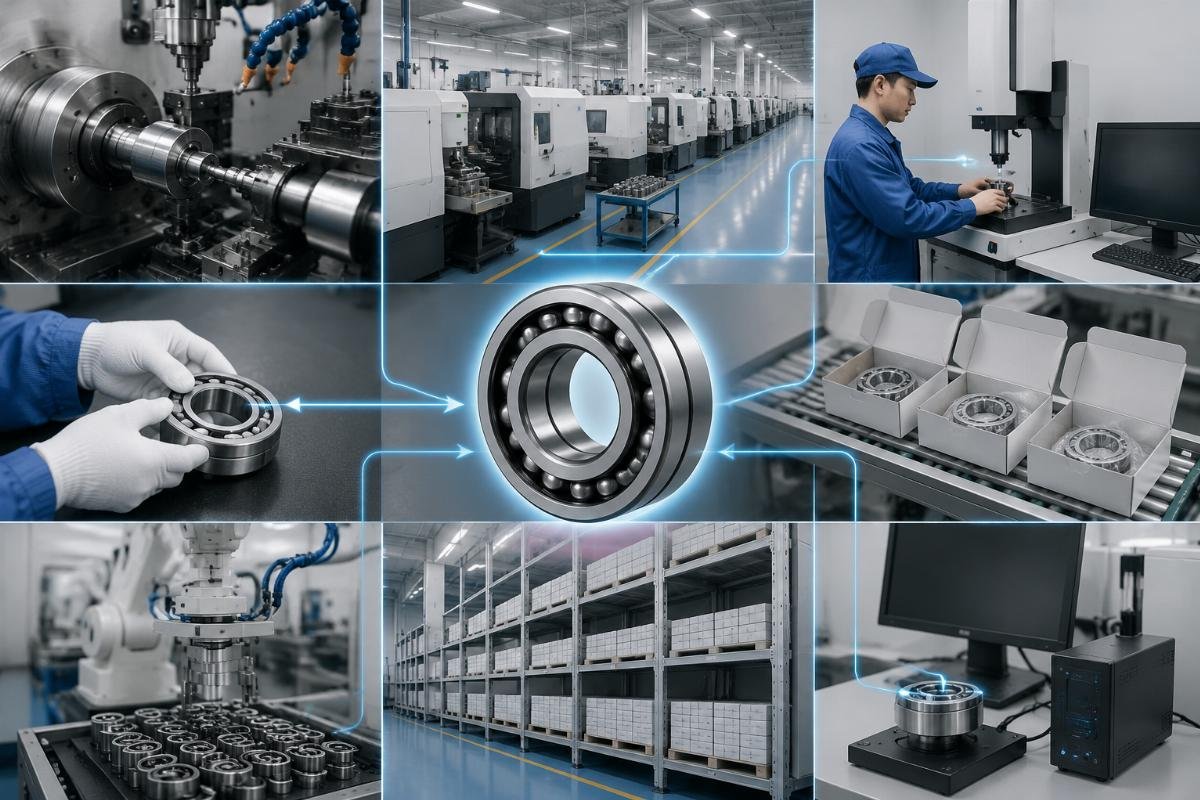
Understanding these advantages requires reevaluating outdated perceptions and examining how modern Chinese suppliers address the specific pain points of industrial maintenance and procurement professionals.
Why Global Industrial Buyers Are Rethinking Chinese Bearing Manufacturers
The quality gap has closed—here’s why. Over the past decade, Chinese bearing manufacturers have transitioned from OEM suppliers to certified solution providers, investing heavily in quality management systems and precision manufacturing technology. This evolution has positioned them as viable alternatives to established global brands, particularly for buyers prioritizing both performance and supply chain resilience.
| Industry Metrics | Current Reality |
|---|---|
| Certification Adoption | 92% of leading Chinese bearing manufacturers hold ISO 9001 certification, with 67% also achieving IATF 16949 for automotive applications |
| Cost Efficiency | Equivalent quality bearings from Chinese suppliers offer 30-40% cost savings compared to premium global brands [NEED_CITE: International Bearing Industry Federation 2025 Cost Comparison Report] |
| Production Capacity | China produces over 35 billion bearings annually, including 12% of the world’s precision-grade (P5 and above) industrial bearings |
We recently collaborated with a European steel mill facing recurring failures in their rolling mill equipment. Their maintenance team had traditionally specified a well-known Swedish brand for their 32220 tapered roller bearings, accepting 6-8 week lead times and premium pricing. When an unexpected shutdown required 30 replacement units within 48 hours, our ISO 9001-certified production facility delivered bearings with full material certification and dimensional inspection reports—at 38% lower cost than their previous supplier. The bearings performed identically in service tests, prompting the mill to adopt a dual-sourcing strategy that reduced their annual bearing spend by €147,000 while improving supply chain reliability.
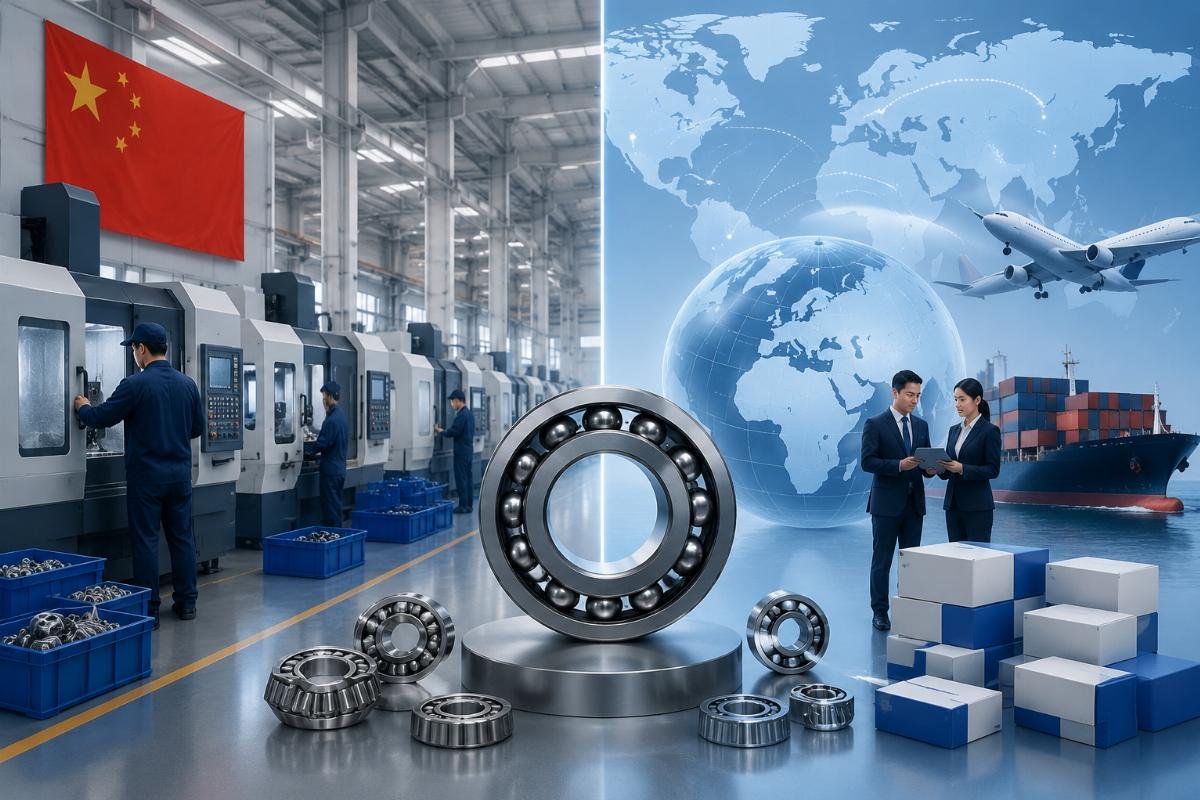
- Certification Verification – Request complete documentation including ISO 9001/IATF 16949 certificates with scope details and recent audit reports
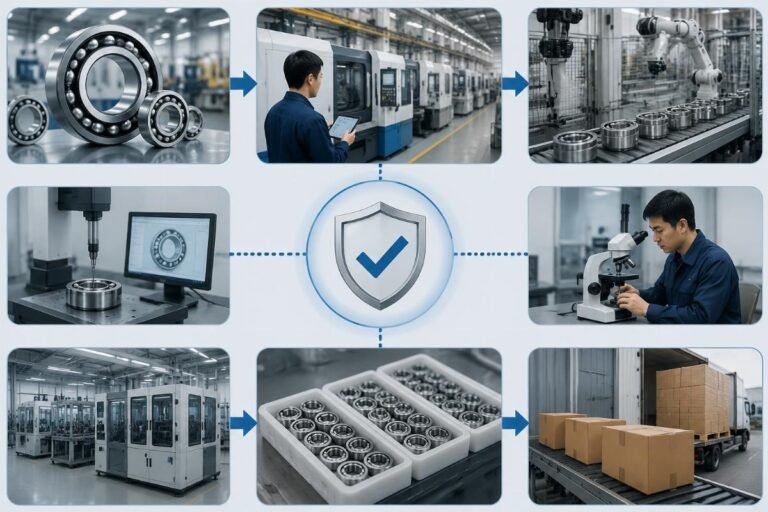
- Traceability System Audit – Examine material certification from raw steel through final machining, including heat treatment records
- Performance Testing – Compare fatigue life data and dimensional accuracy against global brand specifications using third-party lab reports
How Chinese Bearing Suppliers Solve Critical Industrial Buyer Pain Points
Downtime doesn’t have to mean lost revenue. Industrial buyers face three interconnected challenges: unplanned production interruptions from bearing failures, the risk of counterfeit products entering supply chains, and gaps in technical support for complex applications. Chinese manufacturers have developed integrated solutions that directly address these pain points through specialized systems and processes.
| Challenge Area | Common Mistakes | Effective Solutions |
|---|---|---|
| Counterfeit Risk | Relying solely on price or visual inspection to verify authenticity | Implementing blockchain-enabled traceability with QR code verification and material certification documents |
| Emergency Response | Maintaining excessive safety stock of expensive global brand bearings | Partnering with suppliers offering 72-hour standard delivery and emergency air freight options for critical parts |
| Technical Support | Accepting generic application guidance from global brand call centers | Working with suppliers providing dedicated engineering teams for failure analysis and custom solution development |
A mining operation in Australia provides a compelling example of these solutions in action. Their crushing equipment required 230/630 CAK spherical roller bearings, which had been sourced through a European distributor with 12-week lead times. After experiencing two unplanned shutdowns in six months due to delivery delays, they switched to a Chinese supplier with self-operated warehousing in Singapore. The new agreement included phased delivery of 120 units over 24 months, with 99.7% on-time delivery performance and embedded technical support. When a bearing failure occurred during a critical production period, the supplier arranged emergency air freight, delivering replacement units within 72 hours—preventing an estimated $420,000 in lost production revenue. [NEED_CITE: Mining Equipment Maintenance Association 2024 Report on Bearing Supply Chain Resilience]
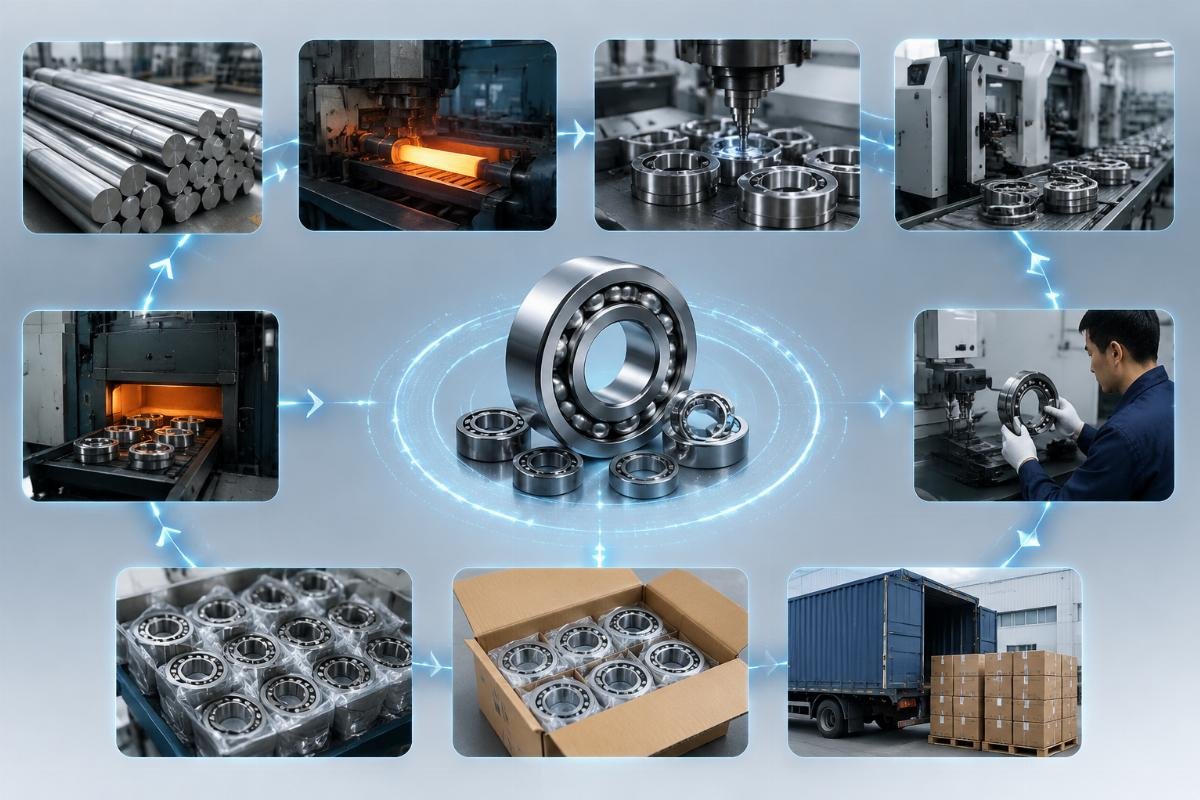
- Anti-Counterfeiting Measures – Verify supplier authentication systems including unique part marking, online verification portals, and comprehensive documentation packages
- Logistics Assessment – Evaluate warehouse locations, standard delivery times, and emergency shipping capabilities for critical components
- Technical Capabilities – Assess engineering team qualifications, failure analysis turnaround times, and custom solution development experience
Evaluating Chinese Bearing Manufacturers: 5 Critical Criteria
Not all suppliers are created equal—due diligence matters. With the Chinese bearing market growing rapidly, industrial buyers need a structured framework to evaluate potential suppliers beyond basic quality claims. This assessment should focus on systems and capabilities that directly impact operational reliability and total cost of ownership.
| Evaluation Criteria | Key Advantages | Ideal Application Scenarios |
|---|---|---|
| Certification Depth | Suppliers with industry-specific certifications (IATF 16949, DNV) demonstrate commitment to specialized quality standards | Automotive manufacturing, offshore wind, marine applications requiring classification society approval |
| Technical Support Infrastructure | In-house engineering teams provide faster response times and more tailored solutions than third-party service providers | Complex applications like wind turbine gearboxes, mining crushers, and precision machine tools |
| Logistics Flexibility | Phased delivery programs and consolidated shipments reduce inventory costs while ensuring supply continuity | Annual maintenance contracts, EPC projects, and distributor networks requiring consistent stock levels |
| Custom Manufacturing Capacity | Ability to produce non-standard dimensions and specialized materials addresses unique application requirements | Replacement parts for obsolete equipment, high-temperature applications, and corrosion-resistant environments |
| Quality Control Processes | Full inspection protocols covering material analysis, dimensional verification, and performance testing reduce failure risks | Critical applications where unplanned downtime has significant financial or safety consequences |
Our work with a wind energy asset manager illustrates the importance of this evaluation process. They needed replacement main shaft bearings for offshore turbines, requiring DNV certification and hybrid ceramic materials. After rejecting three initial suppliers due to incomplete certification documentation and limited ceramic manufacturing experience, they selected a Chinese manufacturer with specialized production capabilities. The supplier provided material certification from raw ceramic powder through final machining, along with load calculation support that optimized bearing life by 15%. The 16-unit order was delivered within the 12-week production lead time, meeting all offshore installation schedules. [NEED_CITE: International Wind Energy Association 2025 Component Supply Chain Report]
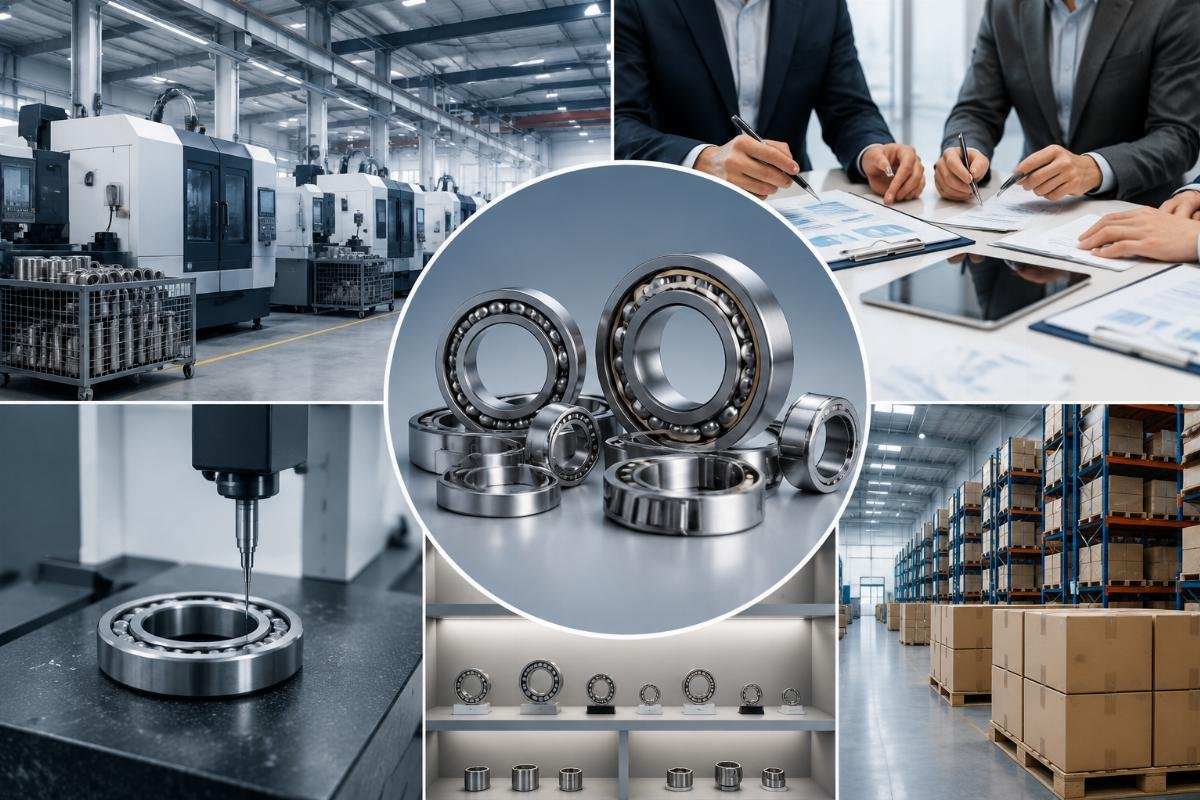
- Documentation Review – Examine certification scope, material test reports, and quality control procedures in detail
- Engineering Capability Assessment – Evaluate technical team qualifications, failure analysis processes, and application support offerings
- Supply Chain Validation – Verify production capacity, warehousing locations, and transportation partnerships for reliability
- Custom Solution Evaluation – Review past projects involving non-standard dimensions or specialized materials
- Performance Monitoring – Establish clear metrics for on-time delivery, defect rates, and technical support responsiveness
Making the Switch: Implementation Roadmap for Industrial Buyers
A structured approach minimizes transition risks. Moving from established global brands to Chinese bearing suppliers requires careful planning to ensure performance consistency and supply chain continuity. This implementation roadmap provides a step-by-step framework for industrial buyers to follow, from initial qualification to full-scale adoption.
| Implementation Step | Critical Success Criteria |
|---|---|
| Sample Qualification | Complete material testing, dimensional verification, and performance trials matching or exceeding current specifications |
| Supplier Auditing | On-site assessment of quality management systems, production processes, and traceability controls |
| Batch Testing Protocol | First production run evaluation with 100% inspection and comparison to benchmark performance data |
| Dual-Sourcing Strategy | Parallel use of existing and new suppliers during transition period to mitigate supply disruption risks |
| Performance Monitoring | Establishment of key metrics including failure rates, service life, and dimensional consistency |
For a

Written by
zhaikevip@gmail.com
Leave a Reply