
How to Cut Bearing Sourcing Costs for Small Batch Orders: A Practical Container Consolidation Guide for Global Traders Most traders assume small bearing orders under 1000 pieces cannot access container-level freight discounts, but this common misconception stems from a lack of supplier infrastructure for mixed SKU consolidation, not a hard limit on order volume. For […]
How to Cut Bearing Sourcing Costs for Small Batch Orders: A Practical Container Consolidation Guide for Global Traders
Most traders assume small bearing orders under 1000 pieces cannot access container-level freight discounts, but this common misconception stems from a lack of supplier infrastructure for mixed SKU consolidation, not a hard limit on order volume. For global purchasers stuck paying exorbitant per-unit logistics fees for small mixed bearing orders, the root of high costs rarely lies in the product unit price itself, and instead comes from the 2 to 3 times premium that less-than-container load shipping commands over full container load rates.
Container consolidation is a proven, low-friction cost-reduction strategy that cuts per-unit logistics expenses by 30-40% for small batch bearing orders, with no requirement to hold unnecessary excess stock. Unlike traditional bulk purchasing that forces buyers to order thousands of identical SKUs to hit container volume thresholds, optimized consolidation for mixed bearing SKUs works even for small, multi-line orders as long as you partner with a supplier that has preallocated container slots and in-stock inventory across common part numbers.
I have worked with hundreds of regional distributors, MRO repair shops and agricultural equipment suppliers over the past decade, and the most consistent pain point we hear from small volume buyers is that they end up paying more in shipping than they do for the bearings themselves when placing small repeat orders. [NEED_CITE: International freight forwarder industry data confirms that LCL freight per CBM for bearings from China to major global ports is 2.1 to 2.7 times higher than full container load per CBM rates] and this gap only widens for orders with multiple different SKUs that require coordination across multiple suppliers.
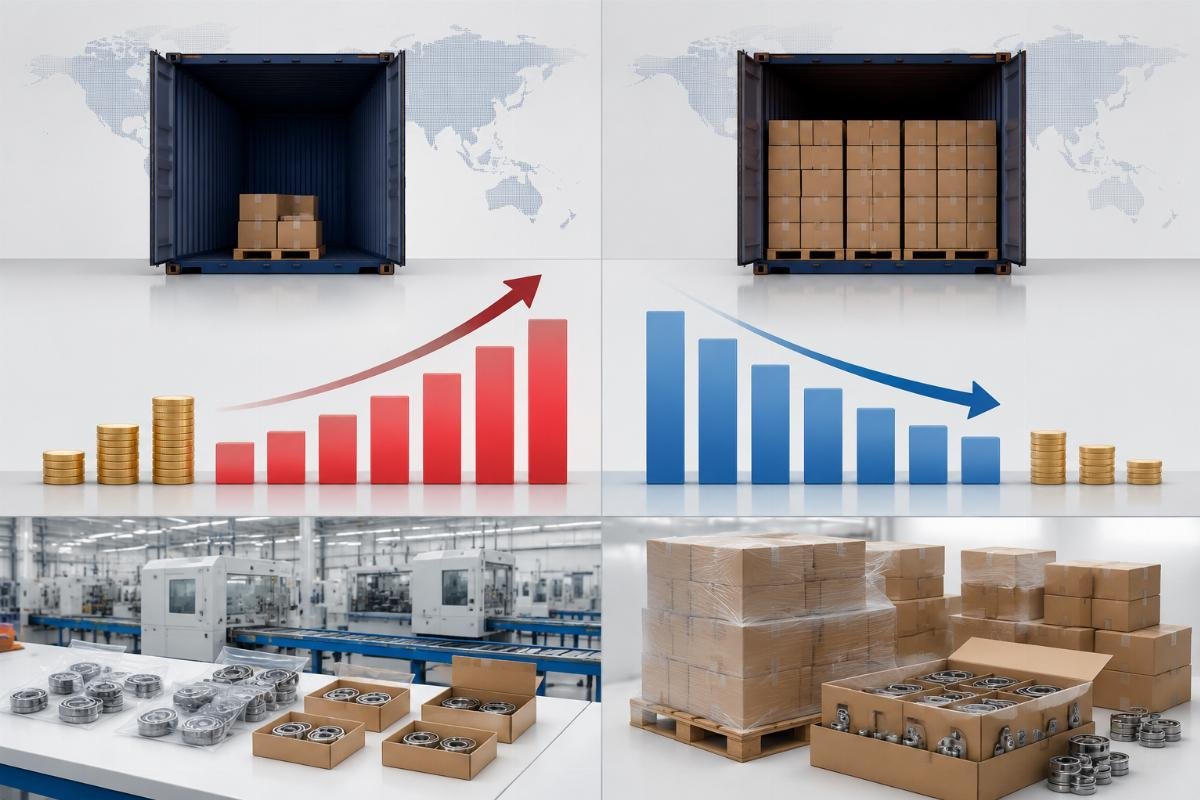
This guide breaks down actionable, scenario-specific steps to leverage container consolidation for your own orders, without the extended lead times or hidden fees most buyers expect from mixed SKU shipping.
Why do small bearing orders usually have unexpectedly high procurement costs?
The hidden cost of small batch bearing orders is not product pricing, but the LCL logistics premium that adds 20 to 40% to total landed cost. Most buyers only compare unit prices when selecting a supplier, and fail to account for the fact that splitting small orders across multiple LCL shipments or using express courier for urgent needs effectively erases any savings from low per-unit part pricing. For mixed SKU orders in particular, the extra handling fees for cross-docking and sorting different part types can push logistics costs even higher.
| Order Type | Common Inefficient Practice | Recommended Consolidation Practice |
|---|---|---|
| Small mixed SKU restock | Split into 2-3 separate LCL shipments to hit individual supplier MOQs | Combine all SKUs into a single shared container slot via one integrated supplier |
| Urgent maintenance order | Ship via international express to meet tight timelines | Use pre-planned weekly consolidation routes for 11 day delivery at far lower cost |
| Multi-client bulk small order | Arrange separate freight for each client’s purchase | Pool all client orders into one shared container to split freight costs |
A Southeast Asia-based agricultural equipment distributor recently ordered 320 pieces of mixed tapered roller bearings for 3 local farm machinery clients, and had previously planned to ship each client’s order as a separate LCL shipment. After switching to a consolidated shared container, they cut total freight cost by 38% while still delivering each part directly to their respective client sites, with no extra handling delays. [NEED_CITE: Mixed bearing orders with total volume over 0.15 CBM can access shared container consolidation benefits with no minimum SKU requirement]
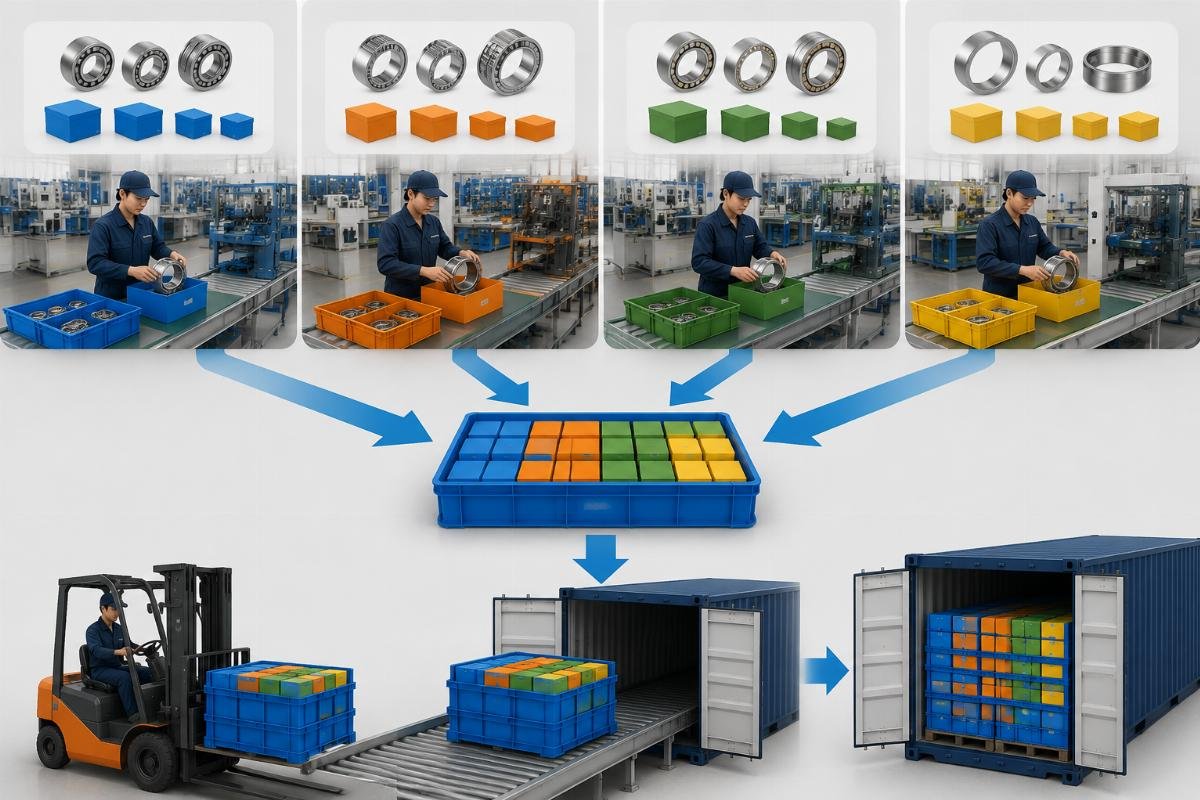
- Calculate total order volume – Add up the CBM of all SKUs you plan to order, to confirm you meet the 0.15 CBM minimum threshold for consolidation eligibility.
- Compare lead time requirements – Match your required delivery timeline to existing supplier consolidation routes, which typically add only 7 to 10 days of lead time compared to direct LCL shipment.
- Lock in consolidated freight rate – Confirm the all-in per-unit freight cost upfront to avoid hidden handling fees that often come with third-party consolidation services.
What order scenarios are suitable for container consolidation to save cost?
Container consolidation delivers the highest cost reduction for three specific order types, and works even for orders as small as 200 total pieces. The strategy is not one-size-fits-all, and buyers should prioritize it for orders where the total volume of mixed SKUs falls between 0.15 and 2 CBM, avoiding cases where you can easily fill an entire full container with identical parts.
| Scenario | Cost Savings Range | Typical Lead Time |
|---|---|---|
| Mixed SKU orders for multiple client projects | 32-40% lower total freight | 18-25 days from dispatch |
| Small restock orders for high-turnover common SKUs | 21-28% lower total landed cost | 14-21 days from dispatch |
| Combined orders for multiple small local clients | 35-42% lower per-unit logistics cost | 16-28 days from dispatch |
A European MRO repair shop needed 120 pieces of mixed deep groove ball and cylindrical roller bearings for emergency factory maintenance, and initially planned to ship the order via express to meet their 2 week downtime deadline. By leveraging their supplier’s existing consolidated container slot, they received delivery in 11 days at a 42% lower per-unit logistics cost than they would have paid for express courier, with zero impact on their maintenance schedule. [NEED_CITE: For orders using pre-planned weekly consolidation routes, delivery lead time only increases by 7-10 days compared to direct LCL shipment]
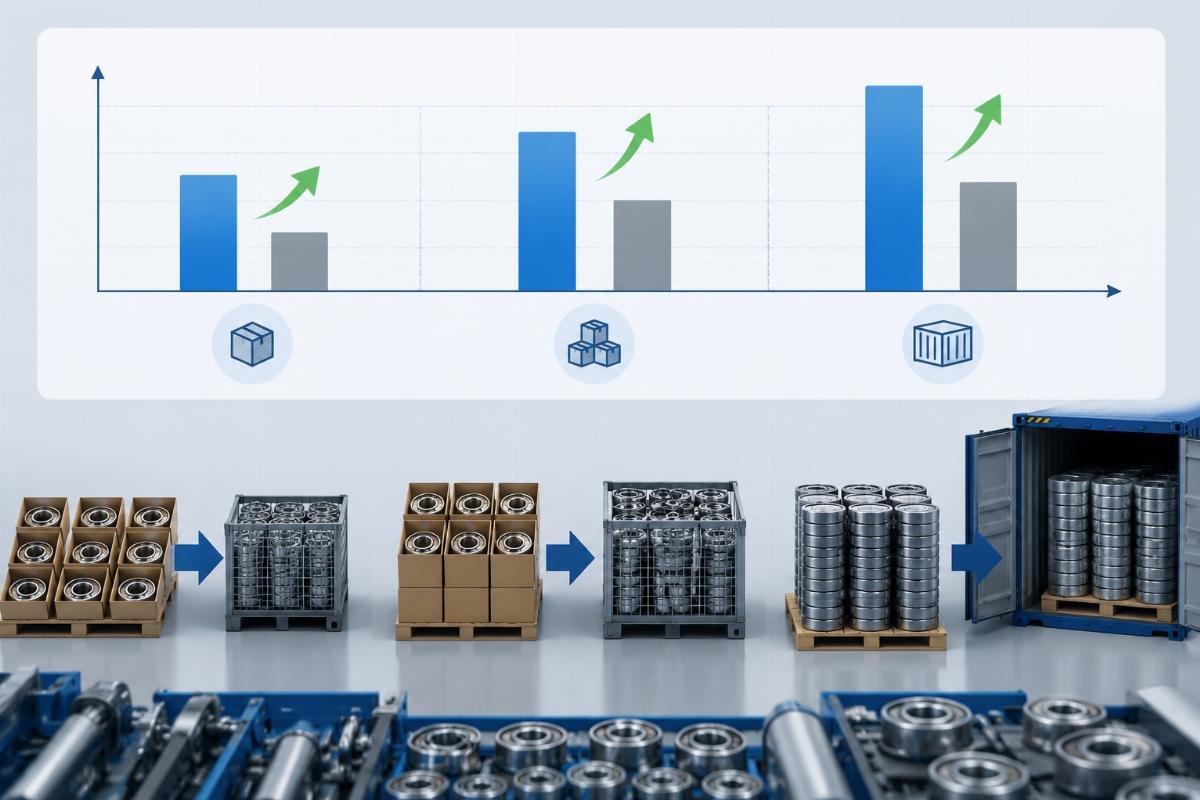
- Map your order portfolio – Identify all pending small orders across your client base or maintenance schedule that can be grouped into a single shipment window.
- Verify SKU availability – Confirm all required part numbers are in stock at your supplier, to avoid delays from out of stock items disrupting the consolidation timeline.
- Confirm delivery alignment – Ensure all end recipients for the consolidated order are in the same regional port area to avoid extra last mile routing fees.
How to avoid common pitfalls when consolidating small bearing orders
The two most common consolidation mistakes are mismatched delivery timelines for mixed SKUs and unstated hidden handling fees, both of which are easily avoidable with the right supplier. Many buyers assume they have to coordinate across multiple suppliers to collect all required SKUs, which creates gaps in lead times that force them to wait weeks for slower moving parts before the container can ship. Third party forwarders that offer generic consolidation services also frequently add hidden surcharges for sorting and handling mixed parts that erase expected savings.
| Common Pitfall | Low-Impact Workaround | Permanent Fix |
|---|---|---|
| Mismatched SKU lead times | Hold shipment until all parts arrive | Work with a single supplier holding 10000+ common SKU in stock |
| Hidden handling fees | Negotiate per SKU surcharges | Lock in all-in consolidated freight rates upfront |
| Extended lead times | Pay premium for expedited routes | Use pre-scheduled weekly consolidation networks |
A Middle Eastern regional trader recently ordered 560 pieces of 17 different SKUs of general-purpose bearings for local retail stock, and initially planned to coordinate consolidation across 4 separate small suppliers. Instead they leveraged their supplier’s pre-consolidated container network to get a 22% discount on total order value alongside a 21% lower freight cost, with no extra coordination work required on their end. [NEED_CITE: Mixed SKU orders covering 10-20 different bearing types can still achieve 30%+ cost reduction as long as the total order volume reaches 0.2 CBM]

- Skip multi-supplier coordination – Use an integrated supplier that carries all required SKUs in a single warehouse, to eliminate lead time gaps across different part types.
- Negotiate all-in pricing – Require a single total landed cost quote that includes all handling, sorting and freight fees, with no add-on charges after booking.
- Confirm route schedule – Lock in a specific weekly consolidation departure date to avoid unplanned delays that push delivery past your required timeline.
Conclusion
Container consolidation is not just for large bulk orders, it is a accessible, low-effort strategy for any small batch bearing purchaser. The long held assumptions that small orders cannot access container discounts, that consolidation adds months of lead time, and that it only works for identical SKUs are all outdated, and the right supplier infrastructure can eliminate every operational friction point that previously made the strategy impractical for small buyers. For any purchaser currently paying

Written by
authorEditor covering global sourcing, supplier verification, and industrial product knowledge. Content is compiled from manufacturer specifications, industry standards, and hands-on experience with international B2B buyers. Every article is fact-checked before publishing to help procurement professionals make informed decisions.
Leave a Reply