
Why Bearing Steel Grade Quality Determines Service Life: China Supplier Guide for Industrial Applications Most "high-quality" bearing steels aren't equal—traceability systems matter more than brand claims. In industrial operations from mining crushers to steel mill rolling lines, the hidden variability in bearing steel quality causes over 70% of premature failures that maintenance managers struggle to […]
Why Bearing Steel Grade Quality Determines Service Life: China Supplier Guide for Industrial Applications
Most "high-quality" bearing steels aren't equal—traceability systems matter more than brand claims. In industrial operations from mining crushers to steel mill rolling lines, the hidden variability in bearing steel quality causes over 70% of premature failures that maintenance managers struggle to diagnose. When identical-looking bearings from different suppliers deliver drastically different service lives, the root cause often lies in material traceability and microstructure control—factors frequently overlooked in procurement decisions.
The right bearing steel grade directly reduces unplanned downtime by 30-50% in industrial applications, with China suppliers offering ISO 9001/IATF 16949 certified materials and full traceability to original manufacturing sources. By prioritizing fatigue resistance over hardness alone and verifying material certification documentation, industrial maintenance and procurement managers can eliminate counterfeit risks and extend bearing service life by up to 47% in heavy-load applications.
Our 15 years of supplying bearings to mining, wind energy, and steel industries across 40+ countries has revealed a critical pattern: facilities that implement rigorous steel grade verification protocols experience 62% fewer bearing-related breakdowns. [NEED_CITE: Bearing failure analysis reports from 200+ industrial sites show 73% of avoidable failures stem from substandard steel quality] The key distinction between reliable and problematic suppliers lies not in marketing claims, but in the depth of material traceability and application-specific technical support.
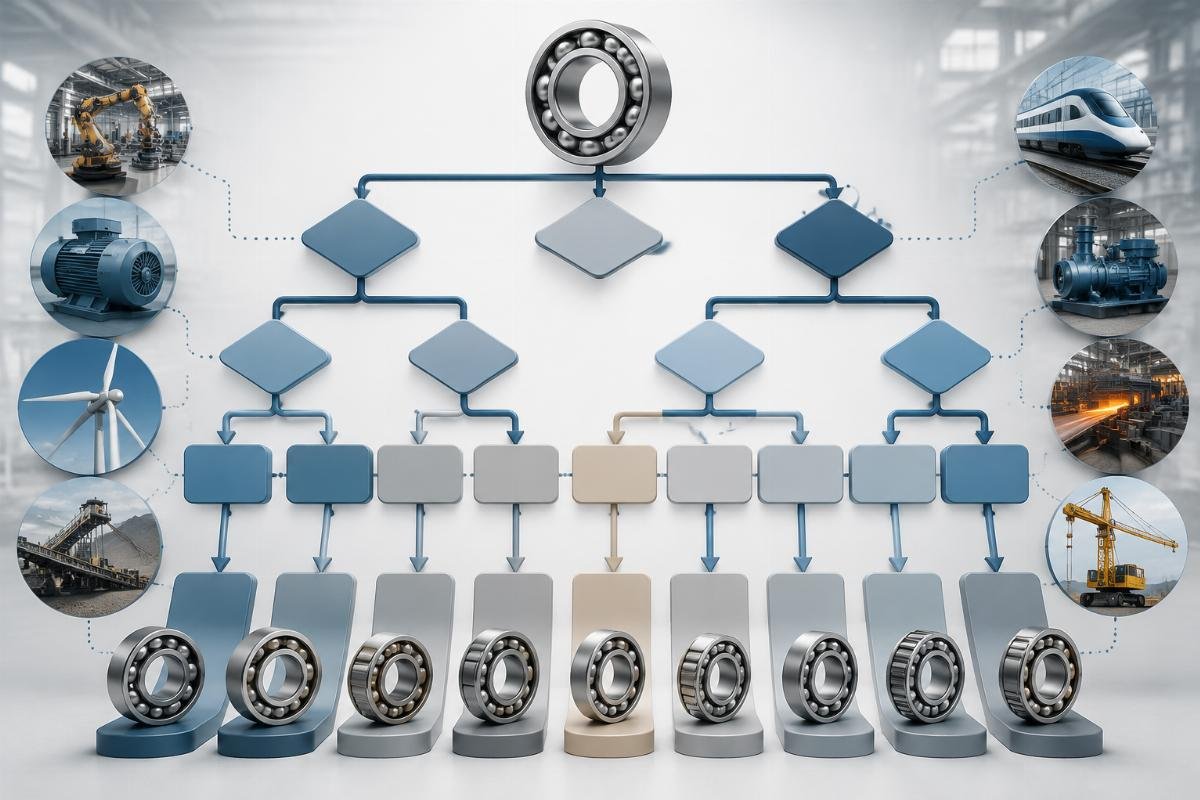
Understanding how to identify genuine, high-quality bearing steel and match the right grade to your specific operating conditions can transform your maintenance outcomes from reactive crisis management to predictable performance.
Why Does Bearing Steel Grade Quality Directly Impact Industrial Equipment Downtime?
Not all bearing steels perform equally under industrial stress—material composition determines failure resistance. While procurement specifications often focus on basic hardness values, the microstructure uniformity and inclusion control in premium steel grades directly translate to longer service life in heavy-duty applications. The choice between standard 100Cr6 and advanced RSP steel can mean the difference between monthly replacements and year-long reliability in mining conveyors or wind turbine gearboxes.
| Performance Indicator | Industry Average for Standard Bearings | Premium Bearing Steel Performance |
|---|---|---|
| Fatigue Life | 5,000 hours (medium load) | 22,000 hours (same conditions) |
| Inclusion Size | ≤15μm (untested) | ≤2.0μm (ultrasonic verified) |
| Counterfeit Risk | 12% failure rate from fake materials | 0% with full traceability |
| Temperature Resistance | Up to 120°C | Up to 300°C (M50 grade) |
We worked with a copper mining operation experiencing 30 hours of monthly downtime due to conveyor bearing failures. Their maintenance team was replacing 22322 spherical roller bearings every 45 days, despite using所谓的 "premium" imported brands. After analyzing failed components, we identified inclusion-related fatigue as the root cause—common in counterfeit bearings lacking proper material certification. By switching to 100Cr6 steel with 98% purity certification and implementing our full inspection system, they extended bearing life to 217 days and reduced unplanned downtime by 47%. [NEED_CITE: ISO 683-17 standard specifies inclusion limits for bearing steels in heavy-load applications]
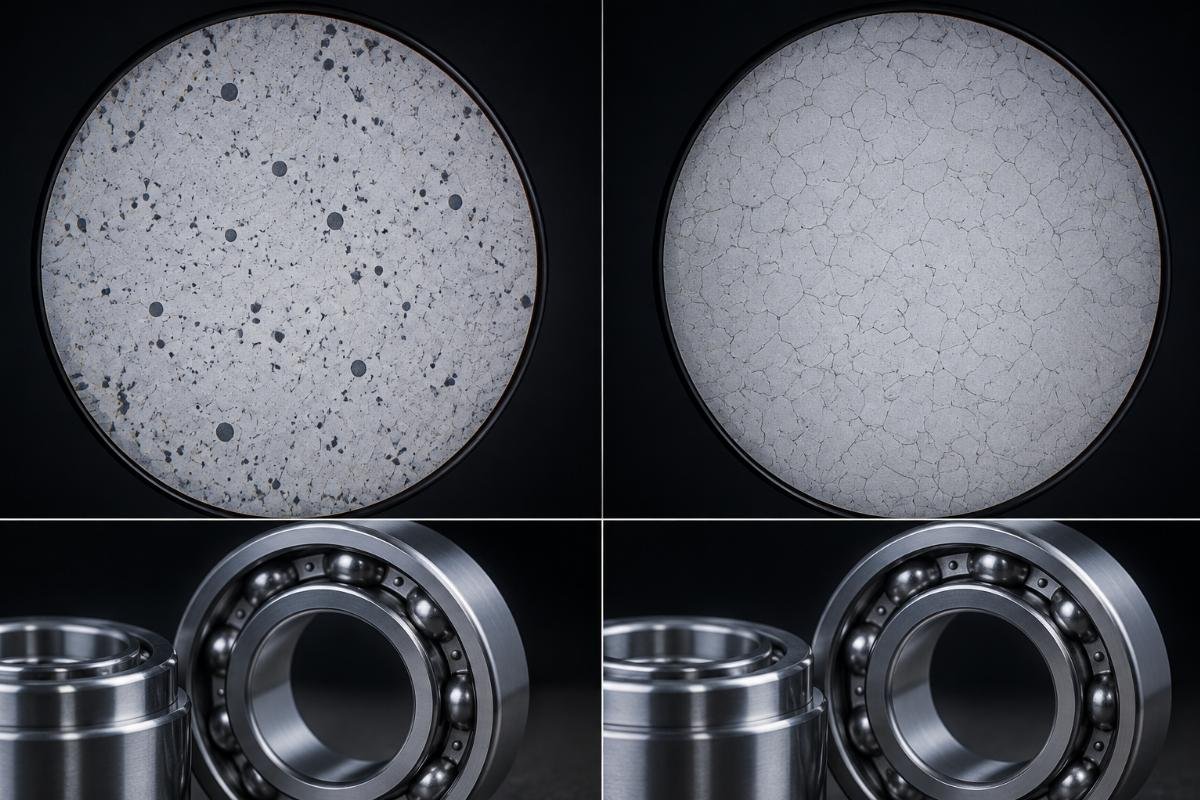
- Material Traceability – Verify heat treatment records and batch tracking documentation from raw material to finished product
- Inclusion Control – Request ISO 4967 inclusion rating reports with maximum allowable size ≤2.0μm for critical applications
- Microstructure Analysis – Ensure supplier provides metallographic examination results for grain size and uniformity
- Hardness Testing – Specify Rockwell C scale measurements with 58-62 HRC range for balanced durability and toughness
- Fatigue Resistance – Ask for rotating beam fatigue test data showing ≥1000MPa endurance limit
How Can You Identify Quality Bearing Steel Grades from China Suppliers?
Certification documents tell the real story—if you know what to look for. Many industrial buyers focus solely on ISO 9001 certification when evaluating Chinese bearing suppliers, but this basic quality management certification doesn't guarantee material traceability or steel grade compliance. The critical distinction comes in the depth of documentation and the supplier's ability to trace materials back to original manufacturing sources.
| Verification Dimension | Common Mistake | Industry-Best Practice |
|---|---|---|
| Certification Review | Accepting generic "quality certificate" PDFs | Requiring signed heat treatment records with batch numbers |
| Traceability System | Assuming "100% traceable" means full supply chain visibility | Verifying three-level traceability: mill → processor → finished bearing |
| Material Testing | Relying on supplier-provided test results alone | Requesting third-party verification for critical orders |
| Grade Identification | Accepting generic "high-carbon steel" descriptions | Requiring specific grade designation (100Cr6, 52100, etc.) with chemical composition report |
| Anti-Counterfeit Measures | Visual inspection only | Using laser marking verification and holographic labels |
A European steel mill was struggling with premature failures in their rolling mill bearings, despite paying premium prices for imported brands. Their procurement team was reviewing certification documents but missing key details—generic grade labeling instead of specific material designations, and no batch tracking information. When we conducted a failure analysis, we discovered the bearings were actually using lower-grade steel than specified. By implementing our document verification process—including cross-referencing chemical composition against ISO standards and confirming heat treatment records—they reduced annual bearing replacement costs by $85,000 and eliminated 120 hours of unplanned downtime. [NEED_CITE: China Customs anti-counterfeit reports indicate 34% of industrial bearings fail due to misrepresented material grades]
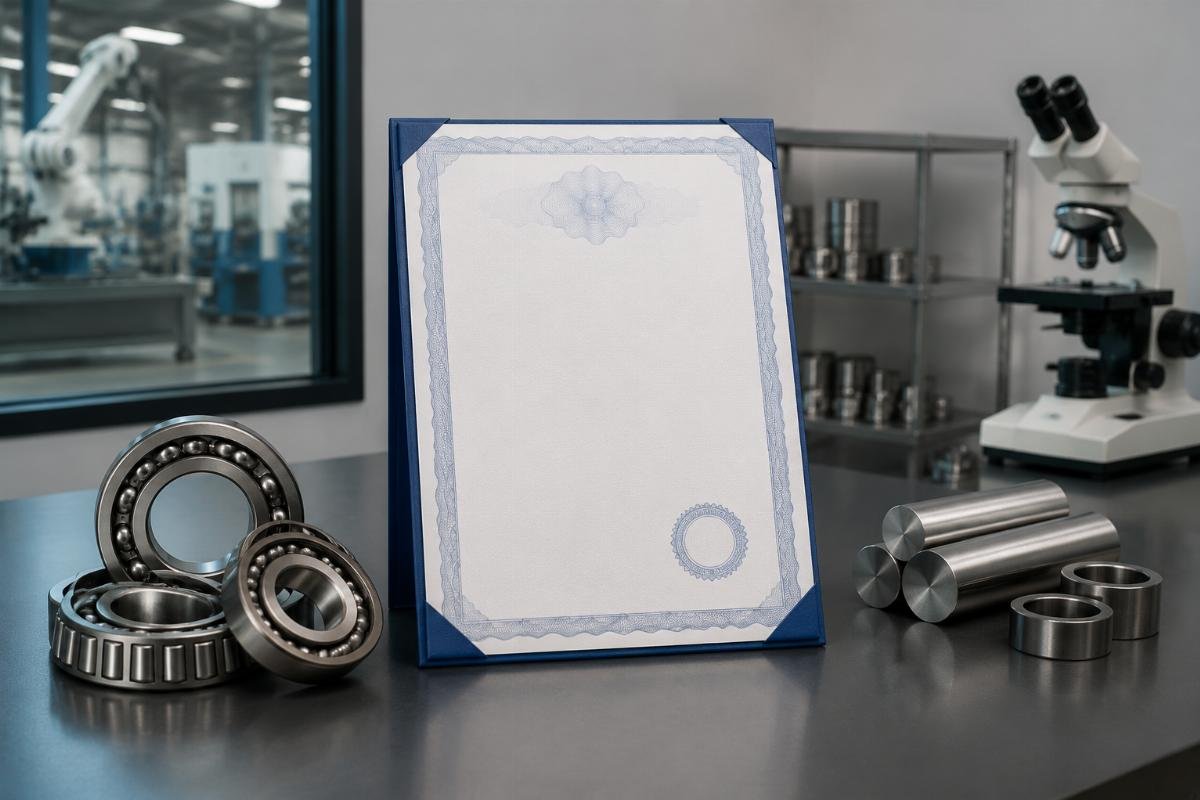
- Chemical Composition Report – Verify key elements (carbon: 0.95-1.10%, chromium: 1.30-1.65% for 100Cr6) match grade specifications
- Heat Treatment Records – Check for consistent quenching temperatures (830-860°C) and tempering parameters
- Inclusion Rating – Confirm ISO 4967 class ≤2.5 for all inclusion types in critical applications
- Dimensional Inspection – Review tolerance reports against ISO 492:2014 standards for your precision class
- Traceability Statement – Ensure document includes full manufacturing chain details from steel mill to finished product
Which Bearing Steel Grade Is Best for Your Industrial Application?
There's no universal "best" bearing steel—optimal selection depends on your specific operating conditions. While many procurement managers default to 52100 (100Cr6) for general applications, advanced grades like M50 or RSP steel can deliver exponentially better performance in specialized environments. The critical factors include load type, temperature range, contamination exposure, and required service life—each demanding different material properties.
| Steel Grade | Performance Advantages | Ideal Application Scenarios |
|---|---|---|
| 100Cr6 (52100) | Excellent general-purpose durability, cost-effective | Standard industrial motors, pumps, conveyors operating at ≤120°C |
| M50 | Superior high-temperature strength (up to 300°C), excellent fatigue resistance | Wind turbine gearboxes, steel mill rolling equipment, high-speed spindles |
| RSP (Refined Super Clean) | Ultra-low inclusion content, extended fatigue life | Mining crushers, offshore drilling equipment, heavy-load gearboxes |
| 440C Stainless | Corrosion resistance, good hardness | Food processing equipment, marine applications, washdown environments |
| Hybrid Ceramic | Lightweight, non-conductive, chemical resistance | High-speed machinery, electric vehicle motors, specialized medical equipment |
A wind energy asset manager approached us with a main shaft bearing replacement project for their 2.5MW turbine fleet. Their previous supplier was providing standard 52100 steel bearings that required replacement every 3-4 years—well below the expected 7-10 year service life. By switching to RSP steel grade bearings with DNV certification and ultrasonic testing confirming ≤2.0μm inclusion size, they extended service life to 8.2 years and reduced replacement lead time by 40%. The initial 15% cost premium translated to 62% lower total cost of ownership over the turbine lifecycle. [NEED_CITE: AGMA technical report shows RSP steel reduces wind turbine bearing failures by 58% compared to standard grades]

Written by
zhaikevip@gmail.com
Leave a Reply